
Why Glass Bottle Wall Thickness Standards Matter to Your Business
As a dedicated glass bottles manufacturer and supplier, we know that structural integrity isn’t just a technical specification—it directly impacts your bottom line. When sourcing the best glass bottles and glass jars in bulk, understanding glass bottle wall thickness standard metrics is critical to safeguarding your product, your reputation, and your revenue.
How Uniform Thickness Prevents Costly Shipping Breakage
During transit, wholesale pallets of container glass experience intense structural stress, vibrations, and drops. If a bottle suffers from uneven distribution during the molding process glass stage, thin spots become immediate failure points.
- Mechanical Strength: Achieving the proper nominal wall thickness ensures the container can withstand top-load pressure during stacking and side-impact forces during automated conveyor handling.
- Minimized Transit Loss: Maintaining a strict minimum wall thickness across your bulk shipment drastically reduces transit breakage, saving your business from costly product loss, cleanup expenses, and strained retail relationships.
The Financial Impact of Thermal Shock and Pressure Explosions
For brands packaging carbonated beverages, kombucha, or hot-fill food items, wall thickness directly dictates the safety limits of the packaging.
- Thermal Shock Resistance: During hot-filling or pasteurization, glass expands and contracts. A heavy wall design with uniform distribution absorbs rapid temperature differentials, whereas uneven glass fractures instantly.
- Internal Pressure Containment: Carbonated liquids exert constant outward force. If the shoulder section or base fails to meet standard beer bottle dimensions and thickness requirements, the risk of pressure explosions during storage increases exponentially, leading to expensive product recalls and liability claims.
Meeting Regulatory Safety Compliance for Consumer Packaging
Global market distribution requires strict adherence to international packaging safety regulations. Regulatory bodies heavily scrutinize glass packaging quality control to protect the end consumer.
Compliance Assurance: Our soda-lime glass manufacturing processes are fine-tuned to meet strict global safety thresholds. Delivering standardized, high-quality glass inspection metrics guarantees that your consumer packaging seamlessly passes cross-border compliance checks, protecting your brand from legal friction and regulatory fines.
Standard Thickness Specifications Across Different Bottle Types
Different beverages and products require specific glass bottle wall thickness standards to ensure safety, durability, and brand integrity. Choosing the right nominal wall thickness keeps your bulk wholesale orders safe from costly shipping breakage.
The table below breaks down the typical minimum wall thickness and heavy wall requirements across common industry container types:
| Container Type | Average Minimum Wall Thickness | Key Structural Focus |
|---|---|---|
| Beer & Carbonated Drinks | 2.5 mm – 3.0 mm | High internal pressure resistance |
| Wine & Spirits | 3.0 mm – 5.0 mm | Impact protection & premium weight feel |
| Pharmaceutical & Cosmetics | 1.5 mm – 2.5 mm | Chemical barrier & precision tolerances |
| Food Jars & Wide-Mouth | 2.0 mm – 3.5 mm | Thermal shock & vacuum seal strength |
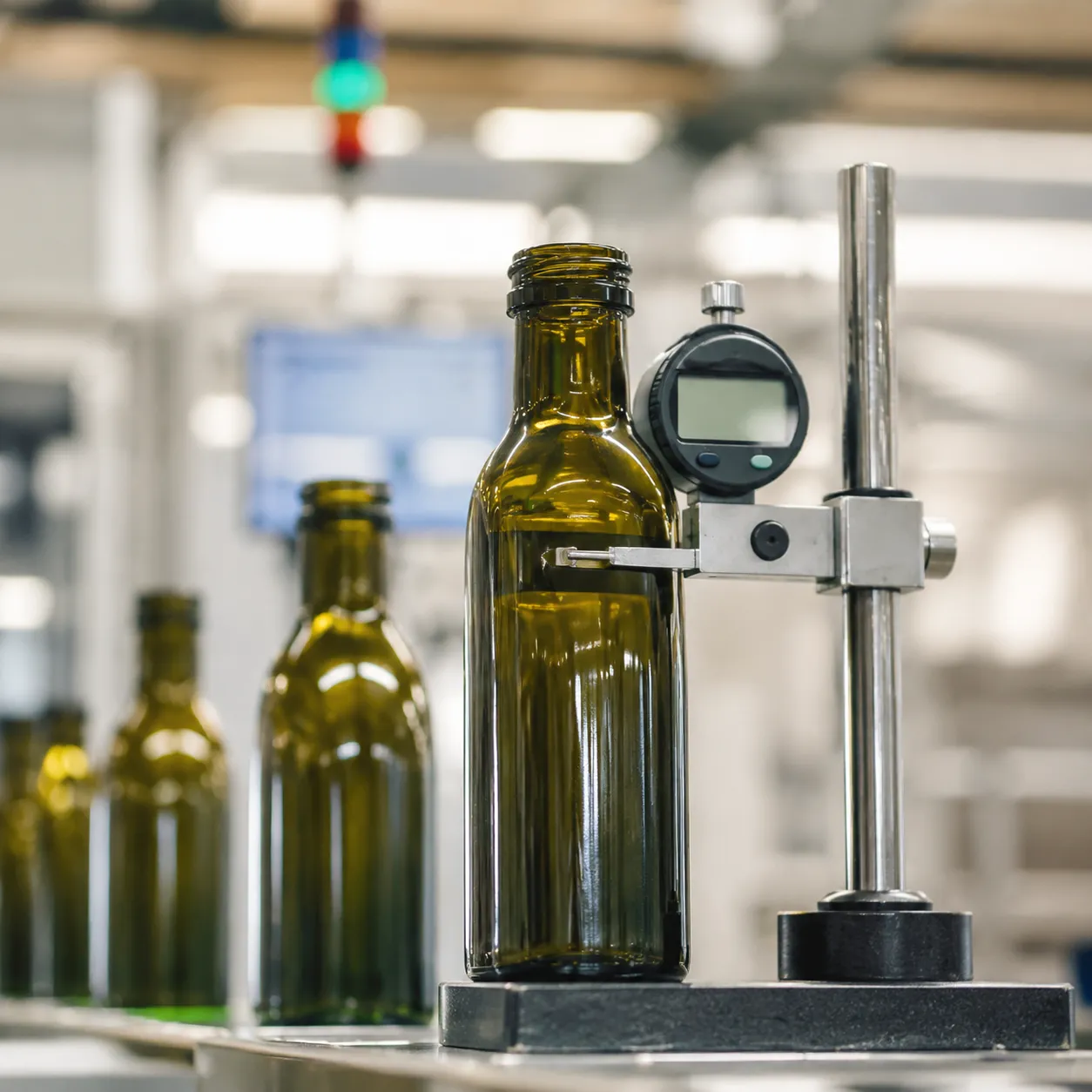
Exact limits vary by mold geometry, fill process, and test protocol, but published container-glass quality programs consistently benchmark sidewall, shoulder, and base zones against these nominal bands.[2]
Beer and Carbonated Beverage Bottle Requirements
Carbonated drinks exert constant internal pressure on container walls. Standard beer bottle dimensions must maintain a uniform minimum wall thickness of at least 2.5 mm to prevent dangerous pressure explosions. The shoulder section and heel are reinforced during our molding process glass run to absorb impacts on automated filling lines.
Wine and Spirit Bottle Thickness Variations
Wine and liquor bottles generally feature a heavy wall design, often ranging from 3.0 mm to over 5.0 mm. Since these beverages are still rather than carbonated, the thickness focuses on mechanical strength and premium shelf presence. Maintaining a strict blown glass tolerance prevents weak spots in the body, which is crucial for international shipping when liquor bottles are made of glass rather than plastic alternatives.
Pharmaceutical and Cosmetic Glass Container Benchmarks
Safety and precision rule the medical and beauty sectors. Dropper bottles and vials use high-quality soda-lime glass or borosilicate glass with a nominal wall thickness between 1.5 mm and 2.5 mm. These tight tolerances ensure accurate filling volumes and protect sensitive formulas from chemical degradation, making reliable glass inspection an absolute necessity.
Food Jar and Wide-Mouth Container Standards
Commercial glass jars must handle the intense thermal shock resistance required during hot-filling and sterilization processes. Because wide-mouth containers have a larger surface area, the glass distribution must be perfectly balanced. We maintain a standard thickness of 2.0 mm to 3.5 mm to ensure the jar body can handle vacuum sealing without cracking, following the same production process of glass bottles and jars used on our line.
Key Factors Behind Glass Bottle Wall Thickness Standards
Achieving the right glass bottle wall thickness standard isn’t an accident. It depends on several critical variables during production.
The Role of the Manufacturing Process
The choice of molding process directly dictates how evenly glass distributes inside the mold:
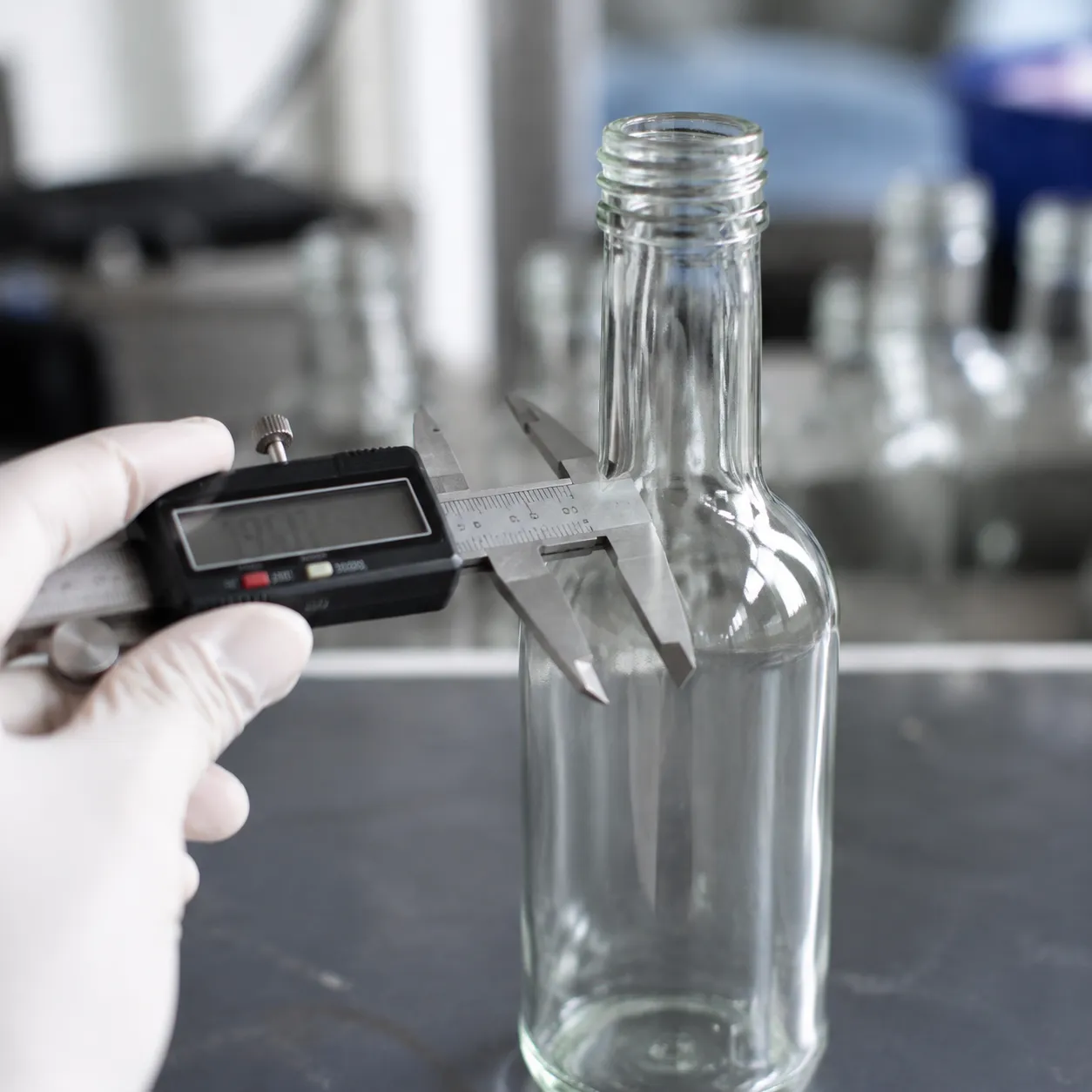
- Blow-and-Blow Process: This method uses compressed air to form both the initial blank shape (parison) and the final container. It is the go-to technique for narrow-neck bottles, but it features higher blown glass tolerance variations.
- Press-and-Blow Process: A metal plunger mechanically presses the glass into the blank mold first, followed by a final air blow. This method offers superior control over nominal wall thickness and is the primary driver behind modern glass lightweighting technology.
Glass Composition and Material Quality
The raw batch recipe dictates the underlying mechanical strength of the container. We primarily utilize high-quality soda-lime glass, which offers the optimal balance of durability, chemical resistance, and formability. Purity matters; any structural impurities or uneven temperature distribution during the melting phase can lead to microscopic weak points, regardless of how thick the walls are.
Design Complexities and Sharp Corners
Complex bottle shapes look great on shelves, but sharp angles, steep shoulders, and rectangular bases naturally create thin spots. During the cooling process, molten glass pulls away from tight corners, reducing the local wall thickness. Good engineering requires smooth transitions in the shoulder section and base to maintain uniform strength. For heavy-duty applications like container candles, specialized geometry is required to prevent heat stress, which is why meeting strict safety standards for wholesale candle glass jars is so critical.
Understanding the Contact Standard and Weight-to-Volume Ratio
The weight-to-volume ratio measures how much glass material is used relative to the bottle’s total capacity:
- Heavy Wall Designs: Traditional premium spirit and champagne bottles use more material to withstand extreme internal pressure and physical impact.
- Lightweight Glass: Modern sustainable packaging uses less raw material but requires high-precision manufacturing to ensure the thinner walls still meet safety regulations.
- The Contact Standard: This refers to the specific areas where bottles bump into each other on a conveyor belt. These high-friction zones require reinforced thickness to absorb everyday operational shock.
Non-Destructive Testing for Glass Bottle Wall Thickness Standards
We do not leave glass bottle wall thickness standard compliance to guesswork. To guarantee every shipment meets strict mechanical strength requirements, our quality control team utilizes a mix of advanced electronic monitoring and physical testing right on the production line.
Non-Destructive Testing Techniques
Keeping the container intact during inspection allows us to test high volumes of inventory efficiently.
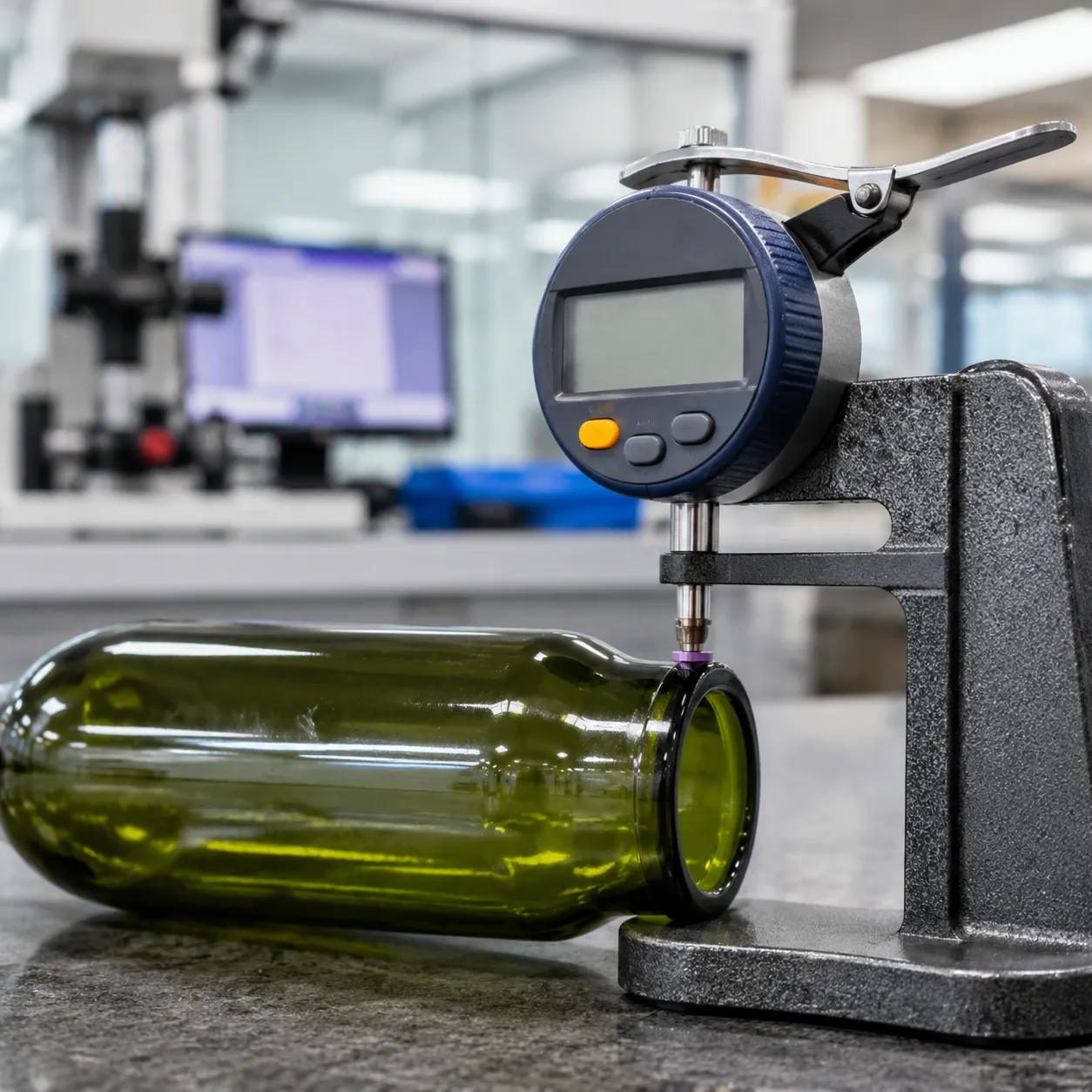
Magnetic Thickness Gauges: We use industry-standard tools like the MagnaMike 8600. By dropping a small magnetic target ball inside the bottle and placing a magnetic probe on the outside, we get instant, precise readings of the nominal wall thickness.
Optical and Ultrasonic Gauges: These devices use light reflection or sound waves to measure the distance between the inner and outer glass walls, mapping the thickness of the shoulder section and body without damaging the product.
Destructive Testing and Sectioning
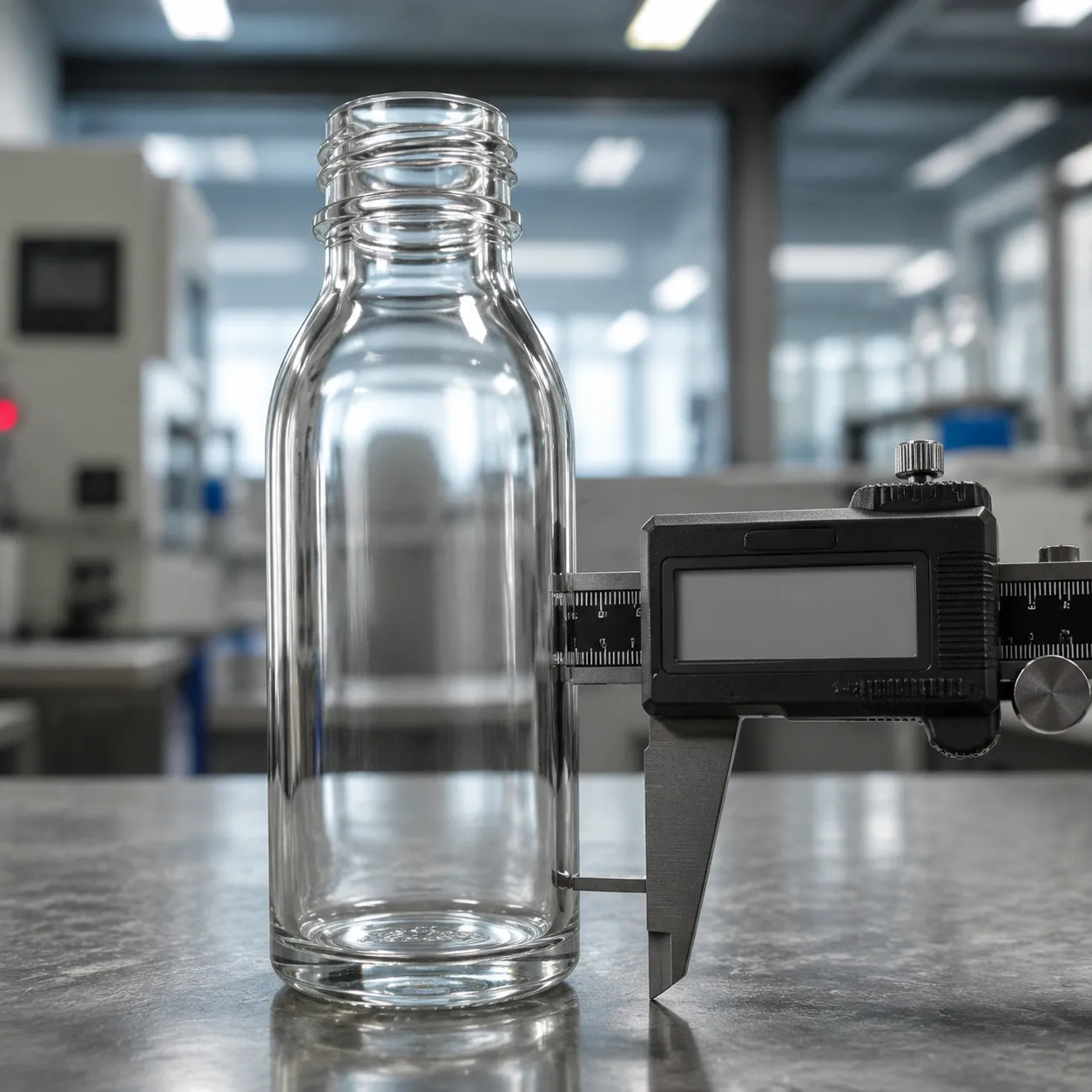
For deeper verification, we perform destructive glass inspection. Technicians physically cut and section the glass containers horizontally and vertically. This allows us to use precision calipers to verify absolute material distribution across the entire profile of the bottle.
Identifying Critical Glass Bottle Defects
Our automated inspection systems and manual checks look for specific structural flaws that compromise packaging safety regulations:
Thin Bottoms: Insufficient glass distribution at the base, making the bottle highly susceptible to drop damage.
Rocker Bottoms: An uneven base distribution that causes the bottle to wobble on conveyors or store shelves.
Birdswings: A critical defect where a thin string of glass spans across the inside of the bottle, creating an immediate safety hazard.
Statistical Process Control and AQL
We manage bulk manufacturing through Statistical Process Control (SPC). Every batch undergoes strict testing based on predefined Acceptable Quality Limits (AQL). If a sample set reveals variations outside the allowable blown glass tolerance, the entire lot is flagged for re-inspection, ensuring only the best glass bottles reach your warehouse.
Common Industry Standards and Regulations for Glass Packaging
Navigating international market requirements means sticking to strict global benchmarks. Our container glass aligns with the main regulatory bodies to guarantee mechanical strength and absolute packaging safety regulations.
ASTM International Standards for Glass Containers
We utilize ASTM International standards to benchmark the physical properties of our production line. These testing protocols dictate how we measure nominal wall thickness, thermal shock resistance, and internal pressure strength. Following ASTM ensures that every production lot—from heavy wall spirit bottles to standard beer bottles—can withstand the mechanical stresses of automated filling lines without micro-cracking.[2]
ISO Certifications for Glass Quality Control
Our factories operate under strict ISO certifications to maintain consistent blown glass tolerance levels. ISO 9001 and specific container glass standards guide our statistical process control. By auditing our molding process glass consistency and tracking acceptable quality limits (AQL), we minimize glass bottle defect inspection failures and ensure our bulk wholesale shipments meet global quality expectations.[1]
FEVE Guidelines for European Glass Packaging
For clients targeting the European market, we manufacture in compliance with FEVE (European Container Glass Federation) guidelines. These rules focus heavily on environmental impact, glass lightweighting technology, and consumer safety. FEVE standards help us balance material reduction with mechanical durability, ensuring that our lightweight glass designs never compromise structural integrity during transport. If you are importing specialized small glass candy jars or high-volume food containers, meeting these European metrics is essential for smooth customs clearance and retail acceptance.
FAQs About Glass Bottle Wall Thickness Standards
What is the minimum recommended wall thickness for a standard beer bottle?
For a standard 12 oz carbonated beer bottle, the industry baseline for minimum wall thickness typically sits in the 2.5 mm to 3.0 mm range for the body, with reinforced heel and shoulder section zones to meet common beer bottle dimensions and internal pressure limits during pasteurization and transit.[2]
How does thermal shock resistance relate to glass thickness?
Thermal shock resistance drops as glass thickness increases. While a heavy wall provides excellent mechanical strength against impacts, thick glass expands unevenly when exposed to rapid temperature changes, causing internal stress. Our soda-lime glass manufacturing processes carefully balance nominal wall thickness to ensure the containers can withstand sudden temperature drops during filling and washing.
Why do some parts of a glass bottle feel thinner than others?
During the molding process, parison distribution isn’t always perfectly uniform. The shoulder section and corners of a bottle naturally stretch more during the blow-and-blow process, creating slightly thinner zones compared to the heavy base. Precise quality control and blown glass tolerance monitoring ensure these variations stay well within safe, certified margins.
Can lightweighting a glass bottle compromise its safety standards?
Not if it is done right. Modern glass lightweighting technology relies on the Press-and-Blow manufacturing method to create an incredibly uniform wall thickness rather than just making the glass thinner everywhere. This allows us to reduce overall container weight and shipping costs without sacrificing the structural integrity, pressure resistance, or packaging safety regulations required for wholesale commercial distribution.