
Mold on glass bottles is more common than most people expect—even though glass itself is non-porous. Spores feed on dust, fingerprints, or organic residue from beverages like coffee, syrup, or maple syrup, then multiply when moisture and stagnant air stay trapped inside sealed bottles or glass jars. This guide explains growth triggers, health risks, cleaning and sanitizing methods, and maintenance habits that keep daily drinkware and bulk inventory mold-free.
Can Mold Grow on Glass Bottles?
As a premier glass bottles manufacturer and supplier, we often encounter a critical question from global brands and distributors: can mold grow on glass bottles? The short answer is yes. While glass is inherently non-porous and resistant to chemical degradation, it is not entirely immune to environmental contamination. Understanding how fungus interacts with glass surfaces is essential for proper bulk inventory maintenance and packaging safety.
The Science Behind Mold Growth on Glass
Glass itself is an inorganic material, meaning it does not provide the nutrients required to feed a fungus. However, mold spores are microscopic, airborne, and virtually omnipresent. When these spores land on a glass surface, they utilize microscopic layers of dust, fingerprints, or product residue as a food source.
Because glass provides an excellent structural foundation and high thermal mass, it can hold ambient moisture on its surface, allowing spores to germinate if environmental conditions align.[2]
What Triggers Mold Inside Glass Containers?
Fungal development inside high-quality glass jars and bottles relies on a specific combination of factors:
- Residual Organic Matter: Microscopic traces of sugar, coffee, syrup, or maple syrup left behind during packing or washing.
- Stagnant Moisture: Even a single drop of trapped water inside a sealed wholesale bulk shipment can trigger spore activation.
- Lack of Airflow: Sealed environments with high relative humidity create a greenhouse effect inside the container.
Common Signs of Mold in Glass Bottles
Detecting contamination early ensures the integrity of your supply chain before filling. Look for these distinct signs:
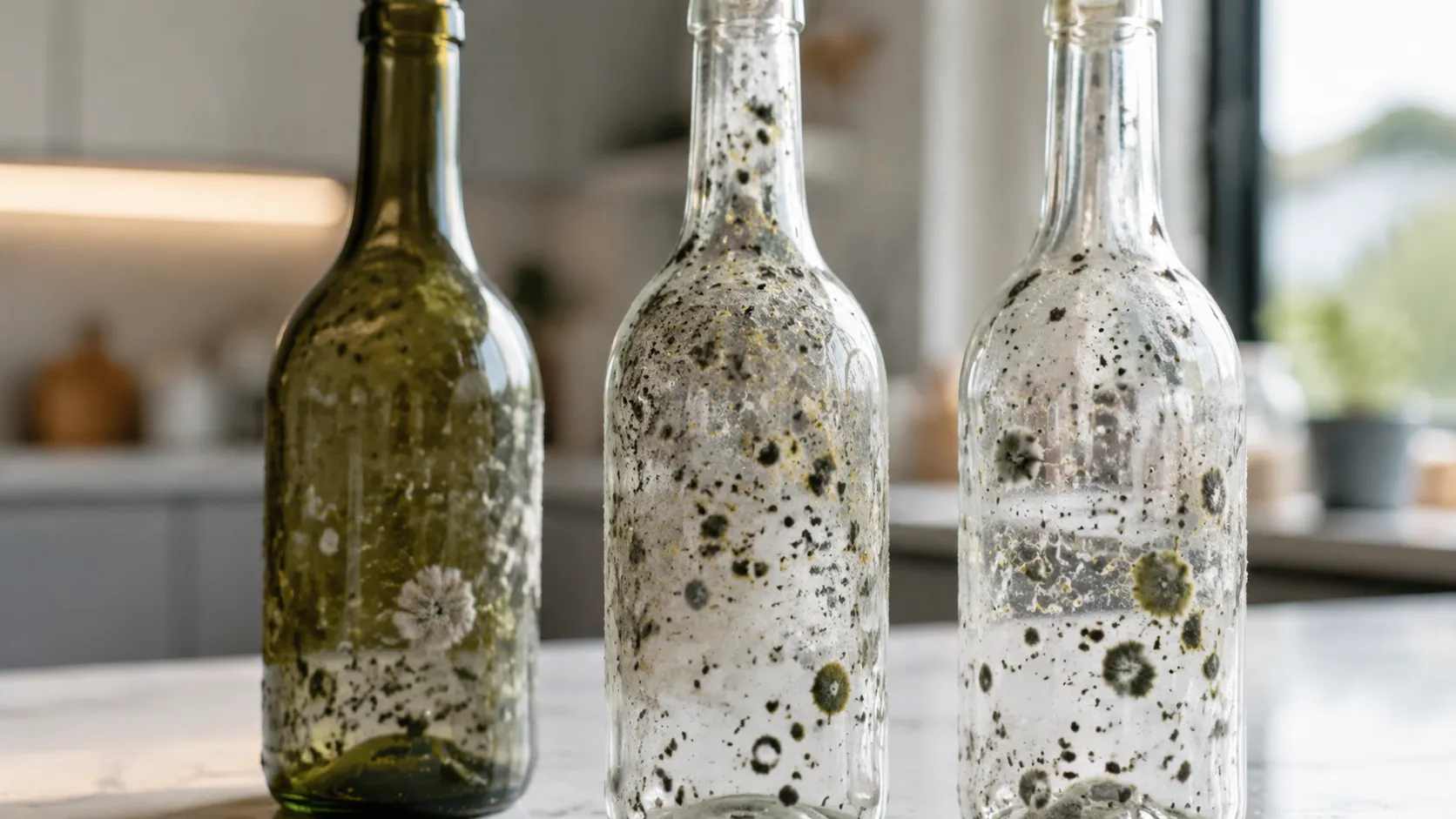
- Fuzzy Patches: White, green, black, or grey spots clinging to the inner walls or base of the bottle.
- Discoloration: A cloudy, slimy film or dark rings forming around the neck and thread areas.
- Persistent Odor: A musty, earthy, or damp smell immediately noticeable upon opening the bottle cap.
Choosing the best glass bottles engineered during high-temperature glass manufacturing minimizes surface imperfections where spores anchor, ensuring a cleaner, safer packaging solution for the global market.
Why Mold Grows on Glass Bottles and Beverage Containers
The Role of Leftover Liquids and Organic Matter
Mold cannot grow on bare, clean glass itself, but it thrives on the residues left behind. When you use reusable bottles for coffee, sports drinks, juice, or even plain water, tiny traces of organic matter stay trapped inside. As a premium glass bottles manufacturer and supplier, we know that even microscopic backwash or a thin layer of dried sugar creates the perfect feeding ground for fungus. Over time, these leftovers ruin the pristine quality of your best glass bottles if they are not cleaned thoroughly.
How Moisture and Air Exposure Fuel Fungal Growth
Fungus needs two primary elements to colonize a container: moisture and oxygen. When you leave a bottle capped with a small puddle of water inside, you create a high-humidity greenhouse. Trapped air provides the oxygen needed for spores to multiply. In the glass manufacturing industry, we focus heavily on creating tight seals, but if you lock moisture inside during daily maintenance, mold will inevitably form. Proper airflow and complete drying are essential to keeping your bulk inventory or daily-use bottles completely sanitary.[2]
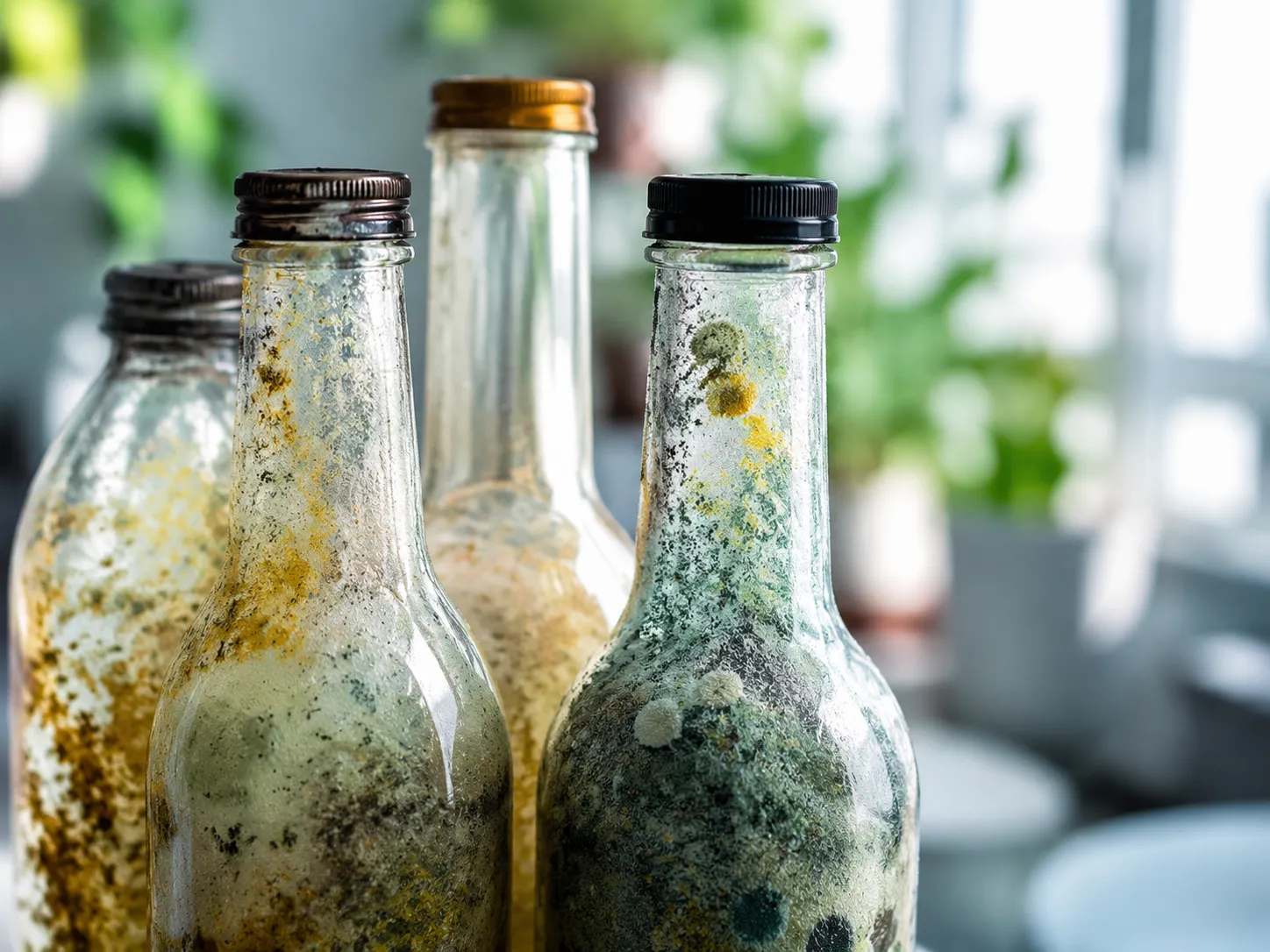
Does Bottle Color Affect Mold Development?
Bottle color plays a surprising role in how quickly mold develops. Darker glass colors, like amber or dark green, block ultraviolet (UV) light. While this is excellent for protecting sensitive beverages like beer or cold brew from light degradation, it also shields developing fungi from natural UV rays that would otherwise slow them down. For clear glass jars or transparent containers, visibility is higher, making it easier to spot issues early. If you buy wholesale for commercial packing, understanding how light interacts with your bottle color helps you establish better storage and sanitation guidelines. Compare tint options in our guide to amber vs clear glass bottles, and see why all the liquor bottles are made up of glass and not plastic for broader material context.
The Health Risks of Using Moldy Glass Bottles
Potential Dangers of Drinking from Fungal Contaminated Bottles
Drinking from glass bottles contaminated with mold on glass bottles is a serious health hazard. When fungus takes hold inside a container, it releases microscopic spores and potentially dangerous mycotoxins into your beverages.
Whether you use these containers for water, juice, or homebrewed syrup, ingesting these toxins can disrupt your digestive system and compromise your immune health. Over time, utilizing poorly maintained bottles allows bacteria and fungi to build up a resilient biofilm, making the container unsafe for daily use.[1]
Symptoms of Mold Exposure from Reusable Bottles
Exposure to a moldy bottle can trigger immediate or chronic health issues, especially for individuals with heightened sensitivities or respiratory conditions.
- Respiratory Distress: Inhaling spores while drinking can cause coughing, wheezing, and nasal congestion.
- Digestive Issues: Consuming fungal toxins often leads to nausea, stomach cramps, and diarrhea.
- Allergic Reactions: Skin rashes, itchy eyes, and throat irritation are common responses to fungal contact.
The same diligence applies when assessing chipped glassware—see our guide on why drinking from a chipped glass is dangerous—along with keeping containers completely free of organic growth.
How to Effectively Clean and Sanitize Moldy Glass Bottles
If you spot mold on glass bottles, you need to act fast. Glass is a non-porous material, which means fungus cannot penetrate the material itself, but a simple rinse will not eliminate the microscopic spores. To safely reuse your bottles, you must thoroughly destroy the fungal colony and sanitize the surface.
Step-by-Step Deep Cleaning Guide
- Rinse and Waste Removal: Flush out any leftover liquids or visible debris with hot water. Do not use cold water, as sudden temperature drops can cause thermal shock.
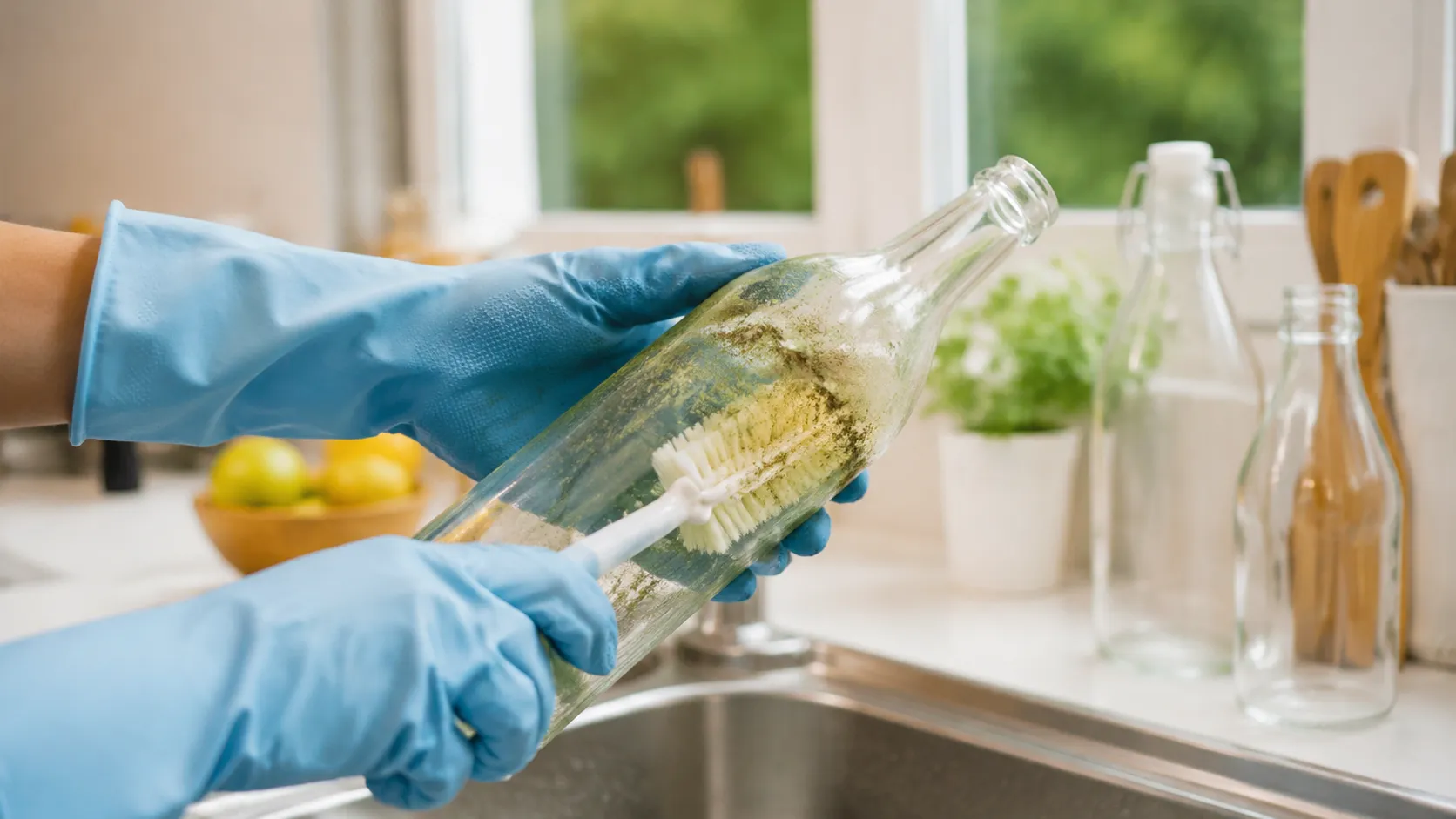
- Mechanical Scrubbing: Apply a dedicated bottle brush to scrub the inner walls, focusing heavily on the bottom and neck creases where grime settles.
- Soaking: Immerse the glassware completely in a cleaning solution for at least 20 to 30 minutes.
- Rinse and Air Dry: Rinse thoroughly with clean water. Invert the containers on a clean rack to dry completely, ensuring no moisture remains trapped inside.
Natural Remedies: Vinegar, Baking Soda, and Boiling Water
For standard food storage or everyday beverage containers, natural sanitizers work exceptionally well without leaving chemical residues.
- White Vinegar: The acetic acid in vinegar is a proven killer of standard household fungus. Fill the bottle with undiluted white vinegar and let it sit for an hour.[3]
- Baking Soda Paste: Excellent for scrubbing away stubborn, dried-on mold patches. Mix it with a small amount of water, scrub with your brush, and rinse.
- Boiling Water: High temperatures sanitize effectively. If you are prepping heat-resistant glass jars for candles or specialty beverage bottles, ensuring your glassware can withstand extreme heat allows you to submerge them safely in boiling water for 10 minutes to eliminate spores.
Commercial Sanitizing Methods for Homebrewing and Reusable Bottles
When handling large volumes for wholesale supply, commercial distribution, or precise homebrewing, natural remedies might not meet strict hygiene thresholds.
| Sanitizer Type | Best For | Application Method |
|---|---|---|
| No-Rinse Acid Sanitizers (Star San) | Homebrewing & Beverage Packing | Soak for 1–2 minutes; drain without rinsing to maintain a sterile environment. |
| Powdered Brewery Wash (PBW) | Heavy Organic Residue & Dried Syrup | Soak for 30 minutes in warm water to break down tough proteins and mold mats. |
| Isopropyl Alcohol (70%) | Quick Sanitation & Cap Sterilization | Spray thoroughly or submerge components; allow to air dry completely. |
We implement strict quality controls during glass manufacturing. For businesses buying in bulk, maintaining a rigorous sanitization pipeline ensures your glass jars and beverage containers remain completely safe for consumers.
How to Prevent Mold on Glass Bottles
Preventing mold on glass bottles comes down to a strict hygiene and storage routine. Proactive care is the best way to stop fungus from ruining your inventory or daily drinkware.
Proper Washing and Drying Techniques After Every Use
Residual moisture is the primary trigger for mold spore germination. To protect your bottles, implement these strict cleaning protocols:
- Immediate Rinsing: Rinse containers right after use to eliminate organic residues from liquids like syrup, juice, or coffee.
- Thorough Air-Drying: Invert the washed containers on a clean, slatted drying rack. Good air circulation is vital to ensure no water droplets remain trapped inside.
- Avoid Early Sealing: Never snap a cap onto a bottle that still feels humid inside, as trapped moisture creates a perfect fungal breeding ground.
Ideal Storage Conditions for Empty Glass Containers
Whether you manage a large wholesale stock or store glass jars at home, environment controls matter.
- Low Humidity: Store empty glass in a dry, temperature-controlled environment away from steam and damp basements.
- Inverted Placement: Store empty containers upside down to prevent airborne spores and dust from settling inside.
- Breathable Packing: When storing bulk shipments long-term, avoid completely airtight plastic wrapping unless the glass has gone through a complete industrial drying cycle during glass manufacturing.
Choosing the Right Bottle Caps and Seals to Prevent Fungal Growth
The closure system you choose plays a massive role in keeping mold at bay. Poorly fitted seals trap moisture against the glass rim, inviting mold growth.
- Airtight Gaskets: Opt for high-quality silicone or plastisol liners that do not absorb liquids.
- Secure Closures: Utilizing leak-proof screw caps creates a dependable barrier against outside air and humidity, cutting off the oxygen supply that mold needs to thrive.
- Separate Maintenance: Always remove rubber seals and caps during the washing process, dry them completely as individual pieces, and only reassemble them when 100% moisture-free.