Why Standard Glass Fails
The Science of Thermal Cracking
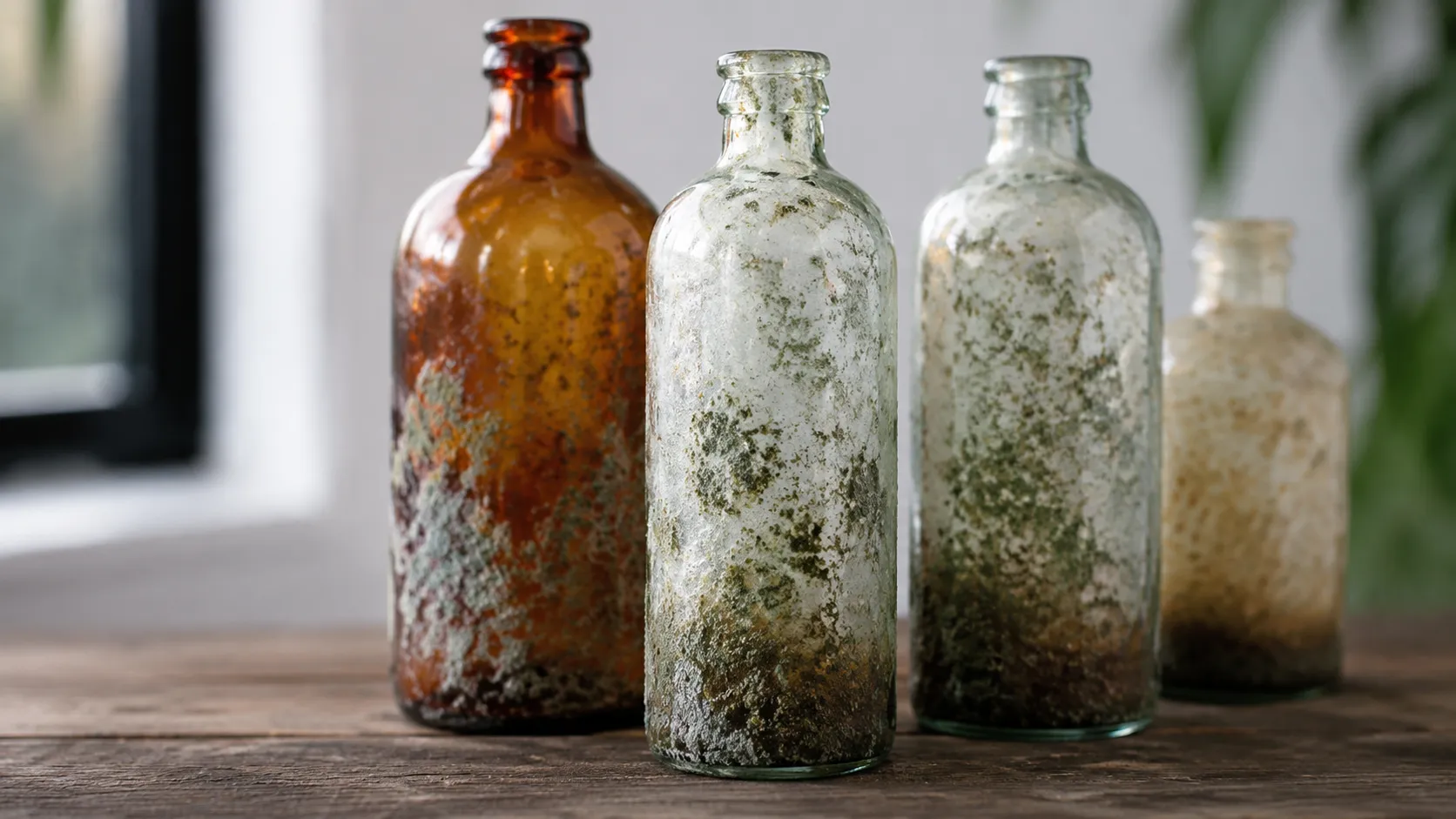
Ever had a candle jar suddenly crack or shatter during a burn? It is a nightmare for candle brands and a massive safety hazard for consumers. When we supply bulk candle jars wholesale, the number one question we get from creators is how to prevent these terrifying container failures. To fix the problem, we have to look at why everyday glass simply cannot handle the heat of a burning wick.
Understanding Thermal Shock
Thermal cracking happens because of a phenomenon known as thermal shock. When a candle is lit, the flame creates intense, localized heat at the top of the vessel, while the bottom and outside of the jar remain cool.
This extreme temperature difference forces the inside of the glass to expand rapidly while the outside stays rigid. Standard glass cannot handle that structural tug-of-war, leading to immediate stress fractures.
The Myth of “Thicker Glass Equals Safer Jars”
A common misconception in B2B glassware sourcing is that thick glass equals a stronger, safer jar. In reality, the exact opposite is often true.
- The Trap of Thickness: Extra thick glass actually increases the risk of thermal shock.
- Heat Transfer Delay: Heat takes longer to travel through a thick wall. This creates a wider temperature gap between the inside and outside surfaces.
- The Goal: True heat-safe candle vessels rely on uniform wall thickness rather than sheer bulk, allowing heat to distribute evenly.
Coefficient of Thermal Expansion (CTE)
To guarantee true glass thermal stability, we must measure the material’s Coefficient of Thermal Expansion (CTE). This rate dictates exactly how much the glass expands per degree of temperature rise.
| Glass Type | CTE Rating | Thermal Shock Resistance | Best Used For |
|---|---|---|---|
| Standard Soda-Lime Glass | High | Low (Fails under sudden heat) | Food storage, cosmetic glass cream jars wholesale |
| Annealed Glass Vessels | Medium | Moderate (Requires precise cooling) | Standard, controlled candle pouring |
| High Borosilicate Glass Jars | Low | Exceptionally High (Resists cracking) | Premium, high-heat luxury candles |
Standard soda-lime glass has a high CTE, meaning it moves and expands too much when heated, making it a major risk for candle container failure points. For a candle to survive the intense heat of a molten wax pool, the glass must feature a low CTE and a proven thermal shock resistance rating.
Industry Safety Standards for Wholesale Candle Glass Jars: Preventing Thermal Cracking
When sourcing bulk candle jars wholesale, you cannot afford to guess on safety. Every vessel you sell or fill must withstand intense temperature shifts without structural failure. To guarantee this resilience, you must demand that your wholesale suppliers strictly adhere to recognized thermal safety benchmarks.
ASTM F2179: The Gold Standard Explained
The definitive benchmark for candle container safety is ASTM F2179 (Standard Specification for Simulated Candle Glass Containers’ Thermal Shock Resistance). This standard ensures that heat-safe candle vessels can endure rapid temperature changes without breaking.
During testing, the glass is subjected to a sudden thermal shock differential—typically around 90°F (50°C)—to mimic the real-world conditions of a burning candle. Passing this test proves the glass possesses the structural integrity required to handle uneven heat distribution as the wax burns down. When vetting a B2B partner, always demand certified testing reports verifying that their batches meet or exceed ASTM F2179 requirements.
Complementary Frameworks to Know
Beyond ASTM F2179, a comprehensive quality profile relies on additional manufacturing guidelines to ensure global compliance and product safety:
- National Candle Association (NCA) Guidelines: These industry standards outline specific container safety rules to eliminate candle container failure points, focusing on design stability and heat resistance.
- ASTM F2147: This standard covers the practices for qualifying candle designs, ensuring the vessel and the burning elements work safely together.
- AQL (Acceptable Quality Limit) Standards: A strict quality assurance AQL standard ensures that random sampling during mass production catches micro-cracks or uneven walls before the batch leaves the factory floor.
Securing certified glassware from a verified supplier guarantees your brand stays protected from liability while delivering a premium, reliable product to your customers.
Evaluating Glass Types: Borosilicate, Annealed, vs. Tempered Glass

Choosing the right material for bulk candle jars wholesale production determines whether your product safely burns or dangerously shatters. Not all glass is created equal, and understanding how different glass types handle thermal stress is vital for your brand’s reputation.
Annealed Glass
Annealed glass undergoes a controlled cooling process that relieves internal stresses. Standard annealed glass vessels are the industry norm for typical container candles. When manufactured with uniform wall thickness, high-quality annealed glass handles the gradual temperature rise of a burning candle exceptionally well, making it a reliable and cost-effective choice for standard candle lines.
High Borosilicate Glass Jars
For premium, high-heat applications, high borosilicate glass jars offer the ultimate protection against thermal shock. By incorporating boron trioxide, this glass achieves an incredibly low coefficient of thermal expansion (CTE). It can withstand extreme temperature fluctuations without breaking, which is why we utilize similar high-end engineering for our heat-resistant 9oz straight cylinder glass candle jars. If your candles feature multiple wicks or high fragrance loads that generate intense heat, borosilicate provides the highest thermal stability testing ratings available.
Tempered Glass (The Hidden Risk)
While tempered glass is incredibly strong against physical impacts, it represents a hidden risk in candle manufacturing. Tempered glass exists in a state of high internal tension. If a microscopic defect experiences prolonged heat exposure from a misplaced wick, the glass can fail catastrophically—shattering into thousands of tiny pieces. For candle containers, the predictable thermal shock resistance rating of annealed or borosilicate glass is always preferred over tempered glass.
Cross-Industry Crossover
The engineering behind heat-safe candle vessels shares a direct connection with other heavy-duty glassware industries. The same thermal stability required to keep a candle from cracking is utilized in commercial food service and premium cosmetic packaging.
| Glass Type | Thermal Shock Resistance | Best Used For | Risk Level for Candles |
|---|---|---|---|
| Annealed Glass | Moderate to High | Standard Everyday Candles, Mason Jars | Low (With uniform walls) |
| Borosilicate Glass | Exceptional | Luxury, Multi-Wick, High-Heat Candles | Lowest |
| Tempered Glass | Poor (Under Heat) | Windows, Safety Screens | High (Risk of explosive shattering) |
How to Screen Bulk Glass Jar Batches
B2B Quality Control Checklist
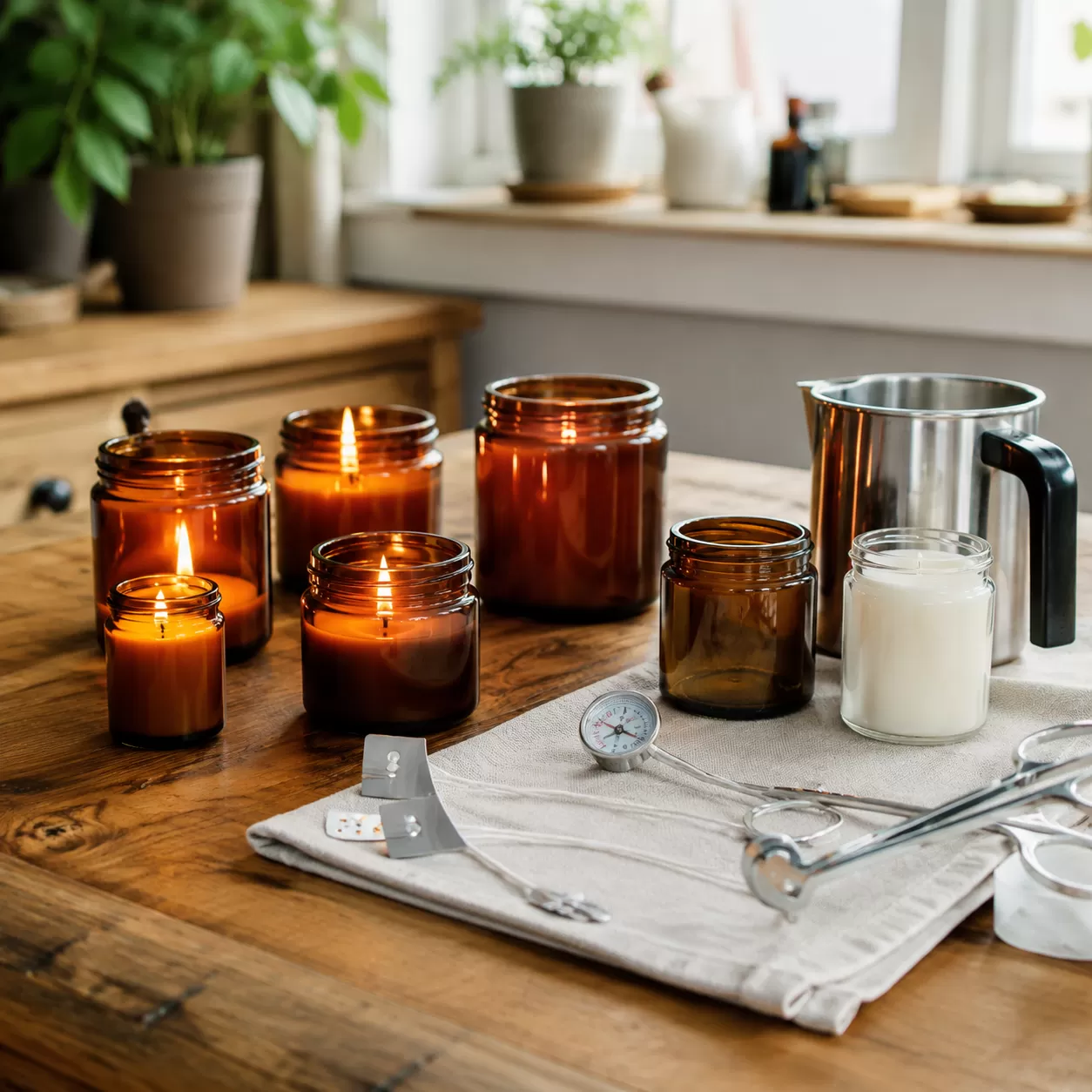
When you’re sourcing bulk candle jars wholesale, you can’t afford to guess at the quality. A single hairline fracture in a batch of 10,000 units isn’t just a defect; it’s a liability. We utilize a rigorous screening process to ensure every vessel that reaches your production line is structurally sound and ready for high-heat applications.
Acceptable Quality Limit (AQL) Standards
In the world of B2B glassware sourcing, we rely on AQL standards (typically AQL 1.5 or 2.5) to determine the “pass” or “fail” status of a shipment. This statistical sampling method ensures that the heat-safe candle vessels you receive meet international safety benchmarks without requiring you to inspect every single piece manually.
- Critical Defects: Zero tolerance. This includes cracks, sharp edges, or unstable bases.
- Major Defects: Bubbles larger than 2mm or significant wall thickness variations that affect thermal stability.
- Minor Defects: Small surface scuffs or cosmetic seeds that don’t compromise safety.
Visual Verification Protocols
Before these jars hit the packing line, they undergo a series of visual checks. We look for uniform wall thickness, as “thin spots” are the primary failure points during the wax cooling process. Using high-intensity lighting, inspectors check for:
- Internal Stresses: Identifying “stones” or impurities embedded in the glass.
- Rim Integrity: Ensuring the mouth of the jar is perfectly level for a secure lid fit.
- Clarity: Verifying the aesthetic consistency expected for cosmetic glass cream jars wholesale and premium candle lines.
Ensuring Structural Harmony
A safe jar is a balanced jar. Structural harmony refers to the even distribution of glass weight from the base to the shoulder. If the bottom is too heavy compared to the sides, the borosilicate glass vs soda lime debate becomes irrelevant because the physical tension will cause a crack regardless of the material.
| Checkpoint | Requirement | Impact on Safety |
|---|---|---|
| Verticality | Must not lean > 1.5° | Prevents uneven heat pooling from the wick |
| Base Flatness | No “rocking” on flat surfaces | Ensures stability during the pour and burn |
| Annealing Grade | High (Internal stress-free) | Vital for thermal shock resistance rating |
By sticking to these strict Quality assurance AQL standards, we eliminate the “weak links” in your supply chain, allowing you to focus on branding while we handle the technical safety.
Best Practices to Prevent Container Failure During the Candle-Making Process
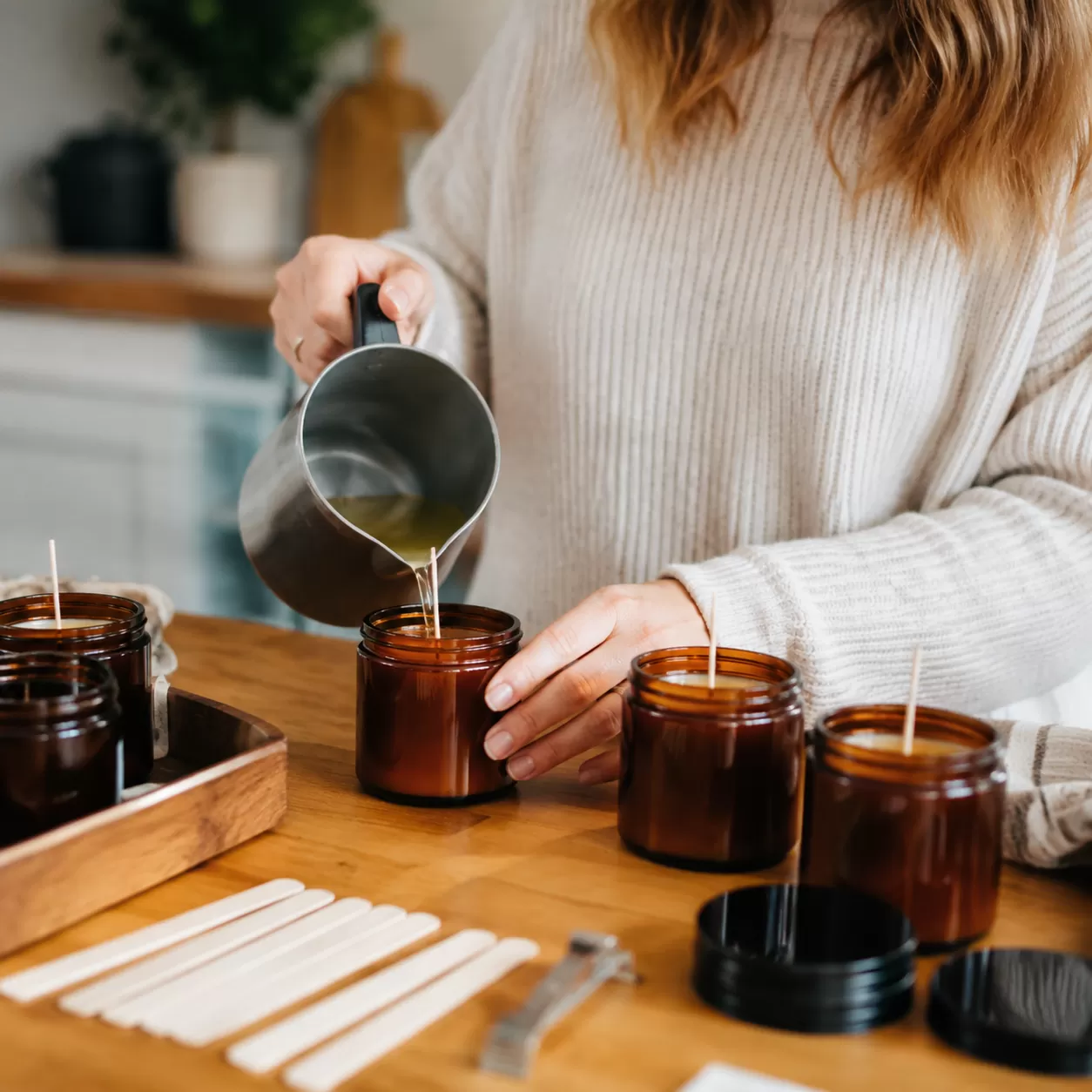
Even the highest quality bulk candle jars wholesale can fail if the pouring and curing process strains the glass. Preventing thermal cracking requires strict adherence to temperature controls and structural harmony between the wax, wick, and vessel. As a dedicated manufacturer, we know that premium glassware is only half the equation; correct production techniques eliminate candle container failure points entirely.
Pre-Pour Inspection
Thermal shock often triggers at the site of microscopic, invisible damage. Before any wax touches the production line, every single vessel must undergo a rigorous check.
- Thermal Shock Prep: Pre-heat your glass vessels to 110°F–120°F (43°C–49°C) before pouring. Pouring hot wax into a cold glass jar creates an immediate temperature differential that can trigger thermal cracking.
- Micro-Crack Detection: Inspect jars for hairline scratches, chipping, or air bubbles. Even a tiny blemish acts as a stress concentrator when the glass expands.
- Surface Contamination: Ensure jars are completely dry and free of debris. Moisture trapped between the wax and the glass walls creates uneven heat pockets during the burn cycle.
Wick Architecture Alignment
Proper wick selection is the most critical factor in maintaining glass thermal stability testing benchmarks during consumer use. An improperly sized wick transforms a safe jar into a hazard.
- Perfect Centering: A misplaced wick allows the flame to sit too close to one side of the glass. This creates localized overheating, violating National Candle Association guidelines for safe outer wall temperatures.
- Melt Pool Management: Size the wick so the melt pool reaches the edge of the jar within 2 to 3 hours. If the wick is too large (over-wicked), it generates excessive heat that exceeds the thermal shock resistance rating of the vessel.
- Multi-Wick Spacing: For larger glass Mason jars bulk orders, space multiple wicks evenly to distribute thermal energy uniformly across the diameter, preventing localized hot spots.
Wax and Fragrance Load Calculation
The chemical makeup of your candle directly impacts how heat transfers to the glass walls.
| Formulation Factor | Impact on Glass Integrity | Safe Production Standard |
|---|---|---|
| Fragrance Load | Excess oil pools at the bottom or sides, creating localized flash fires. | Keep fragrance oil loads between 6% and 10% maximum. |
| Pour Temperature | Excessive heat spikes cause sudden expansion of the jar base. | Pour wax at the lowest possible temperature recommended by the wax supplier (typically 135°F–160°F). |
| Cooling Rate | Cooling candles too fast in a cold room induces structural stress in both wax and glass. | Cure candles in a temperature-controlled environment (70°F–75°F) with space between jars for uniform airflow. |
By mastering these production variables, you protect your brand from liabilities and ensure our high-quality glass vessels perform flawlessly from the first light to the very end of the burn.
Sourcing Safe, Premium Wholesale Glass Vessels with Reihey
The Reihey Assurance
At Reihey, we do not compromise on the structural integrity of your inventory. As a leading manufacturer, we engineer our bulk candle jars wholesale to withstand intense thermal stress without cracking. Every batch undergoes strict glass thermal stability testing to ensure it meets and exceeds global safety protocols. When you partner with us, you are buying directly from the source—eliminating middlemen and securing premium, heat-safe candle vessels that protect your brand identity and your customers.
Versatility for Brands
We understand that modern brands require a diverse product ecosystem to scale. Beyond our core line of heavy-duty candle containers, our manufacturing capabilities extend across multiple glassware categories to streamline your B2B glassware sourcing.
- Candle Lineup: Classic glass Mason jars bulk orders, modern thick-walled vessels, and custom tinted containers.
- Beauty & Wellness: Premium cosmetic glass cream jars wholesale selections designed for high-end formulations and airtight preservation.
- Beverage & Novelty: High-clarity specialty glassware, including durable shot glasses built for commercial hospitality environments.
Partnering for Scale
Growing your brand requires a reliable supply chain that keeps pace with your volume. Reihey provides the manufacturing muscle needed for seamless scaling, offering flexible quality assurance AQL standards and predictable lead times. We combine localized market insights with world-class production efficiency, ensuring your inventory remains stocked, compliant, and ready for retail shelves.