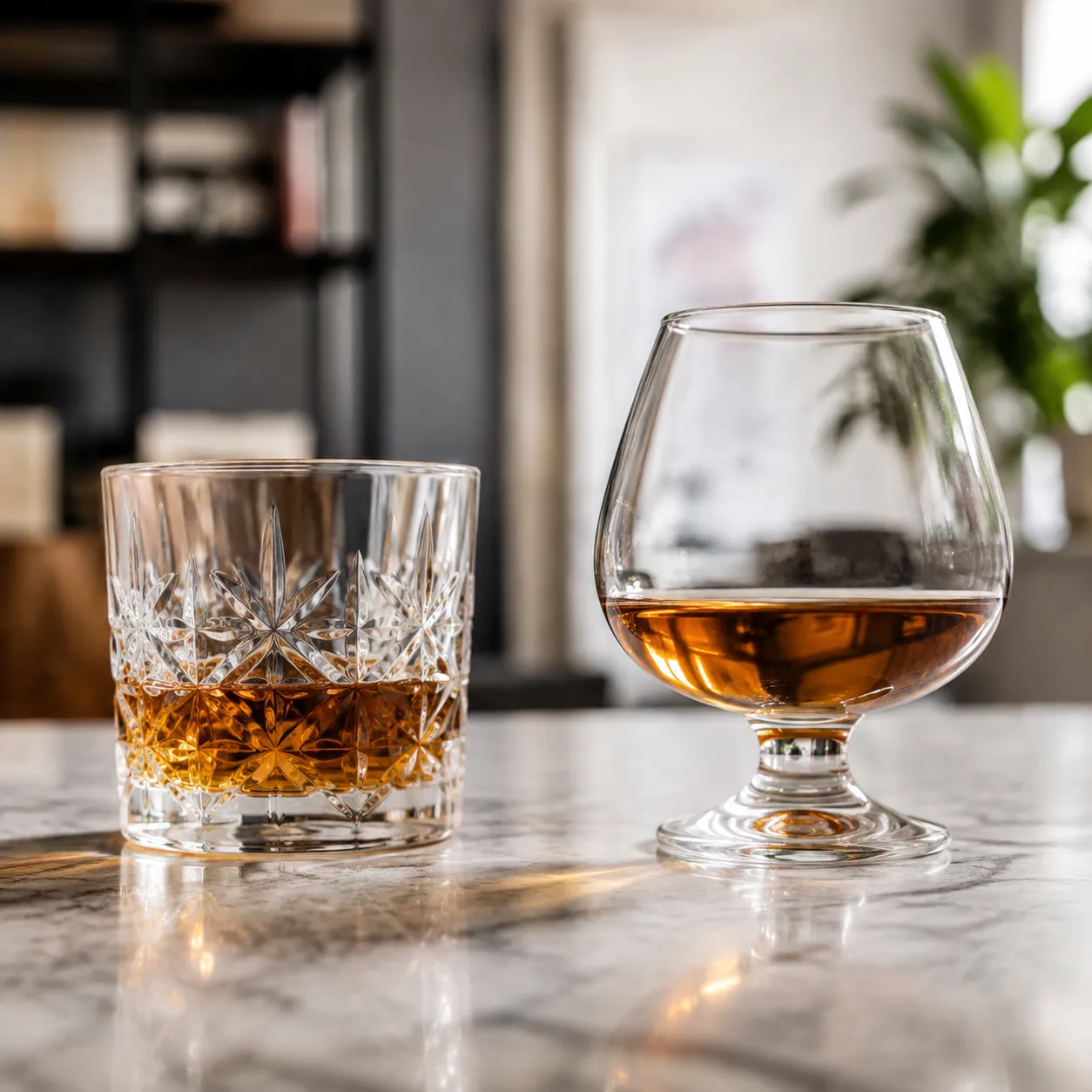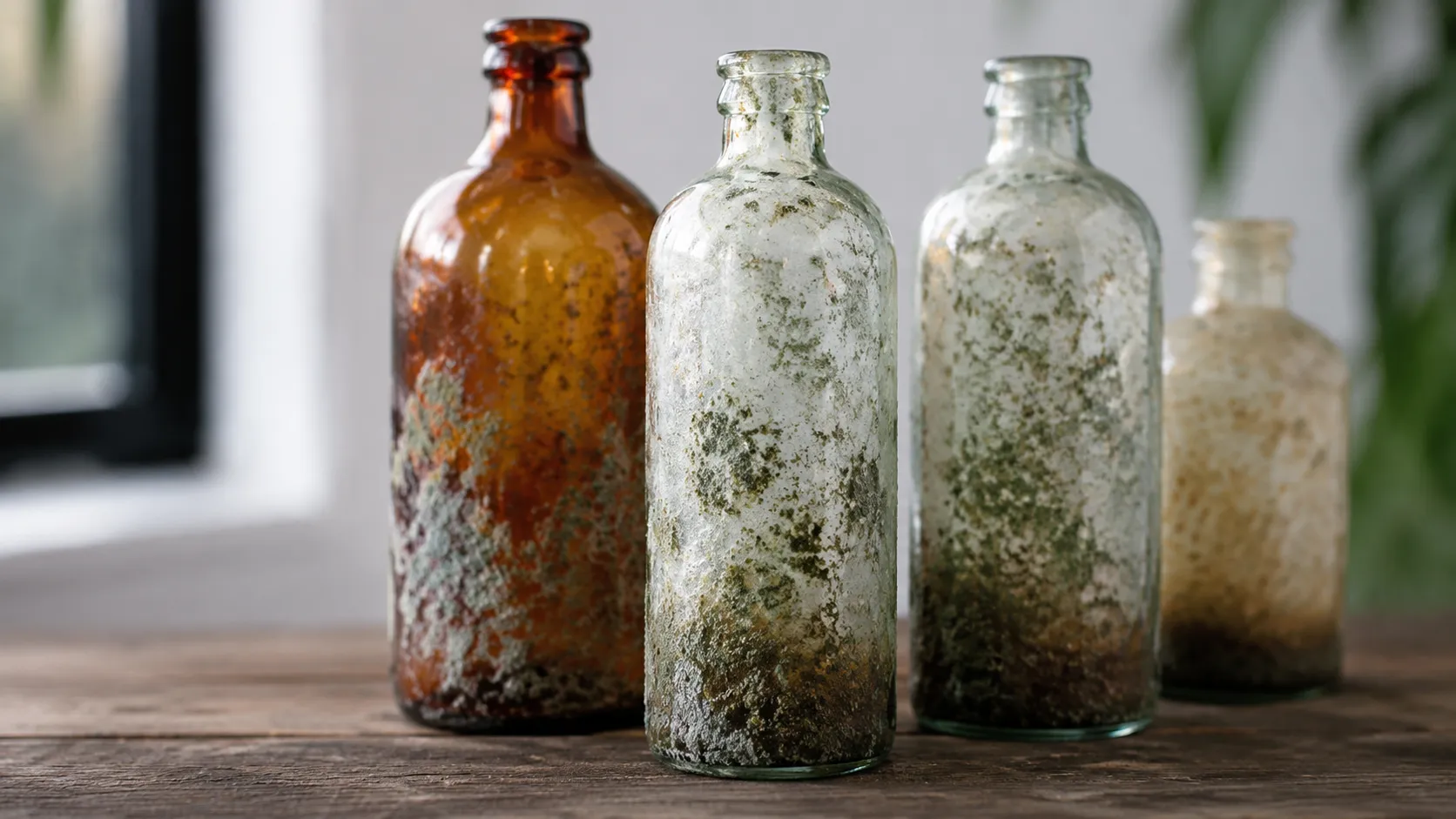
Amber vs clear glass bottles trade off UV protection against product visibility: amber filters light exposure to extend shelf life for light-sensitive formulas, while clear flint glass showcases color for retail packaging. We are a glass bottles manufacturer and supplier helping brands choose the right tint for essential oils, beer, serum lines, and wholesale bulk runs—covering specs, industry use cases, and when secondary packaging can bridge a clear-glass design.
Introduction to Amber and Clear Glass Bottles
Choosing the right packaging is a critical decision that directly impacts product integrity, brand perception, and shelf life. The debate between amber vs clear glass bottles comes down to balancing functional protection with visual appeal. Selecting the best glass bottles for your inventory requires a clear understanding of how these materials interact with light, aesthetics, and consumer expectations.
What is Amber Glass?
Amber glass is a specialized, iron- and sulfur-rich borosilicate or soda-lime glass that features a distinct, rich brown tint.
- Primary Function: Provides superior uv protection for light-sensitive compounds.
- Key Benefit: Prevents chemical degradation, preserving the molecular stability of the contents.
- Common Formats: Widely manufactured as dropper bottles, medicine vials, and beverage containers for wholesale distribution.
What is Clear Glass?
Clear glass, often referred to as flint glass, is a highly transparent material valued for its pristine clarity and flawless transmission of light.
- Primary Function: Maximizes product visibility and highlights the natural color of the contents.
- Key Benefit: Enhances aesthetic appeal, allowing brands to showcase premium formulations directly to consumers.
- Common Formats: Extensively used for high-end cosmetic serum lines, spirits, gourmet food glass jars, and daily wellness items.
Key Differences Between Amber and Clear Glass Bottles
When choosing the right packaging for your brand, comparing amber vs clear glass bottles comes down to balancing formulation safety with visual design. We look at the core differences that impact your product’s success.
Light Protection and UV Resistance
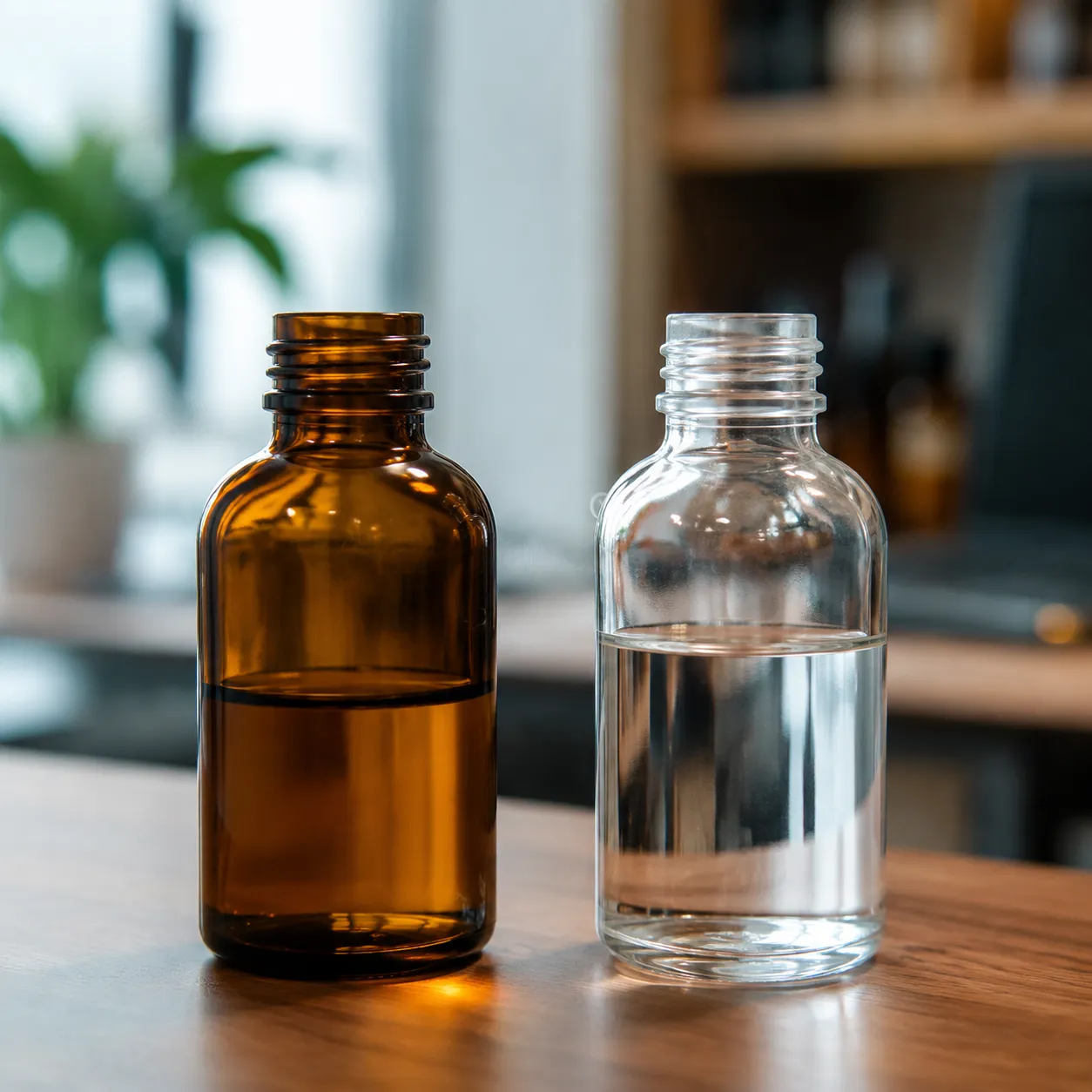
- Amber Glass: Provides premium UV protection by absorbing harmful ultraviolet light. This prevents chemical degradation and significantly extends the shelf life of light-sensitive products.
- Clear Glass: Offers virtually zero defense against UV rays, making it unsuitable for light-sensitive ingredients without secondary packaging.
Product Visibility and Shelf Appeal
- Amber Glass: Gives a classic, apothecary-style aesthetic appeal. While it obscures the exact color of the contents, it projects a sense of premium quality and medical-grade purity.
- Clear Glass: Maximizes product visibility. It lets customers see the exact color and texture of your liquid, serum, or beverage, creating high shelf appeal that builds immediate consumer trust.
Cost and Manufacturing Differences
The production process of glass bottles and glass jars varies based on color additives. Amber glass requires iron, sulfur, and carbon to achieve its protective tint, slightly impacting melting dynamics. However, when sourcing in bulk or wholesale, production costs normalize, making both options highly cost-effective for large-scale packaging lines.
Sustainability and Recyclability
Both options are 100% recyclable and infinitely reusable—see our guide on whether glass bottles are recyclable for municipal stream notes.[3]
Comparison Summary
| Feature | Amber Glass Bottles | Clear Glass Bottles |
|---|---|---|
| UV Protection | Excellent (Blocks UV and blue light) | None |
| Best For | Beer, essential oils, serums, antibiotics | Water, juices, clear spirits, cosmetics |
| Shelf Life Impact | Maximizes stability for active formulas | Depends heavily on storage conditions |
| Visual Clarity | Low visibility (Protective tint) | Maximum visibility (Showcases product color) |
Pros and Cons of Amber Glass Bottles
Advantages of Amber Glass Packaging
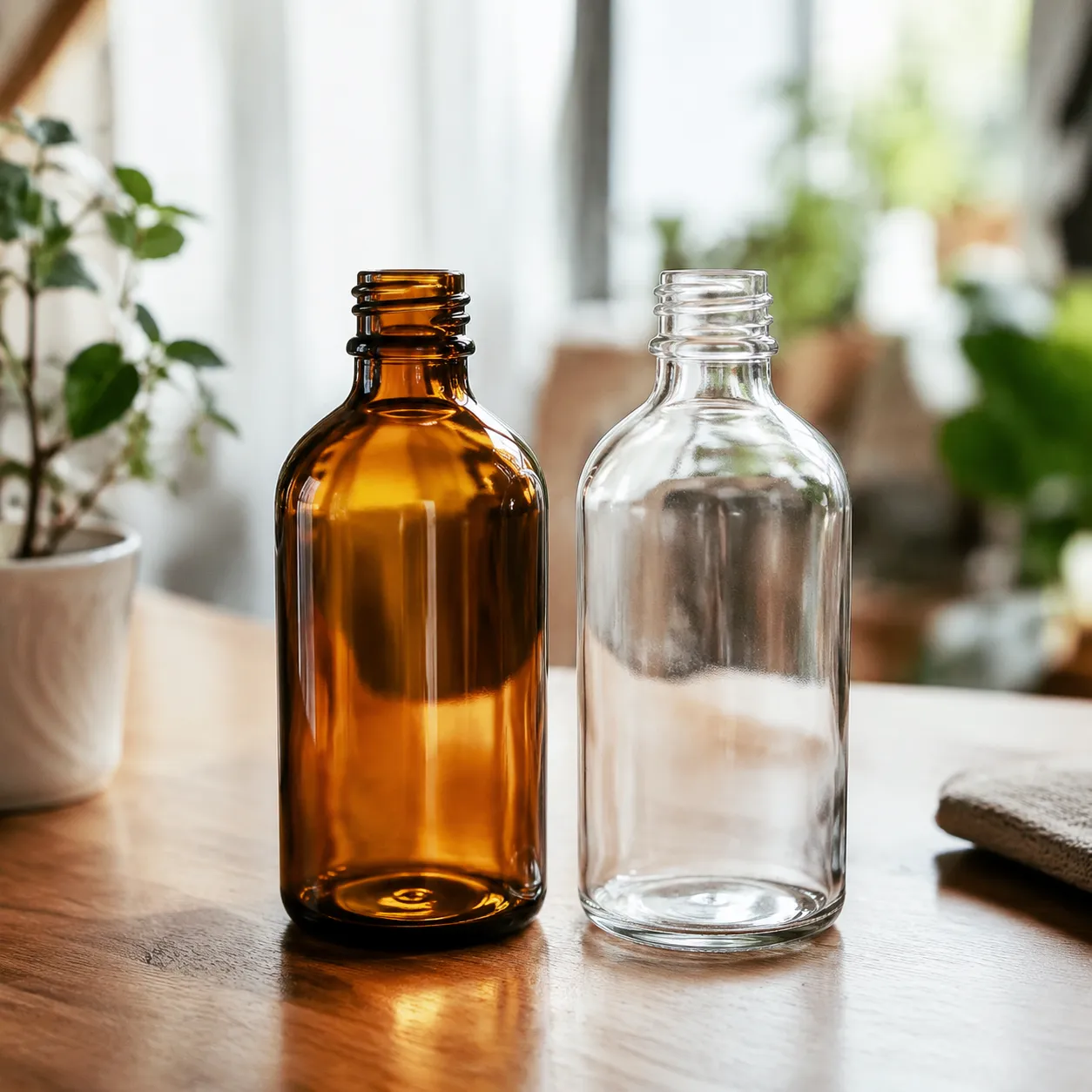
Amber glass bottles are the gold standard for protecting light-sensitive products. We craft these bottles to filter out harmful ultraviolet (UV) and blue light wavelengths. This superior UV protection prevents chemical degradation, ensuring your premium formulas maintain their potency and therapeutic properties.
- Maximum Shelf Life: Drastically reduces the risk of oxidation for essential oils, serums, and homebrew beer.
- Premium Brand Image: The deep amber hue conveys a professional, apothecary-style aesthetic appeal that consumers trust.
- Safe and Inert: Like our amber glass candle jars, these bottles do not leach chemicals into your product, making them ideal for pharmaceuticals and natural cosmetics.
Limitations of Amber Glass Packaging
While amber glass offers unmatched protection against light exposure, it does come with a few trade-offs that brands must consider before buying wholesale.
- Hidden Product Visibility: The dark tint makes it difficult for customers to see the actual color, texture, or remaining volume of the liquid inside.
- Color Limitations: If your marketing strategy relies heavily on the vibrant, natural color of your product, amber glass will mask that visual appeal.
- Color Consistency: Achieving the exact same amber shade across massive bulk production runs requires highly precise manufacturing controls compared to clear glass.
Pros and Cons of Clear Glass Bottles
Advantages of Clear Glass Packaging
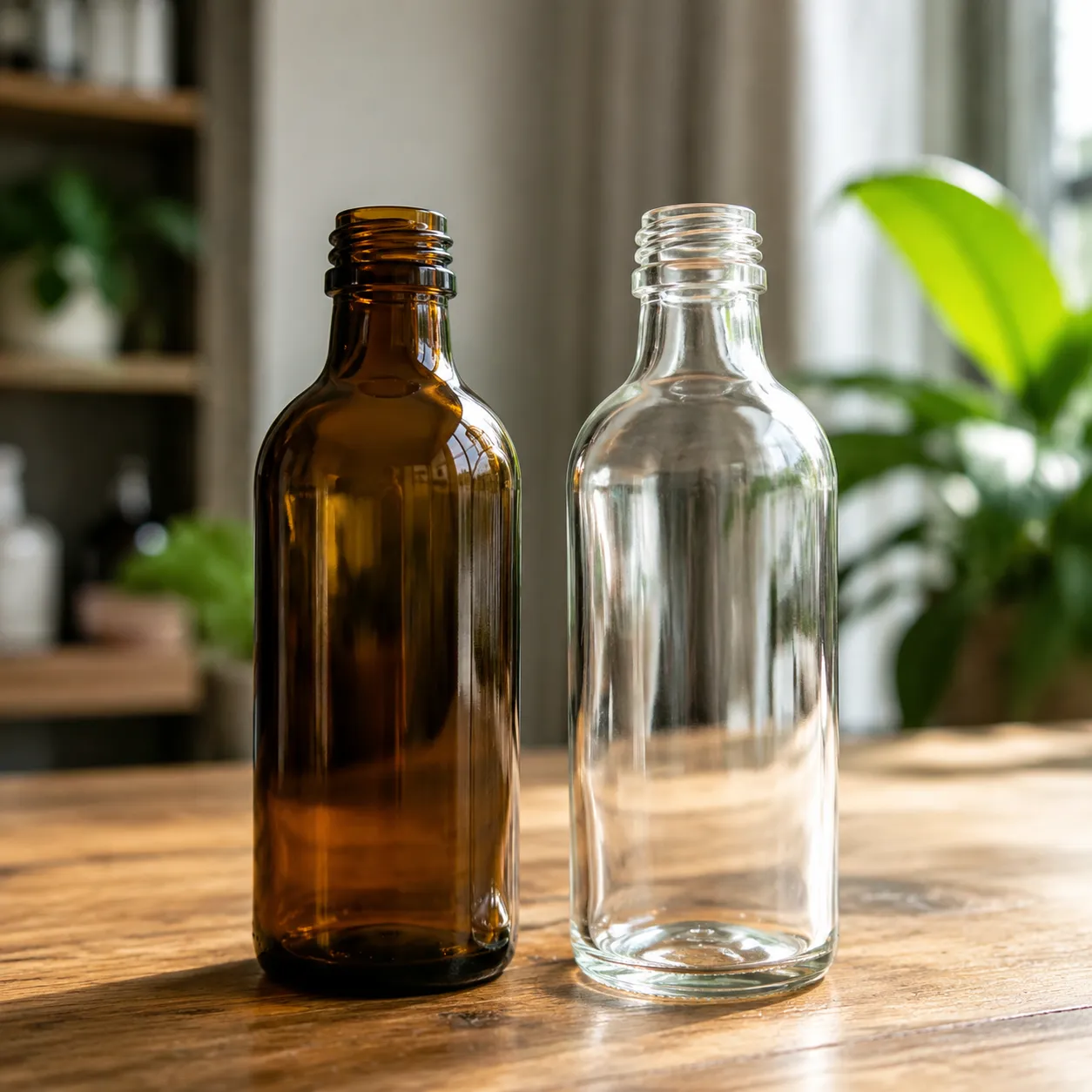
Clear glass bottles offer unmatched product visibility, making them a top choice for brands that want to showcase the natural color, texture, and purity of their formulas. We see firsthand how premium transparency drives consumer trust and shelf appeal.
- Maximum Aesthetic Appeal: It allows the vibrant colors of cosmetics, premium spirits, and luxury fragrances to act as their own marketing tool.
- High Consumer Trust: Customers can easily verify the quality, consistency, and remaining volume of the liquid inside before making a purchase.
- Premium Branding: Clear glass delivers a clean, modern, and high-end look that elevates the perceived value of your product line.
For luxury cosmetic and fragrance packaging, utilizing high-quality clear square thick glass perfume bottles or sleek oval flat clear glass perfume bottles creates an instant visual connection that helps your brand stand out in a crowded wholesale marketplace.
Limitations of Clear Glass Packaging
The biggest drawback of clear glass is its complete lack of uv protection. Unlike amber glass, clear bottles allow the full spectrum of visible and ultraviolet light to pass through completely unhindered.
- Zero UV Resistance: Exposes formulas to harmful light rays, which accelerates chemical degradation.
- Shortened Shelf Life: Rapidly degrades light-sensitive ingredients like essential oils, active serums, and certain food products.
- Risk of Spoilage: Light exposure causes oxidation, color fading, and off-flavors, making it a poor choice for unstable or chemically active ingredients without protective secondary packaging.
How Light and UV Rays Impact Product Shelf Life
We know that choosing the right packaging is about more than just aesthetics. Light exposure is one of the leading causes of product spoilage, directly affecting the stability and performance of your formulas.
The Science Behind UV Light Degradation
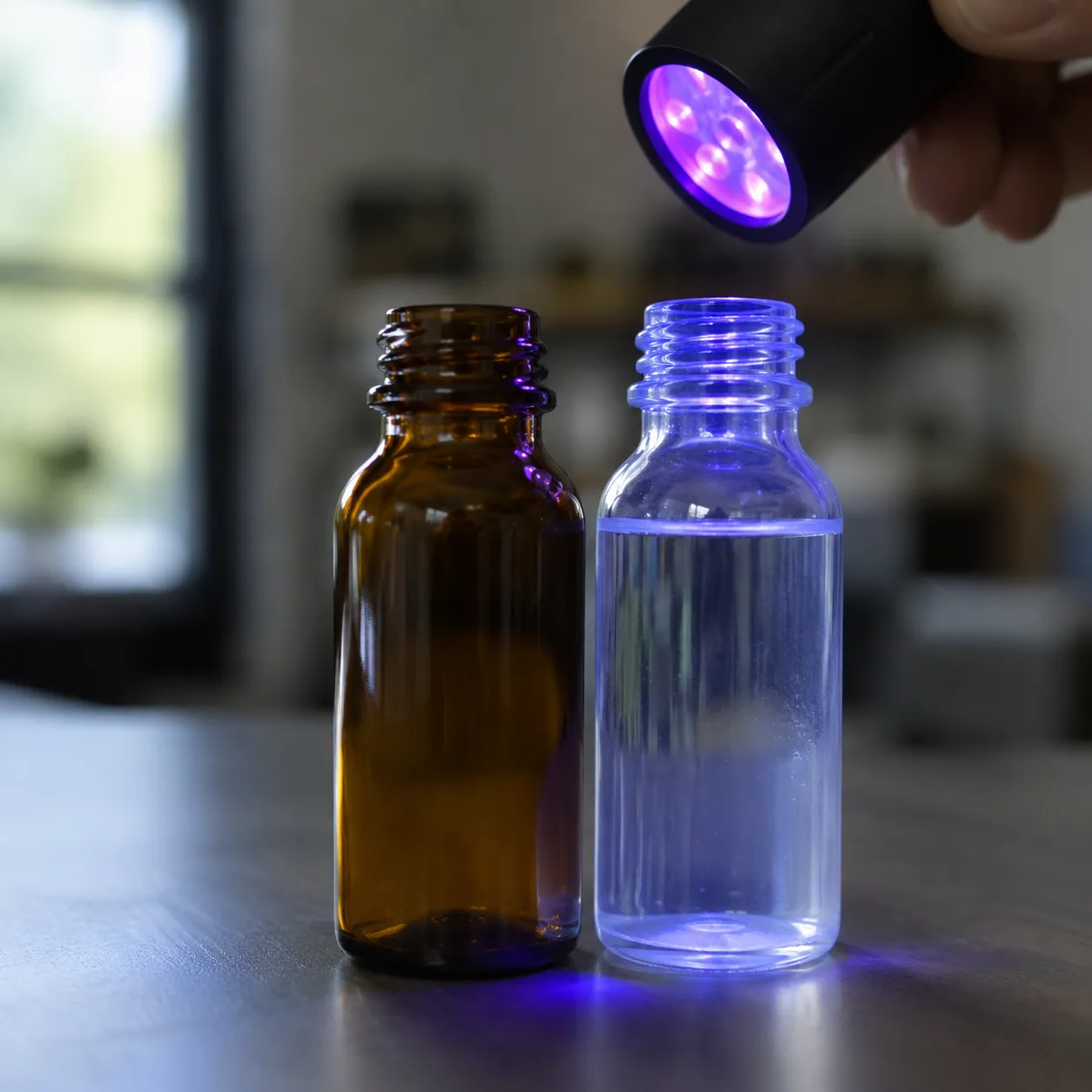
When light energy strikes a liquid, it triggers chemical degradation at a molecular level. Ultraviolet (UV) rays break down sensitive chemical bonds, causing active ingredients to lose their potency. This is especially critical for light-sensitive products like essential oils and cosmetic serums.
- UV-A and UV-B Rays: Penetrate standard clear glass and accelerate oxidation.[1]
- Visible Light: Can degrade vitamins, enzymes, and natural colorants.
- The Solution: Packaging your items in light-proof roll-on glass bottles or dark amber containers filters out these harmful wavelengths, significantly extending shelf life.
The Risk of Spoilage and Skunking
For the beverage and food industries, light exposure causes rapid quality loss. In beer, UV light reacts with hop compounds to create a distinct, unpleasant sulfur smell—a process known as “skunking.”[2] In oils and dairy products, light triggers photo-oxidation, turning fats rancid and ruining the taste profile. Amber glass blocks the specific blue and UV wavelengths responsible for this reaction, while clear glass offers zero defense against it.[1]
How to Test Your Formula for Light Sensitivity
Before committing to a wholesale or bulk packaging order, you must evaluate how your product reacts to environmental light.
| Testing Step | Action Items |
|---|---|
| 1. Baseline Controls | Store samples in complete darkness as your control group. |
| 2. Exposure Testing | Place samples in both clear and amber glass under intense UV/visible light. |
| 3. Evaluation | Check for shifts in color, aroma changes, texture separation, or loss of active ingredient efficacy over a 2 to 4-week period. |
Amber vs Clear Glass Bottles — Industry Use Cases and Applications
Choosing between amber vs clear glass bottles depends heavily on your specific industry and product formulation. We see firsthand how the right packaging choice impacts product longevity and market success.
Pharmaceuticals, Chemicals, and Laboratory Reagents
The medical and chemical sectors require strict reliability. Amber glass bottles are the standard for pharmaceuticals, liquid antibiotics, and reactive laboratory reagents. These products are highly light-sensitive and vulnerable to chemical degradation when exposed to UV rays. For another tint comparison, read amber vs blue glass bottles. Amber glass blocks these harmful wavelengths, ensuring the chemical stability, potency, and safety of the medication remain intact from the lab to the patient.
Essential Oils, Serums, and Cosmetics
The beauty and wellness industries balance aesthetics with formulation safety.
Amber Dropper Bottles: Ideal for premium essential oils, active skincare serums (like Vitamin C), and facial oils. These natural products lack heavy artificial preservatives and degrade quickly under regular light exposure.
Clear Glass Bottles and Jars: Perfect for stable cosmetics, perfumes, and lotions where product visibility and aesthetic appeal drive sales. For non-liquid luxury items, pairing your line with high-quality options like a round borosilicate glass food jar with bamboo lids and spoon can elevate your brand’s eco-friendly, premium presentation.
Beverages, Homebrewing, and Food Products
Food and beverage packaging directly influences shelf life and taste preservation.
- Amber Bottles: The undisputed choice for beer, kombucha, and cold-brew coffee. It prevents the distinct “skunking” flavor defect caused by light-struck riboflavin in brewing.
- Clear Bottles and Jars: Preferred for juices, water, honey, sauces, and dry ingredients. Consumers want to see the freshness, color, and texture of what they eat and drink.
| Industry | Recommended Glass Type | Primary Benefit |
|---|---|---|
| Pharmaceuticals | Amber Glass | Maximum UV protection; prevents chemical degradation |
| Skincare & Oils | Amber (for actives) / Clear (for aesthetics) | Preserves volatile compounds / Displays product color |
| Brewing & Beverage | Amber Glass | Prevents skunking; extends beverage shelf life |
| Food Packaging | Clear Glass | Maximizes product visibility and consumer trust |
How to Choose the Right Glass Bottle for Your Product
Selecting the perfect packaging is a critical decision for your brand. Stock versus custom mold paths are covered in our glass bottle design overview. We help businesses balance functional safety with shelf appeal. When deciding between amber vs clear glass bottles, you must weigh your formula’s ingredients against your visual marketing strategy.
Assessing Your Formula’s Protection Needs
Your first priority is protecting the integrity of your product. Light-sensitive formulas contain active ingredients that degrade when exposed to UV rays and ambient light. Identifying your specific vulnerabilities ensures you choose the right level of uv protection.
- High Sensitivity: Products containing vitamins, essential oils, or citrus extracts face rapid chemical degradation from light exposure. They require amber glass.
- Moderate Sensitivity: Certain craft beers, cold-brew coffees, and premium serums can tolerate minimal light but still benefit from tinted protection to maximize shelf life.
- Zero Sensitivity: Plain water, sugar syrups, and certain clear cosmetics face no risk of spoilage from light, making them perfect candidates for clear glass.
| Product Type | Light Sensitivity | Recommended Glass Type |
|---|---|---|
| Essential Oils & Serums | High | Amber Dropper Bottles |
| Craft Beer & Cider | High | Amber Beer Bottles |
| Cold-Brew Coffee | Moderate | Amber or Heavy Tinted Glass |
| Spirits & Clear Juices | Low / None | Clear Glass Bottles |
Aligning Packaging with Branding and Marketing Goals
While protection keeps the formula safe, your packaging drives sales. The choice between amber and clear glass deeply impacts your aesthetic appeal and how customers perceive your brand on the shelf.
- Amber Glass Visuals: Conveys a vintage, apothecary, or medicinal vibe. It signals premium quality, natural ingredients, and scientific efficacy. It is the go-to look for organic skincare and craft breweries.
- Clear Glass Visuals: Prioritizes product visibility and honesty. If your product has a vibrant, beautiful natural color—like a rose-infused oil or a bright green juice—clear glass lets the product sell itself.
Utilizing Secondary Packaging and Storage Solutions
If your brand strategy demands clear glass jars or bottles, but your formula is mildly light-sensitive, you can bridge the gap using secondary packaging solutions. You do not always have to compromise your design vision for safety.
- Custom Boxes & Tubes: House your clear dropper bottles or premium liquids in opaque outer cardboard boxes to block light until the consumer opens the product.
- UV Window Films & Coatings: Apply specialized UV-blocking clear labels or external coatings directly onto clear glass to add a layer of invisible uv resistance.
- Strategic Storage: Design your supply chain and retail instructions to ensure products are stored in cool, dark environments, away from direct sunlight and harsh supermarket fluorescent bulbs.
Frequently Asked Questions
Why are amber bottles preferred for essential oils and beer?
Amber glass blocks harmful ultraviolet (UV) and blue light, which triggers chemical degradation in light-sensitive products. For beer, this exposure causes “skunking” by breaking down hop compounds. For amber essential oil bottles, UV rays destroy the active therapeutic properties, reducing potency. We always recommend amber packaging to preserve formula integrity.
Can clear glass bottles be used for light-sensitive products?
Generally, no. Clear glass offers zero UV protection, leaving products vulnerable to light exposure. However, you can use clear glass if you use opaque secondary packaging like boxes, store the items in complete darkness, or add specific UV-blocking coatings to the glass surface.
Does frosted glass provide the same protection as amber glass?
No, frosted glass does not offer the same UV resistance as amber glass. While frosting diffuses visible light and enhances aesthetic appeal, it still allows harmful UV rays to penetrate the bottle. Amber glass remains the superior choice for preventing chemical degradation.
Which glass bottle type has a longer shelf life impact?
Amber glass bottles have a significantly better impact on shelf life for any light-sensitive formula. By filtering out damaging wavelengths, amber packaging prevents spoilage and maintains product stability far longer than clear glass bottles. Clear glass is better reserved for items where product visibility is the priority and light sensitivity is not an issue.
Need amber or clear glass bottles, dropper bottles, or glass jars for bulk runs? Request a quote.