The current guide includes: common flaw classes, our line workflow, inspection technologies, and how to Choose equipment for the best glass bottles and glass jars in high-speed production.
Why Do Glass Bottles Need Quality Inspections?
In glass container manufacturing, the stakes of production defects are incredibly high. We know that compromising on quality control is never an option for global brands.
A proactive glass bottle quality inspection process protects consumer safety and shields your brand reputation from devastating damage.
| Risk Factor | Reactive Approach (Recalls) | Proactive Approach (Quality Control) |
|---|---|---|
| Financial Cost | Millions in recall logistics, lawsuits, and wasted inventory. | Minimal investment in automated inspection equipment. |
| Brand Equity | Permanent loss of consumer trust and distributor partnerships. | Strengthened reputation as a reliable supplier of premium glass jars and bottles. |
| Production Efficiency | Unplanned downtime and massive batches of scrapped material. | Continuous optimization of the bottle manufacturing quality control loop. |
The cost of a product recall completely dwarfs the investment required for rigorous, automated empty bottle inspection. When distributing bulk and wholesale empty glass containers to global markets, catching defects at the source is the only way to ensure regulatory compliance and maintain a flawless supply chain.[4]
Common Glass Bottle Defects and How to Spot Them
When manufacturing the best glass bottles and glass jars, keeping quality consistent means catching issues before they leave the factory floor. We sort these flaws into three main categories based on how badly they affect the safety and function of the empty glass containers.
Critical Defects
They require immediate rejection by our automatic inspection equipment.
Birdswings and Spikes: Thin glass threads stretching across the inside of the bottle or sharp glass points on the interior base.
Choked Bores: An obstruction in the opening that prevents proper filling or sealing.
Major Defects
These structural issues compromise the strength of the bottles, leading to breakage during carbonation, pasteurization, or transit.
Stones: Unmelted raw material or furnace lining pieces embedded in the glass wall.
Checks and Cracks: Small fractures, often found around the base or neck finish.
Split Finishes: Cracks that run through the sealing surface inspection area, causing leaks. To prevent these mechanical vulnerabilities, we adhere strictly to the glass bottle wall thickness standard during production.
Minor Defects
These are mostly cosmetic molding process defects that do not affect the safety or structural integrity of the container but look bad to wholesale buyers.
Scratches and Blemishes: Surface marks from contact with machinery.
Blisters and Seed Bubbles: Small air bubbles trapped inside the glass structure.
| Defect Class | Example | Impact on Product | Action Required |
|---|---|---|---|
| Critical | Spikes, Birdswings | High safety risk, structural failure | Immediate Reject |
| Major | Stones, Checks, Splits | Leaks, breakage during filling | Reject & Adjust Line |
| Minor | Seed bubbles, Scratches | Cosmetic only, lower aesthetic value | Monitor & Sort |
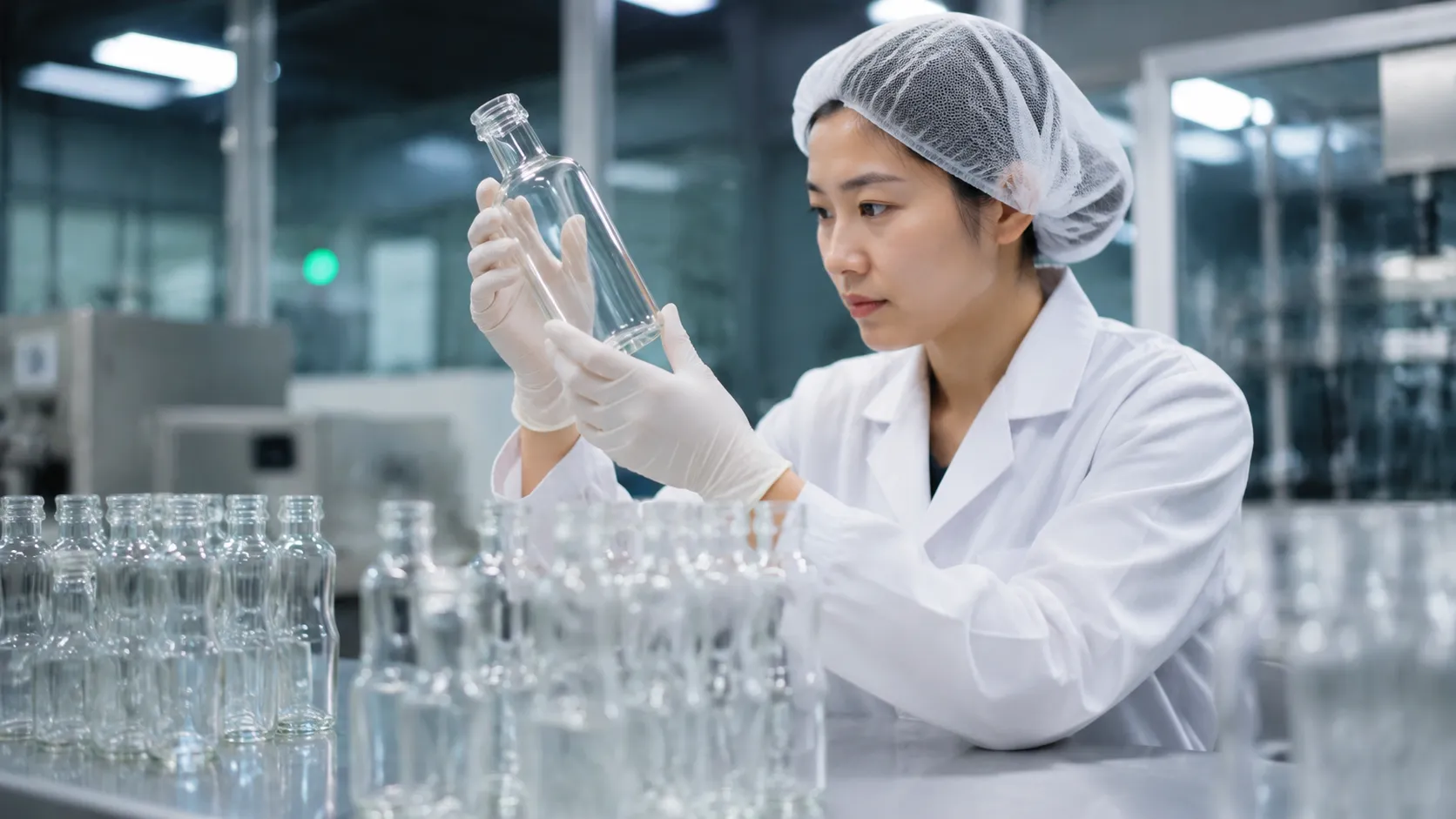
In our glass bottle quality inspection workflow, catching these early keeps production efficient, reduces waste, and ensures our customers receive flawless glass packaging in bulk.
Glass Bottle Quality Inspection Process
Our glass bottle quality inspection follows a strict, multi-stage workflow to catch defects early and ensure structural integrity. We manage every step to guarantee our bulk shipments meet strict global standards.[1]
1. Hot End Inspection
Right after the molding process, we run a hot end inspection on the glowing, newly formed containers. Catching structural flaws or wall thickness variations at this early stage allows us to adjust the machinery instantly, minimizing material waste and stopping systemic defects before they spread.
2. Annealing Lehr Stress Monitoring
Thermal stress can make glass incredibly fragile. We closely monitor the cooling process inside the annealing lehr to eliminate internal tension. This structural stress relief ensures our empty glass containers achieve the thermal shock resistance required for safe filling and commercial transport.
3. Cold End Testing
This is our final line of defense. Once the bottles cool completely, they undergo rigorous cold end testing. We pass every unit through automated optical networks to verify precise dimensions and screen for micro-cracks, ensuring only flawless, high-quality bottles make it to the packaging line.
Key Glass Bottle Inspection Technologies
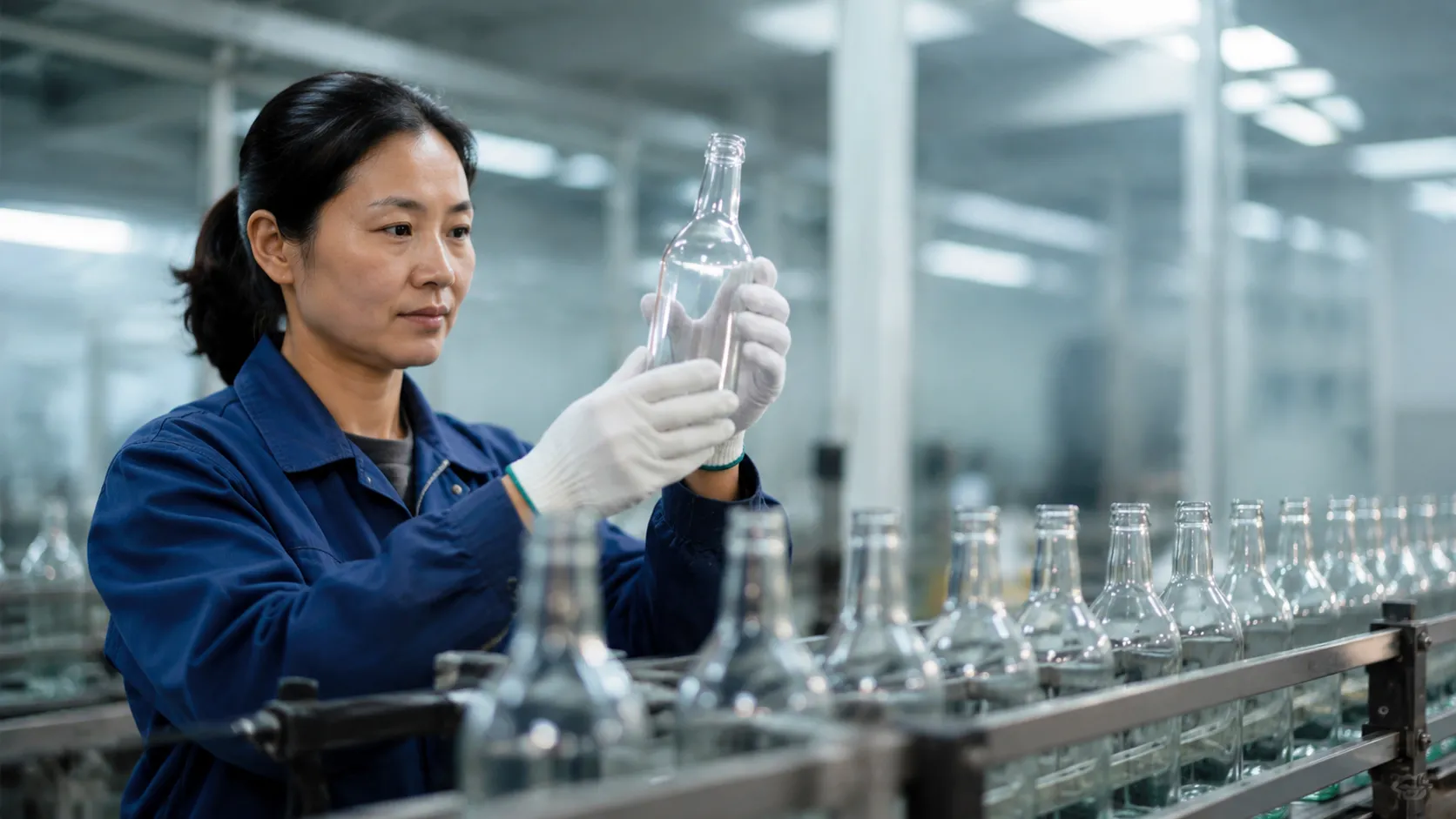
We deliver the best glass bottles and bulk wholesale glass jars, and we utilize advanced inspection technologies across our production lines. These automated systems identify structural and cosmetic flaws before any empty glass containers reach our customers.
Sidewall and Bottom Glass Inspection
The body and base of a container are highly susceptible to defects during the molding process. Our high-speed optical systems scan 360 degrees of the bottle to catch body inspection issues immediately.
- Sidewall Scans: Detects structural cracks, cosmetic scratches, and embedded inclusions that weaken the glass.
- Bottom Inspection: Identifies glass container defects like stars, checks, and contamination at the base where stress concentrates.
Sealing Surface and Finish Analysis
A flawless neck and finish inspection ensures that your closures fit perfectly, preventing leaks or spoilage. We deploy specialized vision sensor technology to examine the critical dimensions of the threads and rim.
| Inspection Area | Target Defects Detected | Impact on Quality |
|---|---|---|
| Sealing Surface | Split finishes, chips, and rough surfaces | Prevents leaks and maintains a tight seal |
| Thread & Neck | Choked bores, warped threads, and scratches | Ensures smooth capping and opening for consumers |

Wall Thickness Measurement
Uneven glass distribution compromises the pressure resistance of a bottle. We use non-contact optical sensors to perform precise wall thickness measurement around the entire circumference of the container. This automated testing guarantees that thin spots are flagged and handled by automatic reject mechanisms, ensuring every bottle in your bulk order handles shipping and handling effortlessly.
Choose the Right Glass Bottle Quality Inspection Equipment
Picking the right automatic inspection equipment is all about balancing your line speed, budget, and long-term production goals. We know that the wrong setup can create massive bottlenecks or let critical defects slip through.
Line Speed and Integration
Your inspection machinery must match or exceed your current manufacturing speeds. On typical high-speed lines that output several hundred empty glass containers per minute, your vision sensor technology and reject mechanisms need to process data even faster to prevent slowdowns.
Modular vs. Fully Integrated Systems
When investing in bottle manufacturing quality control, you need to decide between a modular setup or a fully integrated system.
| System Type | Pros | Cons | Best For |
|---|---|---|---|
| Modular Systems | Lower initial cost, easy to upgrade specific zones (like neck and finish inspection). | Requires manual syncing between different machines. | Growing plants scaling up wholesale production. |
| Fully Integrated Systems | Seamless data flow, handles body inspection and sealing surface inspection all at once. | Higher upfront investment, longer installation downtime. | High-speed, high-volume bulk manufacturing. |
Vendor Support and Calibration
Ensure your vendor provides routine calibration, prompt software updates for the optical systems, and quick access to spare parts. Up-to-date software ensures your cameras can accurately spot micro-cracks and scratches before products ship out to global customers. Understanding the overall setup costs and operational demands is just as vital as calculating how much it costs to manufacture a glass bottle from scratch.
FAQs About Glass Bottle Quality Inspection
What are the most dangerous glass defects?
The most dangerous issues are critical defects that compromise consumer safety or cause immediate structural failure. Birdswings (a thin glass thread inside the bottle), spikes (sharp glass projections), and choked bores (restricted neck openings) top the list. These defects can contaminate the product with fragments or cause the container to burst during filling, making strict glass bottle quality inspection an absolute necessity for protecting your brand and customers.
How does machine vision detect micro-cracks in glass?
Automated systems utilize high-resolution vision sensor technology paired with specialized LED lighting arrays. When a bottle passes through the inspection zone, the optical systems capture images from multiple angles. Light refracts differently when it encounters structural flaws; the machine vision inspection software instantly identifies these anomalies[3], flagging micro-cracks, chips, and scratches that are invisible to the human eye, and triggers automatic reject mechanisms.
Can recycled glass (cullet) cause more manufacturing defects?
Yes, using recycled glass can introduce a higher rate of molding process defects if the cullet is not properly sorted and processed. Contaminants like ceramics, metals, or stones that do not melt at the same temperature as glass create foreign inclusions and stones in the final container. While we prioritize sustainability, managing high cullet ratios requires rigorous bottle manufacturing quality control to maintain structural integrity. To understand the foundational melting and forming stages before these defects occur, you can explore our guide on how glass bottles are manufactured to see how raw materials impact final quality.
Need bulk or wholesale glass bottles and glass jars with documented QC? Request a quote.
References
- NIST Special Publication 960-16 — The Statistical Process Control Handbook (PDF)
- ISO 9058 — Glass bottles — Dimensions and capacities
- NIH PMC — Machine vision and optical inspection research (glass and container applications)
- eCFR Title 21 Part 177 — Indirect food additives: polymers (food-contact packaging context)