Phase 1: Blueprint Engineering & CAD Design
Transforming an artistic vision into a functional OEM glass bottle requires balancing aesthetic appeal with structural physics. Every custom project begins by translating concept sketches into precise 2D engineering blueprints and 3D CAD files.
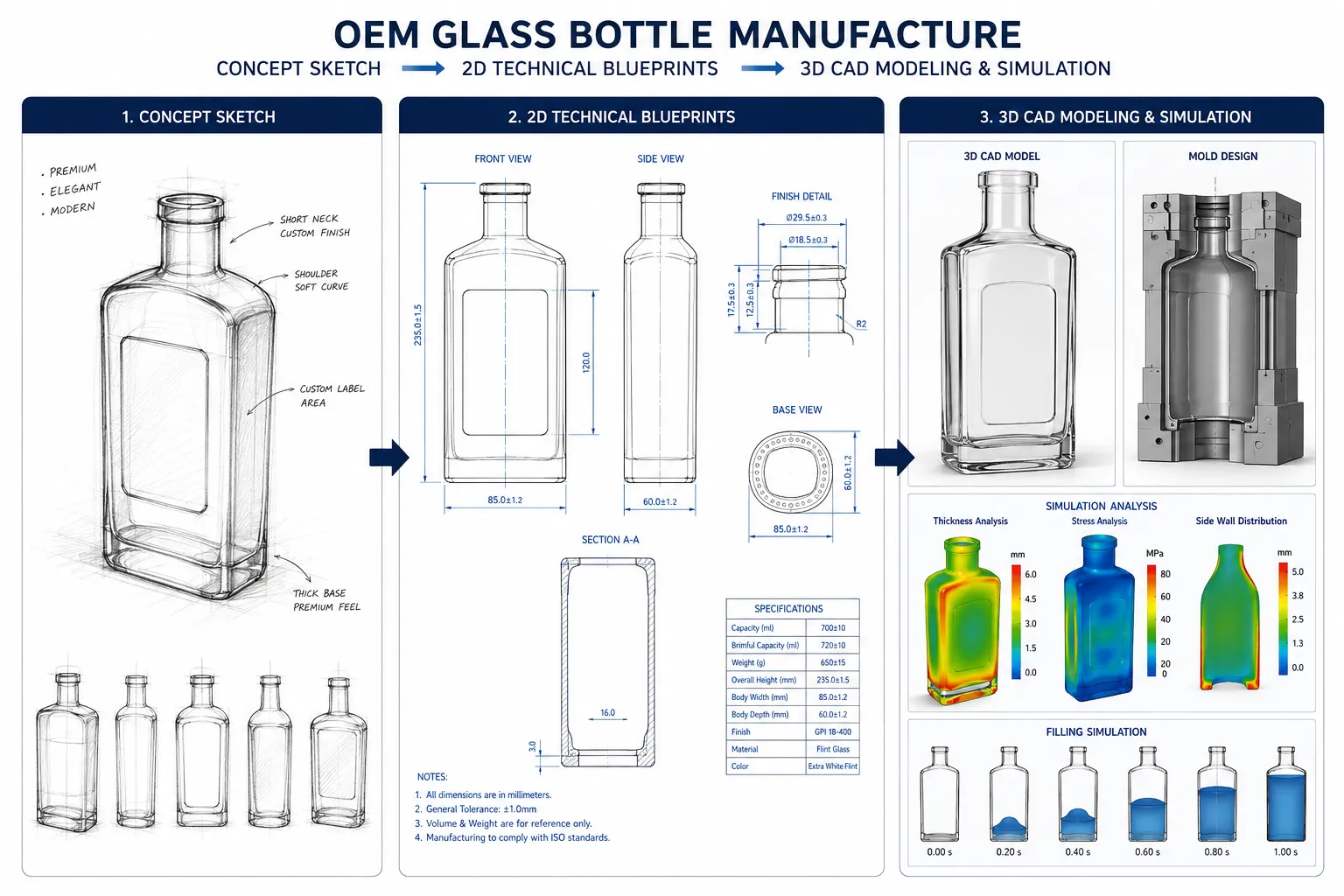
[ Concept Sketch ] ➔ [ 2D Technical Blueprints ] ➔ [ 3D CAD Modeling & Simulation ]
Our engineering team analyzes and optimizes several critical factors during this phase:
Thermal Shock Resistance: Calculating optimal glass distribution to ensure the container withstands rapid temperature shifts during pasteurization or hot-filling.
Internal Pressure Capacity: Optimizing wall thickness and curves for carbonated beverages or sparkling spirits to prevent catastrophic bursting.
Volumetric Precision: Designing the exact internal volume to account for headspace requirements and strict compliance regulations.
Phase 2: Tooling & Physical Prototyping
Moving straight from a digital file to high-volume manufacturing is a massive risk. We mitigate this by utilizing a two-tiered mold strategy to validate the design before initiating full-scale production.
Test Molds vs. Multi-Cavity Production Molds
-
- Single-Cavity Test Molds: A cost-effective, temporary mold used to blow a limited run of physical samples. This allows us to test real-world physics without investing in full production tooling.
- Multi-Cavity Production Molds: High-grade, durable steel mold sets engineered for high-speed, automated production lines capable of producing thousands of identical units per hour.
Physical Sample Evaluation Checklist
Before approving mass production, the physical prototypes undergo a strict evaluation process:
| Metric Evaluated | Testing Method | Target Outcome |
|---|---|---|
| Gram Weight | Precision scale verification | Uniform weight distribution to control material costs and shipping logistics. |
| Color Consistency | Spectrophotometer analysis | Flawless glass clarity and exact color matching across different lighting environments. |
| Dimensional Accuracy | Caliper and go/no-go gauge testing | Exact neck finish dimensions to guarantee airtight closure compatibility. |
Phase 3: Mass Production & Yield Optimization
Once prototypes are approved, we transition production to our fully automated, high-speed IS (Individual Section) forming machines. This stage demands absolute precision to maintain consistent quality across high-volume runs.
To keep your operations running smoothly, we focus on:
Automated Consistency: Continuous monitoring systems track glass temperature, mold lubrication, and cooling rates to eliminate human error and cosmetic defects.
Supply Chain Synchronicity: We align our manufacturing schedules with your filling timelines. This ensures a steady flow of inventory, preventing costly downtime on your bottling lines.
Technical Specifications & Custom OEM Glass Bottle Capabilities
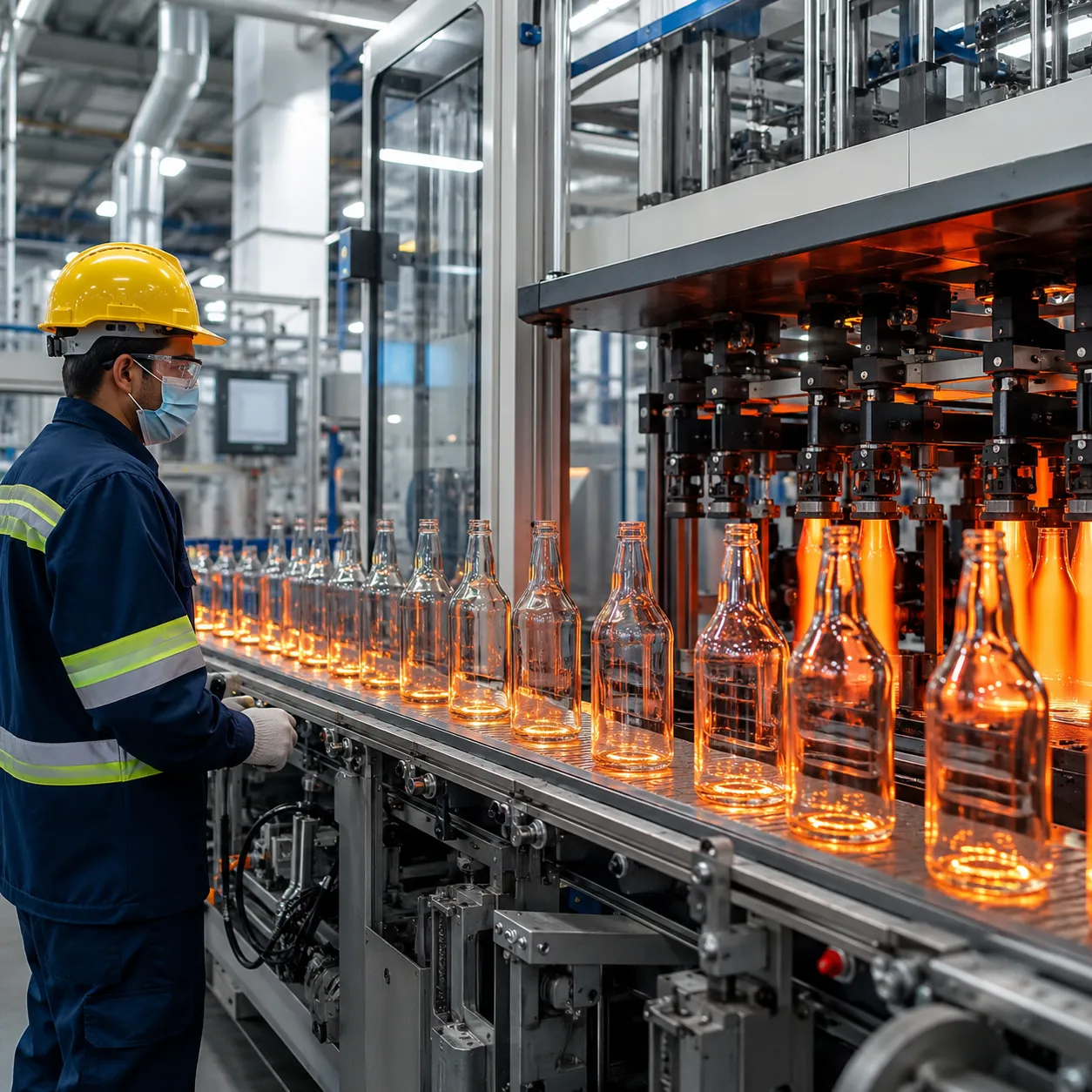
Transforming a standard container into premium packaging requires a mix of advanced surface styling and strict engineering control. As an established OEM glass bottle manufacturer, Reihey bridges the gap between creative brand design and industrial reality.
Secondary Processing & Aesthetic Enhancement
Custom branding on a bulk glass bottle supplier level demands high-fidelity execution. We utilize automated post-processing to elevate shelf presence:
-
- Dimensional Texturing: Precision custom embossing and debossing molded directly into the glass.
- Advanced Surface Treatments: Premium frosting, metallic electroplating, opaque/translucent exterior coating, and high-durability screen printing.
Critical Engineering Metrics Every Buyer Must Track
A beautiful bottle is worthless if it breaks on the filling line or leaks during transit. We maintain strict process control across three critical engineering vectors:
| Metric | Industry Standard Tolerance | Reihey Quality Target | Impact on Product |
|---|---|---|---|
| Raw Silica Sand Purity | ≥ 98.5% | ≥ 99.3% (Extra-Flint) | Eliminates iron tints for flawless color consistency. |
| Wall Thickness Ratio | Max 3:1 variation | Max 2:1 variation | Prevents structural weak points and thermal shock breakage. |
| Neck Finish Accuracy | ±0.5 mm | ±0.25 mm | Ensures absolute closure, cap, and pump compatibility. |
Neck Finish and Closure Compatibility
A flawed neck finish ruins product integrity. Whether you are sourcing custom spirits bottles or high-end cosmetic glass jars, the E, T, and I dimensions of the bottle neck must match the closure mechanism perfectly. Our precise glass manufacturing process control eliminates leakage risks, ensuring that third-party caps, corks, and pumps seal perfectly every single time.
Risk Mitigation & Quality Assurance in High-Volume Sourcing
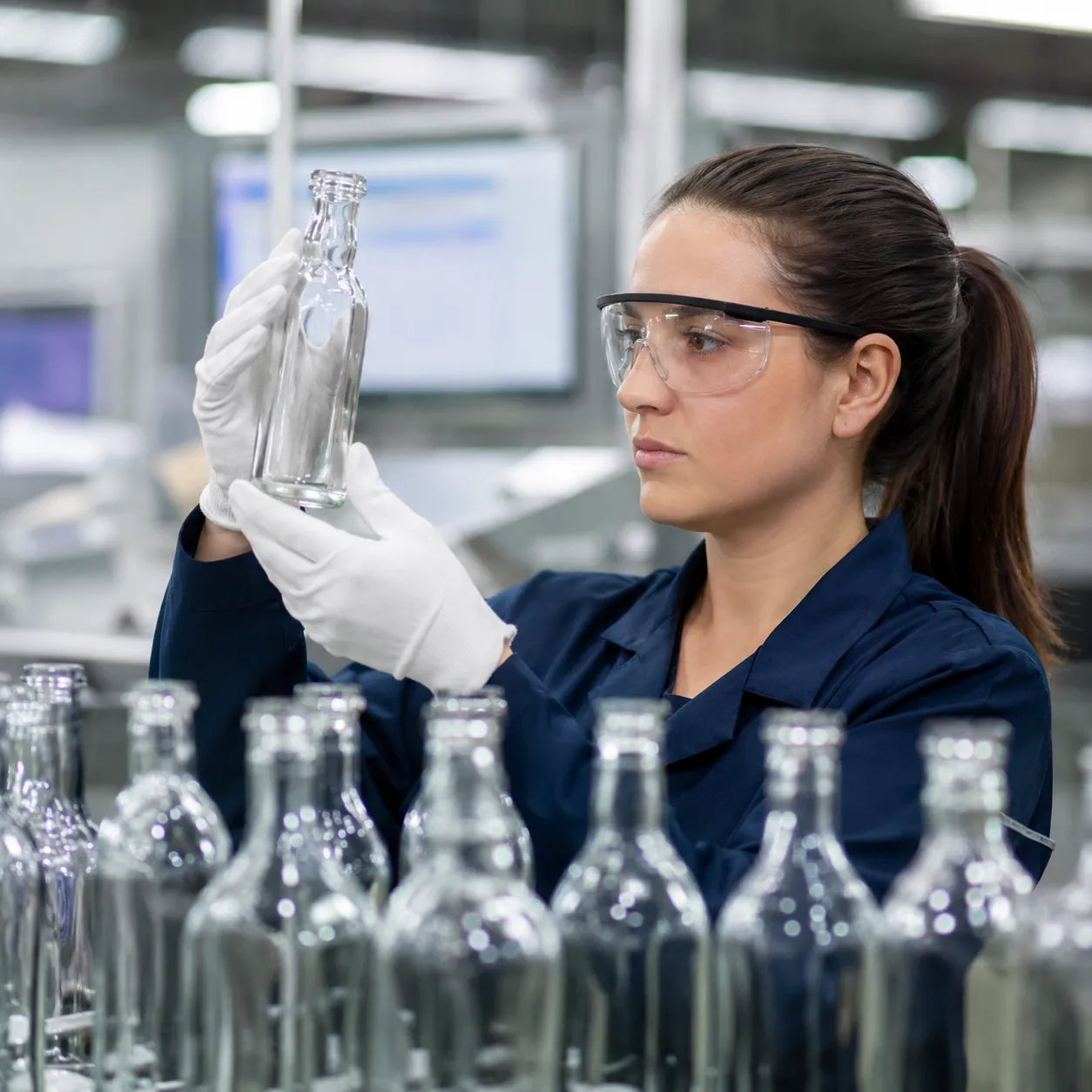
Looking Beyond “Perfect Samples”
Trade-show prototypes and hand-selected golden samples look flawless, but they rarely tell the whole story. These pristine mockups often mask underlying structural flaws that only appear during automated mass production. When scaling an OEM glass bottle run, true quality control requires deep transparency into actual manufacturing process control. Buyers should always demand and evaluate real factory batch records and defect rate logs from previous runs rather than relying solely on a curated prototype.
Integrated Early Planning vs. Costly Rework
A successful production run requires aligning every element of the packaging ecosystem simultaneously. Designing a custom shape without considering the label application area or the precision neck finish leads to catastrophic line stoppages.
-
- Bottle Shape & Labelling: Complex curves can cause labels to wrinkle or blister during high-speed application.
- Closure Compatibility: The neck finish must match the cap tolerances exactly to ensure a leak-proof seal.
- Thermal & Structural Realities: Aesthetic designs must handle the physical stresses of filling, pasteurization, and shipping.
To safeguard food and beverage products, ensuring compliance with strict safety frameworks is non-negotiable. For instance, when sourcing high-volume container lines, maintaining safety standards for wholesale candle glass jars or food-grade storage requires a deep understanding of thermal shock resistance and chemical stability.
Quality Standards & Regulatory Compliance
To guarantee structural integrity and global market access, production facilities must operate under rigid quality frameworks.
| Standard Category | Compliance Requirements | Sourcing Impact |
|---|---|---|
| Quality Management | Strict alignment with ISO 9001 systems | Ensures repeatable batch-to-batch consistency and traceable manufacturing. |
| Global Regulation | Strict compliance with FDA and EU food-grade safety standards | Guarantees that the glass contains no harmful heavy metals and is 100% safe for consumption or cosmetic use. |
| Defect Tolerance | Strict adherence to Acceptable Quality Level (AQL) standards | Defines clear, measurable boundaries for critical, major, and minor defects before shipment. |
Every production batch must accommodate independent, third-party inspections from trusted agencies like SGS or TUV right at the factory floor before final balance payments are released.
Financial Realities: Tooling, Unit Costs, and Sourcing Optimization

Navigating the financial landscape of custom manufacturing requires a clear understanding of upfront investments and recurring variables. Working with a dedicated OEM glass bottle manufacturer helps streamline these expenses, ensuring your budget aligns perfectly with your production scale.
Breakdown of Commercial Terms
Launching a custom glass packaging solution involves specific initial and per-unit costs:
-
- Tooling Costs: Expect an investment between $2,000 and $15,000 depending on mold complexity and the number of cavities required for mass production.
- Sample Development Costs: Initial prototyping and iteration allowances run from $300 to $1,500 to ensure the physical bottle matches your exact specifications.
- Per-Unit Cost Variables: Individual unit prices generally range from $0.08 to $0.30. The final rate depends heavily on glass weight, composition (such as flint or extra-flint), and decoration complexity like custom embossing or frosting.
Milestone Management
Standard industrial payment structures are straightforward and designed to secure both parties throughout the glass manufacturing process control cycle. We operate on a 30% upfront deposit to initiate tool development and raw material preparation, with the 70% balance payment due pre-shipment. Once the design is finalized, navigating production lead times typically takes 25 to 45 days to move from raw silica sand melting to packed inventory on our active production lines.
Strategic Procurement Tactics
Optimizing your supply chain requires a mix of flexible volume scaling and smart timing:
| Strategy | Tactical Approach | Bottom-Line Benefit |
|---|---|---|
| Flexible Scaling | Utilizing minimum order tiers with flexible MOQs starting at 8,000 units. | Lowers the barrier to entry for premium cosmetic glass jars or niche beverage packaging. |
| Off-Season Procurement | Placing high-volume sourcing orders during winter production windows (November to February). | Unlocks substantial cost efficiencies and avoids peak seasonal manufacturing bottlenecks. |
What to Look for in a Manufacturing Partner
Supplier Evaluation Checklist
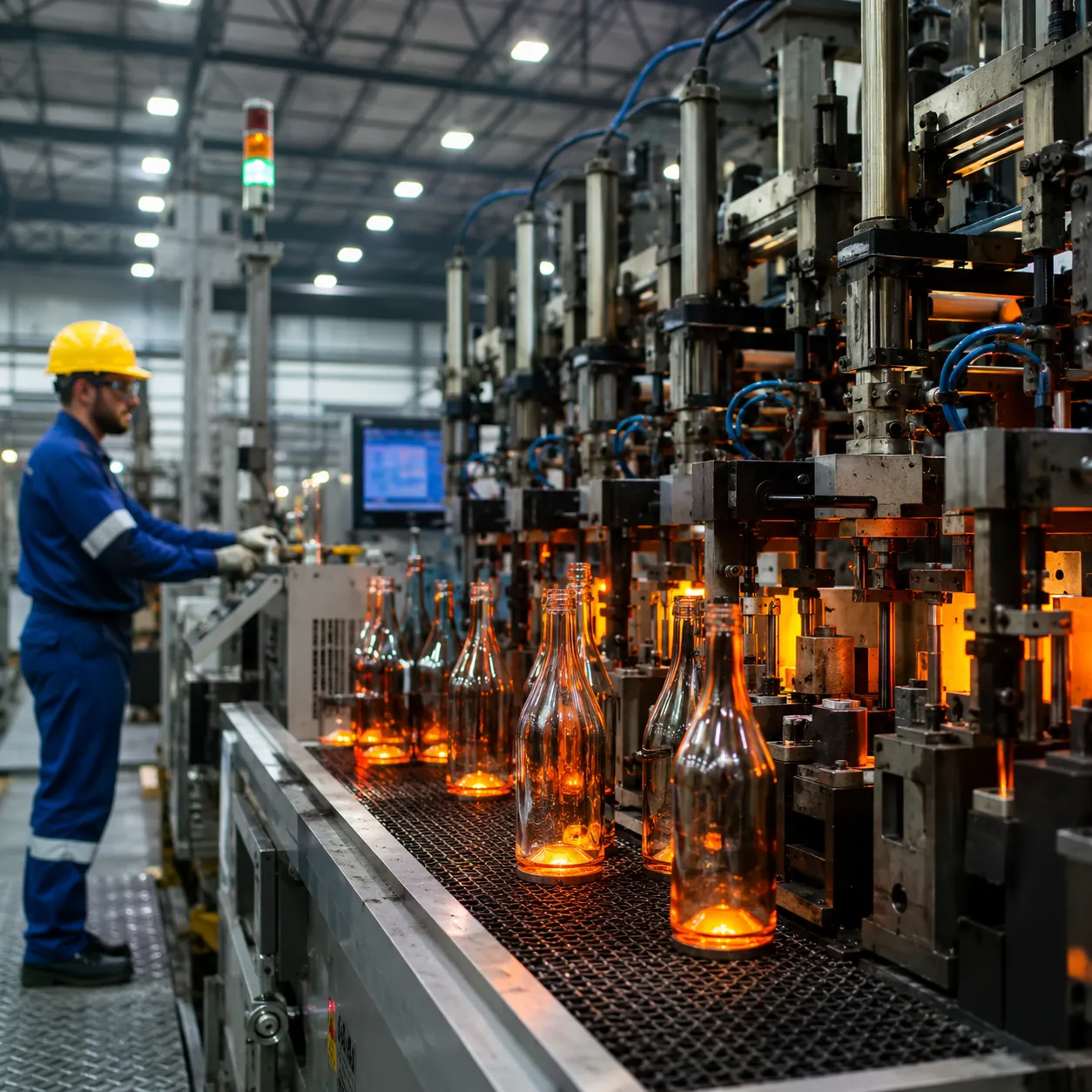
Choosing the right OEM glass bottle manufacturer determines whether a product launches on time or gets trapped in a cycle of production delays. Trade-show samples can be misleading, making it essential to audit a partner’s physical infrastructure and support network before signing a contract.
Infrastructure and Scale
A reliable supplier must possess the technical capacity to scale production without compromising structural integrity.
Dedicated R&D Labs: True customization requires in-house engineering to refine 3D CAD models, test thermal shock resistance, and ensure precise wall thickness distribution.
Modern Automated Production Lines: High-volume consistency depends on automated IS (Individual Section) machines that maintain precise temperature controls and uniform glass distribution.
Multi-Industry Application Capacity: A manufacturer serving the spirits, cosmetics, and food sectors understands distinct regulatory demands, from heavy-base spirit bottles to specialized glass jars for candies packing.
Global Support Ecosystem
Technical capability means little without the logistics and communication framework to deliver the goods across borders.
Multilingual Project Management: Clear communication prevents engineering misunderstandings, ensuring custom embossing, neck finishes, and tolerances match the exact specifications.
End-to-End Global Logistics Support: Ocean freight involves risk. A tier-one partner manages the entire supply chain, utilizing optimized crate packing and reliable shipping methods to eliminate transit breakage and prevent bottling line downtime.
OEM Glass Bottle Supplier Evaluation Checklist
| Evaluation Criteria | Minimum Requirement | Industry Best Practice |
|---|---|---|
| Quality System | ISO 9001 Certification | ISO 9001 + FSSC 22000 (Food Safety) |
| Defect Tracking | Basic AQL 2.5 Standards | Strict AQL 1.0 with real-time batch logs |
| Testing Capabilities | Visual inspection & weight checks | Vertical load, thermal shock, and pressure testing |
| Logistics Expertise | FOB Port Delivery | Full DDP/CIF handling with custom transit packaging |
Common OEM Glass Sourcing FAQs
Navigating custom glassware manufacturing comes with technical hurdles. Here are direct, clear answers to the most common questions we receive from global brands sourcing from us at Reihey.
Lifespan, Formats, Logistics, and Materials
| Question | Direct Answer & Technical Specification |
|---|---|
| What is the typical lifespan of a custom glass mold? | A standard cast iron production mold generally lasts for 500,000 to 1,000,000 units before requiring refurbishment or replacement due to normal wear. |
| Can I use my existing 3D files for production at Reihey? | Yes. We accept standard CAD formats including STEP, IGS, and DWG. Our engineering team will review your files to ensure the design maintains ideal wall thickness distribution. |
| How do you handle breakages during international shipping? | We pack bulk orders using heavy-duty export pallets and custom dividers. If transit damage occurs, losses exceeding the standard 1% to 2% break-rate allowance are covered or credited based on verified third-party inspection reports. |
| What are the differences between flint and extra-flint glass for spirits? | Flint glass offers standard clarity for everyday beverage packaging. Extra-flint glass utilizes ultra-pure raw silica sand to eliminate greenish tints, providing maximum optical clarity and premium light refraction for high-end spirits. |
Ensuring Perfect Compatibility
When designing custom bottles, achieving absolute neck finish and closure compatibility is critical to prevent leaks. Many brands ask why alternative materials aren’t used for high-end products; to understand why premium brands consistently avoid plastics, you can read about why liquor bottles are made of glass. Every custom mold development project we undertake balances these exact aesthetic demands with rigorous process control to ensure your custom glass packaging solutions scale flawlessly.