✔ The key differences between silicone, glass, and plastic baby bottles
✔ BPA-free safety standards and chemical-leaching concerns
✔ Heat resistance and sterilization performance
✔ Durability, lifespan, and sustainability comparisons
✔ The best bottle material for home use, daycare, travel, and breastfed babies
Read on to find the safest and most practical baby bottle solution for every feeding scenario.
Understanding Baby Bottle Materials
Choosing the right baby bottle material is one of the most critical decisions for newborn feeding. The material dictates not only the longevity of the infant feeding gear but also the health and safety of the infant. As global markets demand higher quality and stricter safety profiles, understanding the fundamental differences between bottle compositions ensures parents and distributors make informed, health-first decisions.
Chemical Safety and BPA-Free Standards
When sourcing the best glass bottles or modern alternatives, chemical safety remains the ultimate priority. Modern manufacturing mandates strict compliance with global safety standards.
-
- BPA-Free Certification: Bisphenol A (BPA) is a harmful chemical historically found in plastics that mimics hormones and disrupts infant development. Today’s premium feeding gear must be certified 100% BPA-free.
- Chemical Stability: Premium materials do not leach phthalates, PVC, or heavy metals, ensuring the nutritional integrity of the breastmilk or formula is never compromised.
- Heat Resistance: High-quality materials endure rigorous sterilization processes—such as boiling water or steam—without chemical breakdown, maintaining absolute purity for every single feed.
Silicone Baby Bottles:
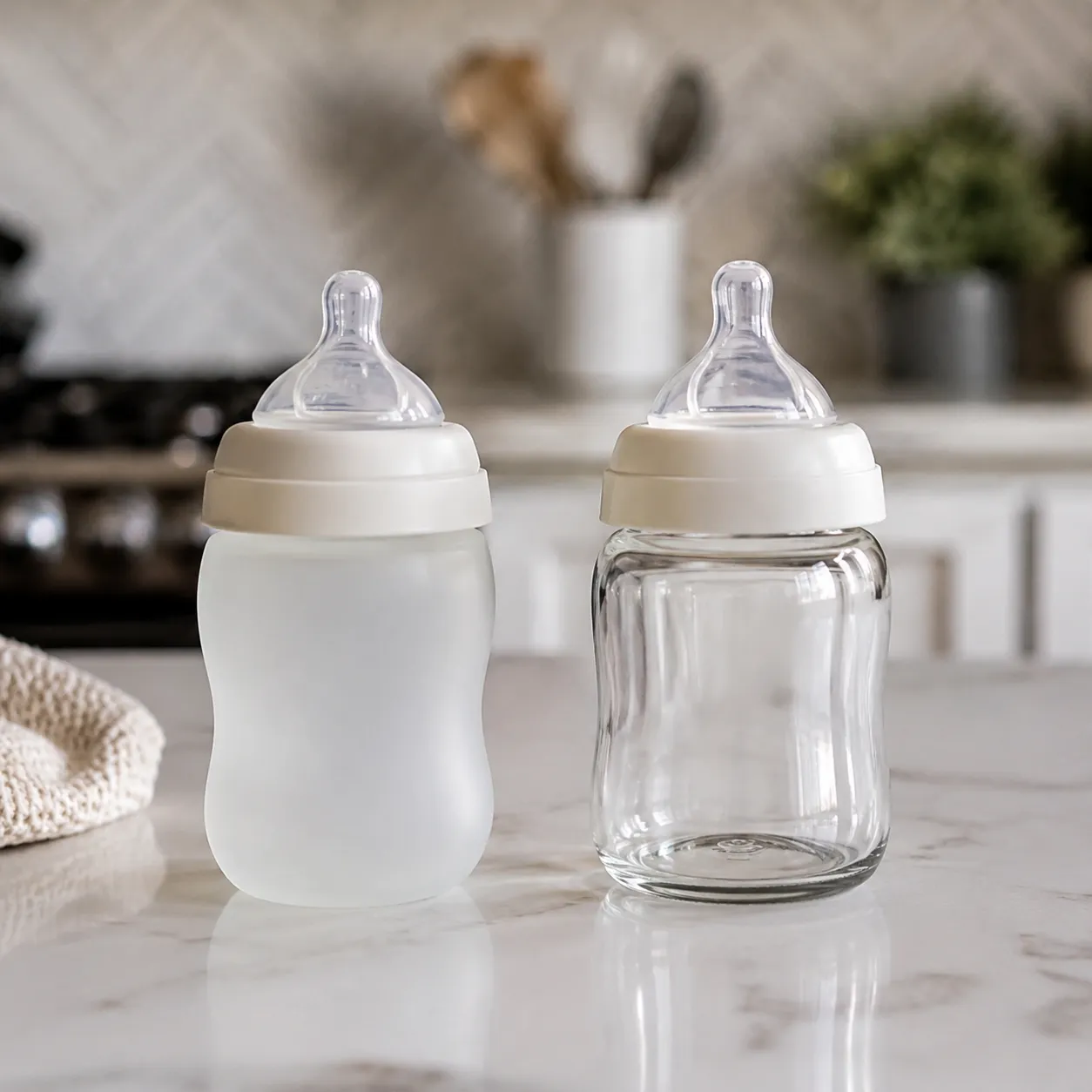
Silicone has rapidly taken over the infant feeding gear market, positioning itself as the go-to middle ground for parents who want a break from traditional plastic but aren’t ready to commit to heavy glass. These bottles are soft, squishy, and highly durable, mimicking a more natural feel for the baby while offering great peace of mind for parents.
Pros and Cons of Silicone Bottles
When deciding on the best baby bottle material, weighing the practical trade-offs of silicone is essential.
The Pros:
Unbreakable: You can drop them a hundred times on hardwood or concrete, and they will never shatter.
Lightweight: Easy for older infants to hold independently during feeding times.
Mimics Breastfeeding: The squishy texture offers a familiar, comforting grip for newborns.
The Cons:
Price Point: High-quality, food-grade silicone bottles generally carry a premium price tag compared to plastic.
Floppy Structure: Because they are flexible, they can sometimes tip over more easily on a flat surface during assembly.
Odor Retention: Silicone tends to hold onto dish soap scents or strong milk odors if not washed properly.
Safety, Flexibility, and Sensory Feel
Medical-grade silicone is entirely BPA-free, latex-free, and phthalate-free, ensuring zero chemical leaching into warm breast milk or formula. Beyond chemical safety, the standout feature of a silicone bottle is its unique sensory feel. The flexible, skin-like texture feels natural in a baby’s hands, making the transition between breast and bottle much smoother for newborn feeding. This tactile flexibility also allows parents to gently squeeze the bottle to assist a sluggish feeder or mimic a natural milk let-down.
Heat Resistance and Washing Guidelines
Silicone boasts exceptional heat resistance, allowing it to withstand extreme temperature shifts without warping or degrading. It is completely safe to boil, steam sterilize, or toss into the top rack of a dishwasher.
Pro Tip for Sterilization: To keep silicone bottles completely clean and clear, use a mild, fragrance-free dish soap. While silicone handles high heat beautifully, its porous nature can trap strong perfumes, which might alter the taste of the milk.
While silicone serves as an excellent modern option, many parents still prefer the absolute purity of a classic material. If you are exploring alternative setups, you can learn more about how industrial forming techniques ensure thick walls in traditional containers by looking into the production process of glass bottles and glass jars.
Glass Baby Bottles:
The Purest Choice
Pros and Cons of Glass Bottles
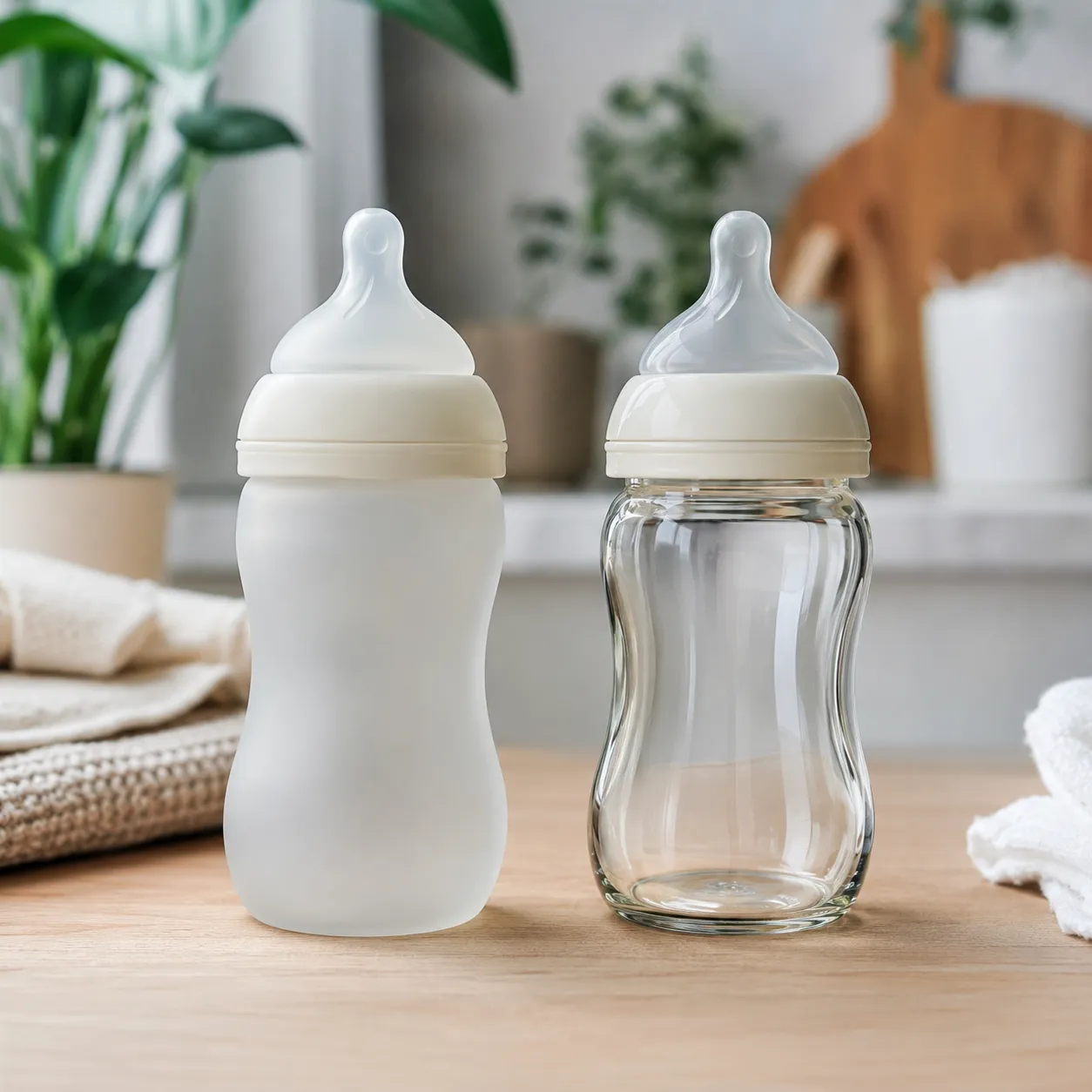
When it comes to infant feeding gear, glass remains the gold standard for parents who refuse to compromise on chemical purity. As a premier glass bottles manufacturer and supplier, we see firsthand why families consistently return to this traditional material.
-
- The Pros: Exceptional purity, scratch resistance, zero chemical leaching, and an infinite lifespan if handled carefully. They do not retain odors or stains from breast milk or formula.
- The Cons: They are heavier than plastic or silicone alternatives and carry a risk of breaking if dropped on hard surfaces.
Purity, Hygiene, and Long-Lasting Durability
Choosing the best glass bottles means investing in long-lasting durability. Unlike porous materials, high-quality glass maintains a completely smooth surface that prevents bacteria and milk residue from clinging to the walls. This makes them incredibly hygienic and straightforward to sanitize.
When evaluating silicone vs glass baby bottles, glass stands out because it does not degrade over time. You can sterilize these bottles thousands of times without the material clouding, warping, or releasing microplastics into the feed. For a deeper look at how traditional glass holds up against modern synthetics, explore our comprehensive breakdown on glass baby bottles vs plastic to choose the right fit for your newborn feeding routine.
Thermal Shock and Weight Considerations
Modern premium glass bottles are engineered from thermal shock-resistant borosilicate glass. This specialized material allows you to transition the bottle directly from the refrigerator to a warm water bath without the risk of cracking.
Safety Note: While borosilicate glass is highly durable and handles extreme temperature swings beautifully, it is still heavier than synthetic options. For on-the-go feeding or older infants who want to hold their own bottle, adding a silicone sleeve is a smart upgrade to improve grip and add a layer of shatterproof protection.
Plastic and Alternative Bottles
The Convenient Classic
Pros and Cons of Traditional Plastic Bottles
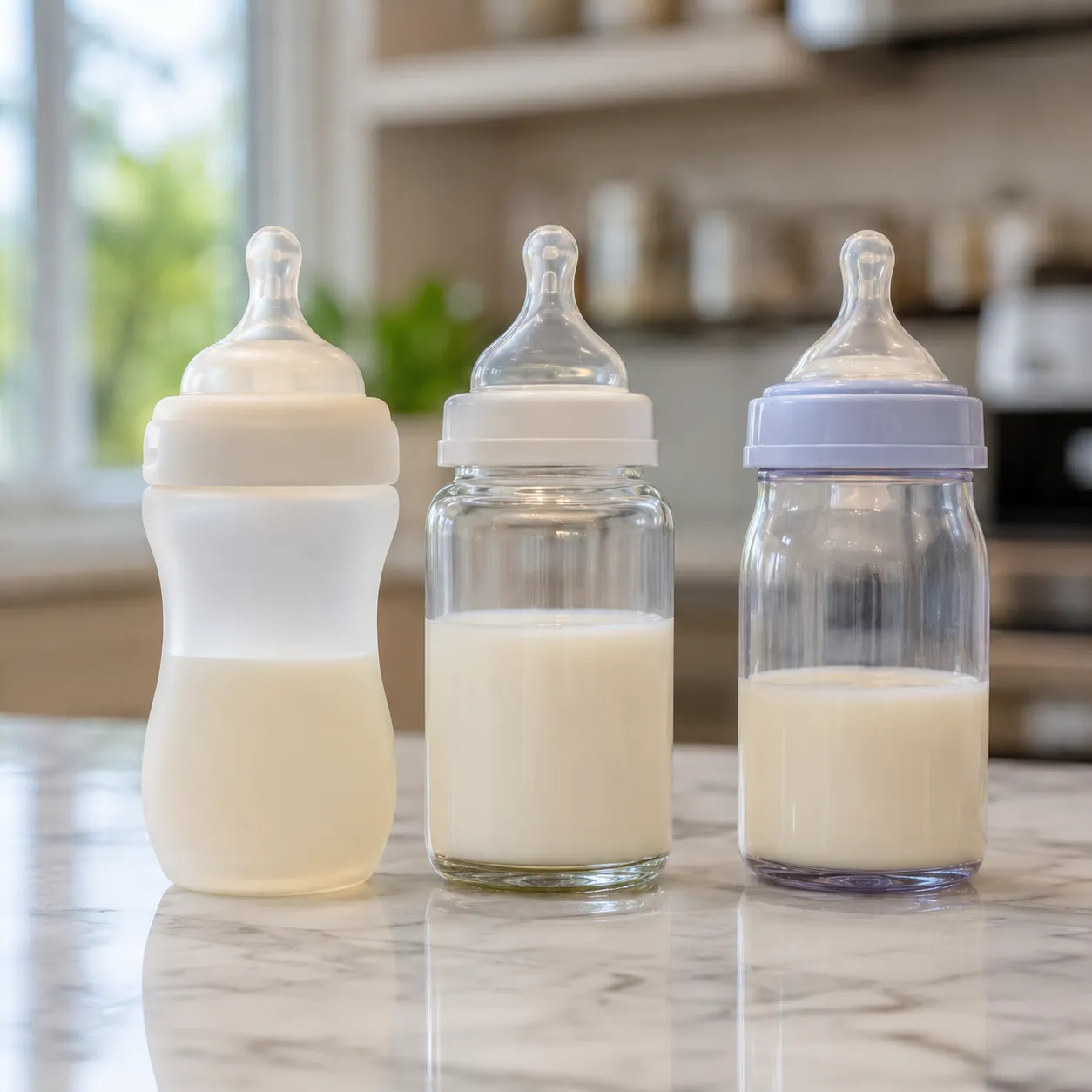
Traditional plastic options have dominated the infant feeding gear market for decades due to their lightweight nature and low upfront cost. They do not shatter when dropped, making them a highly practical option for busy parents. However, they lack the long-term durability found in high-quality alternative materials. Over time, plastic scratches easily, creating tiny crevices where bacteria can harbor despite thorough washing.
Microplastics, Wear and Tear, and Heat Sensitivity
Standard plastic bottles show significant wear and tear after just a few months of continuous use. High heat sensitivity is a major drawback; exposing these bottles to boiling water, steam sterilizers, or microwaves can accelerate material degradation. This degradation raises valid concerns regarding the release of microplastics into the milk during heating or vigorous scrubbing. For parents prioritizing absolute purity, upgrading to premium materials remains the preferred choice. As a dedicated glass manufacturer, we see a growing shift toward high-purity options, though we also design versatile kitchenware like our clear round glass cooking bowls with glass lids to support plastic-free food preparation homes.
Tritan and Safe Plastic Alternatives
To address safety concerns, the industry introduced modern, high-grade plastic alternatives like Tritan and PPSU. These materials are engineered to be completely BPA-free, offering clearer transparency and better impact resistance than traditional polypropylene.
-
- Tritan Plastic: Offers a glass-like clarity while remaining lightweight and shatterproof.
- PPSU (Polyphenylsulfone): Highly durable and capable of withstanding repeated medical-grade sterilization without breaking down.
- Temperature Resistance: Both alternatives handle higher temperatures better than standard plastics, though they still lack the infinite sterilization lifespan of true borosilicate glass.
Head-to-Head Comparison: Silicone vs. Glass vs. Plastic
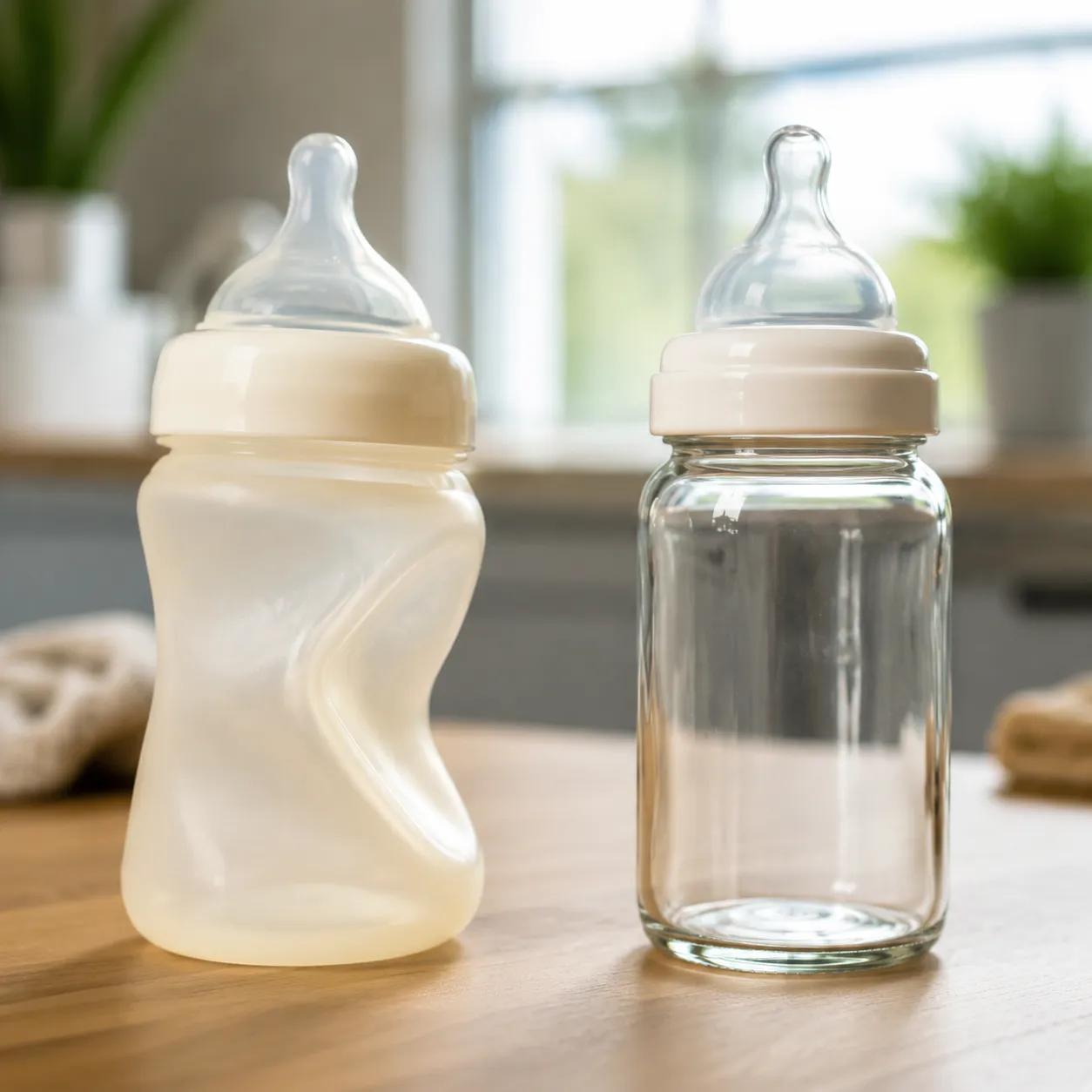
When choosing the infant feeding gear for your inventory or daily routine, comparing silicone vs glass baby bottles—and contrasting them with traditional plastic—comes down to three core performance metrics.
Durability and Lifespan (Wear & Tear)
Every baby bottle material handles daily wear and tear differently. Glass offers unmatched scratch resistance, meaning it will not degrade or cloud over time, though it requires careful handling to remain shatterproof. Silicone provides a virtually indestructible, flexible alternative that survives high drops without cracking. Plastic sits at the bottom of the lifespan scale, scratching easily under bottle brushes and requiring frequent replacement.
Heat Resistance and Ease of Sterilization
High heat resistance is mandatory for deep cleaning. Glass excels here, managing rapid temperature shifts seamlessly and making it a top candidate for heavy dishwasher use. Silicone also tolerates high sterilization temperatures without warping. Plastic is highly heat-sensitive; frequent boiling or high-temp steaming accelerates material degradation and microplastic release.
Eco-Friendliness and Sustainability
For businesses and parents prioritizing sustainability, glass is the premium eco friendly choice because it is 100% infinitely recyclable. Silicone is a highly durable, ocean-safe alternative that lasts through multiple children, reducing overall waste. Plastic remains the least sustainable option due to its limited recycling lifecycle and long-term environmental footprint.
Material Comparison Matrix
| Feature | Silicone Bottles | Glass Bottles | Plastic Bottles |
|---|---|---|---|
| Lifespan | Long (Replace nipples only) | Indefinite (Unless broken) | Short (Replace every 3–6 months) |
| Scratch Resistance | High | Maximum | Low |
| Drop Protection | Excellent (Unbreakable) | Fragile (Needs silicone sleeve) | Good (Lightweight but cracks over time) |
| Sterilization Limit | High Temp Safe | High Temp Safe | Low-to-Medium Temp Only |
| Recyclability | Specialized Facilities | 100% Infinitely Recyclable | Limited |
How to Choose the Best Bottle for Your Real Use Case
Selecting the right baby bottle material comes down to where, when, and how you feed your baby. While every family has unique routines, matching the bottle type to your specific daily environment ensures safety, convenience, and peace of mind.
| Feeding Scenario | Recommended Bottle Material | Primary Benefit |
|---|---|---|
| Daycare & Travel | Silicone / Safe Plastic | Lightweight, shatterproof, and easy to pack |
| At-Home Feeding | Glass | Maximum purity, easy to sterilize, zero chemical leaching |
| Mixed Feeding / Breastfed | Silicone | Mimics the natural breast feel and flexibility |
Best Bottles for Daycare and On-the-Go Convenience
For busy days out or daycare drops, convenience and safety are the top priorities. You need a lightweight, shatterproof option that can handle being dropped out of a stroller or tossed into a diaper bag.
Silicone bottles excel in these fast-paced environments. They are incredibly durable, squeezeable, and won’t crack under pressure. If you prefer glass but need on-the-go security, always opt for glass bottles equipped with protective silicone sleeves to prevent breakage. For general milk storage and transport before feeding, utilizing durable, food-grade glass milk jars with lids keeps the liquid perfectly sealed and fresh until it is ready to be poured into the feeding bottle.
Best Bottles for Purity and Home Use
When you are feeding at home, you have complete control over handling and sterilization, making glass the gold standard for newborn feeding. Glass is completely non-porous, meaning it will never absorb odors, discolor from formula, or leach chemicals over time.
Choosing the best glass bottles for home use ensures a highly hygienic process, as they withstand frequent high-temperature boiling and heavy dishwashing without degrading. They offer unparalleled purity and a long lifespan, making them a sustainable investment that lasts through multiple children.
Best Bottles for Breastfed Babies and Mixed Feeding
Transitioning between breast and bottle requires a design that mimics the natural feeding experience to avoid nipple confusion. Silicone is the premier choice here because the soft, warm texture of the bottle body closely resembles a mother’s skin.
-
- Sensory Mimicry: The pliable texture allows babies to squeeze the bottle, mimicking natural breastfeeding behaviors.
- Consistent Flow Control: High-quality silicone designs assist in maintaining a natural pacing during infant feeding gear transitions.
- Easy Integration: Simplifies the routine for parents alternating between direct breastfeeding and pumping.
Beyond the Bottle: Choosing Nipples and Venting Systems
Choosing the right baby bottle material is only half the battle. To ensure a smooth newborn feeding experience, the nipple and venting system must work in harmony with the bottle itself.
Nipple Material and Shape Selection
The nipple design directly impacts how well a baby latches and feeds. When selecting infant feeding gear, you will primarily choose between two materials:
-
- Silicone Nipples: The industry standard. They are durable, bpa free, dishwasher safe, and retain their shape longer without degrading.
- Latex Nipples: Softer and more flexible, but they wear out quickly and can trigger latex allergies.
Shape matters just as much as material. Wide-neck nipples mimic the natural breast shape, making them the best choice for breastfed babies to prevent nipple confusion. Narrow nipples work well for traditional, slimmer bottles and are often preferred by preemies or newborns with specific latch needs. Match the flow rate (slow, medium, or fast) to your baby’s developmental stage to prevent choking or frustration.
Whether you choose silicone vs glass baby bottles, pairing them with the correct anti-colic venting system ensures optimal comfort and safety for your baby.
Frequently Asked Questions About Baby Bottle Materials
Choosing the right infant feeding gear comes with plenty of questions. When you are looking to source or buy the best glass bottles, silicone options, or traditional plastics, understanding how these materials perform over time is essential for safety and value.
Are silicone baby bottles completely safe?
Yes, food-grade silicone baby bottles are completely safe for newborn feeding. They are naturally BPA-free, BPS-free, and phthalate-free, meaning they won’t leach harmful chemicals into milk or formula. Silicone offers excellent heat resistance, allowing it to withstand boiling water and steam sterilization without degrading. Because it is a soft, shatterproof material, it provides a safe, comfortable grip for both parents and babies.
How often should you replace plastic vs. silicone vs. glass bottles?
The lifespan of a baby bottle depends entirely on its material durability:
-
- Plastic Bottles: Replace every 3 to 6 months. Plastic scratches easily, and these tiny grooves can harbor bacteria or release microplastics when heated.
- Silicone Bottles: Replace every 6 to 12 months. While highly resilient, silicone can become cloudy or lose its elasticity over time with heavy daily use.
- Glass Bottles: These can last indefinitely unless they chip, crack, or break. As a leading glass manufacturer, we ensure our high-quality glass bottles offer superior thermal shock resistance, making them the most sustainable and long-lasting investment for wholesale buyers and parents alike. Learn more about how these durable containers are made in our guide on how glass bottles are manufactured.
Do silicone bottles absorb odors or stains?
Silicone is a porous material compared to glass, meaning it can occasionally absorb odors from dish soap or strong milk fats, as well as stains from brightly colored foods. To prevent this, wash silicone bottles immediately after feeding, use fragrance-free soap, and sterilize them regularly. If you want a completely non-porous option that never absorbs smells, stains, or residual flavors, premium glass remains the gold standard for absolute purity.
Related Sources
- https://abm.memberclicks.net/assets/DOCUMENTS/PROTOCOLS/8-human-milk-storage-protocol-english.pdf
- https://www.cpsc.gov/Business–Manufacturing/Business-Education/Lead/Total-Lead-Content