Glass vs. Plastic Baby Bottles: Key Comparisons
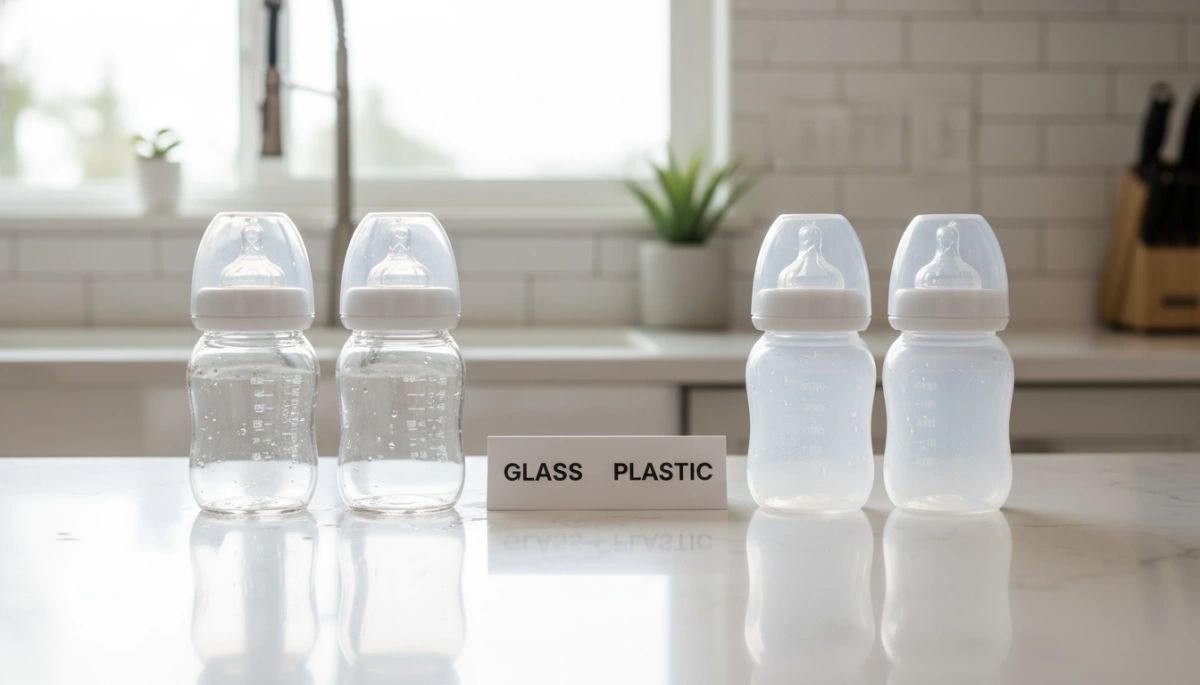
We are a glass baby bottles manufacturer and supplier, and we answer questions about materials every day. When looking at glass baby bottles vs plastic, you need a straight answer on what works best for your baby. Here is how the two materials stack up against each other.
Health and Safety Standards
Safety is always the top priority when feeding your baby.
- Glass: Naturally free of harmful toxins like BPA, BPS, and phthalates. It does not shed microplastics into milk when heated. Glass also prevents taste and odor transmission, ensuring your baby’s milk tastes fresh every time.
- Plastic: Modern plastic bottles are BPA-free, but surface degradation over time can still lead to microplastic leaching.
- Alternative: Some parents also use medical-grade silicone baby bottles as a flexible, toxin-free middle ground.
Heat Resistance and Warming Milk
You need a bottle that can handle daily heating and sterilizing safely.
- Glass: Handles extreme temperatures perfectly. You can safely drop glass in boiling water or use high-heat sterilizers without any risk of the bottle melting, warping, or leaching chemicals.
- Plastic: Repeated exposure to high heat from dishwashers and bottle warmers slowly breaks down the plastic structure.
Durability and Overall Longevity
How long will these bottles actually last?
- Glass: Highly durable against daily wear and tear. It resists scratches and won’t suffer from discoloring or clouding over time. The high-grade precision we use in crafting our glass—similar to the durable glass casing needed for a custom clock hourglass sand timer—ensures these bottles survive heavy daily use. They only need replacing if broken.
- Plastic: Won’t shatter if dropped, making it easier for travel. However, the material scratches easily during washing, creating microscopic grooves where milk fat and bacteria can hide.
Eco-Friendliness and Sustainability
If reducing household waste is important to you, the materials matter.
- Glass: Endlessly reusable and 100% recyclable. Glass leaves a minimal environmental footprint and can be repurposed once your baby outgrows bottles.
- Plastic: Has a much shorter lifespan and eventually ends up in landfills or oceans.
| Feature | Glass Baby Bottles | Plastic Baby Bottles |
|---|---|---|
| Health Safety | Excellent (No microplastics) | Good (BPA-free, but degrades) |
| Heat Resistance | High | Moderate |
| Longevity | High (No discoloring) | Low (Scratches easily) |
| Shatterproof | No (Silicone sleeves recommended) | Yes |
| Environmental Impact | Low (Highly reusable) | High (Landfill waste) |
About Baby Bottle Materials
Choosing the right feeding container is a critical decision for new parents. To make an informed choice, you must understand the exact properties, safety profiles, and daily usability of each material before investing. The core debate usually centers on glass baby bottles vs plastic.
What Are Glass Baby Bottles?
Glass has been the gold standard for infant feeding for generations. Baby bottles are best made of borosilicate glass to meet stringent global safety standards.
- Pure and Safe: Naturally free from BPA, BPS, and other harmful toxins.
- Highly Durable: Fully reusable across multiple children without degrading.
- Clean Tasting: Prevents taste and odor transmission entirely.
- Aesthetic Longevity: Immune to scratches and discoloring, keeping milk visible and sanitary.
What Are Plastic Baby Bottles?
Plastic bottles are the most widely available option on the market, typically made from polypropylene (PP) or PPSU. While modern iterations are regulated, they come with inherent material limitations.
- Lightweight: Easy for both parents and growing babies to hold.
- Shatterproof: Designed to survive drops, making them ideal for travel.
- Degradation Risks: Highly susceptible to scratches during washing, which can harbor bacteria.
- Safety Concerns: Repeated exposure to high-heat sterilization raises valid concerns regarding the shedding of microplastics into milk over time.
Alternative Options: Silicone and Stainless Steel
While the glass baby bottles vs plastic comparison dominates the industry, a few alternative materials serve niche market needs.
- Silicone Baby Bottles: Manufactured from food-grade medical silicone. They are soft, squeezable, and shatterproof, but can occasionally absorb smells over time.
- Stainless Steel: Exceptionally rugged and excellent for thermal insulation. However, their opaque nature makes it difficult to measure liquid volumes quickly.
Material Quick Comparison
| Material | Safety Profile | Weight | Longevity & Wear |
|---|---|---|---|
| Glass | Zero Microplastics | Heavy | Scratch-resistant, highly reusable |
| Plastic | Regulated (Microplastic risks) | Light | Prone to discoloring and scratches |
| Silicone | Toxin-Free | Light | Resists breakage, retains odors |
| Steel | Toxin-Free | Moderate | Indestructible, opaque |
The Pros and Cons of Glass Baby Bottles
When evaluating glass baby bottles vs plastic, it helps to look at the daily realities of feeding your newborn. As an experienced glass baby bottles manufacturer and supplier, we see exactly why modern parents are making the switch to glass, but we also want you to understand its practical trade-offs.
Advantages: Toxin-Free and Easy to Sanitize
Safety is the biggest reason parents choose glass.
- Zero Harmful Toxins: Glass is naturally free of BPA, BPS, and other chemical additives.
- No Microplastics: When you heat milk in glass, there is zero risk of microplastics leaching into your baby’s food.
- Simple Sterilization: Glass easily handles boiling water and heavy-duty steam sterilizers without melting, scratching, or warping.
Advantages: Resistance to Stains and Odors
Glass is completely non-porous. This gives it a massive edge because it naturally resists discoloring from milk fat, juices, or formula. More importantly, glass prevents taste and odor transmission. No matter what was in the bottle yesterday, it will smell completely neutral after a simple wash today. Just like our larger food-grade glass bottles, high-quality glass baby bottles are incredibly durable and remain infinitely reusable for years without degrading.
Disadvantages: Heavier Weight and Breakage Risks
Despite the health benefits, glass is not flawless. It brings two main challenges to the table:
- Extra Weight: Glass is significantly heavier than plastic. A young infant will have a harder time holding a glass bottle independently.
- Shatter Risk: Dropping a glass bottle on a hard tile floor usually results in a messy break.
To reduce breakage risks, you must handle them carefully. For example, if you are freezing breast milk in glass, you must account for liquid expansion—which is exactly why bottles containing liquid are left with some space at the top to stop the glass from cracking under pressure. Many parents also slide protective sleeves over the glass to add grip and impact resistance, giving the bottle the safe feel of silicone baby bottles while keeping the milk touching pure glass.
The Pros and Cons of Plastic Baby Bottles
When comparing glass baby bottles vs plastic, plastic remains a very common choice for everyday feeding. However, understanding the tradeoffs is crucial for your baby’s health and your daily routine.
Advantages: Lightweight and Shatterproof Design
- Easy to handle: Plastic is incredibly light, making it easier for you to feed your baby and, eventually, for older babies to hold the bottle themselves.
- Drop-proof: You never have to worry about a shattered mess on the kitchen floor if the bottle accidentally slips out of your hands during a late-night feed.
Advantages: Affordability and On-the-Go Convenience
- Budget-friendly: Plastic options are generally cheaper to buy upfront, making it affordable to stock up on a large supply.
- Travel-ready: Their low weight and shatterproof nature make them a convenient option for tossing into a crowded diaper bag for day trips, flights, or daycare.
Disadvantages: Wear and Tear and Microplastic Concerns
While convenient, plastic has some serious drawbacks as it ages and goes through daily wash cycles:
- Rapid degradation: Plastic is highly prone to scratching. These micro-scratches harbor bacteria and lead to discoloring, as well as unwanted taste and odor transmission over time.
- Health risks: Frequent heating, sterilizing, and vigorous washing can cause plastic to break down. This raises serious, well-documented concerns about babies ingesting microplastics and the potential release of harmful toxins directly into their milk.
- Shorter lifespan: Because they wear out and degrade so quickly, plastic bottles are not nearly as durable or safely reusable as alternative materials.
We consistently see parents moving away from plastic due to these exact health concerns, choosing instead to protect their newborns with pure glass or by exploring medical-grade silicone baby bottles for a safer, longer-lasting feeding solution.
How to Choose the Best Bottle for Your Baby
Deciding on glass baby bottles vs plastic ultimately comes down to your daily routine and priorities.
Which Material is Better for Newborns?
For newborns, safety and purity are the top priorities. Because you are the one holding the bottle during early feedings, the heavier weight of glass isn’t a problem. Glass provides peace of mind because it is completely free of harmful toxins and eliminates any risk of microplastics entering your baby’s system during high-heat sterilization. It also prevents taste and odor transmission, ensuring your newborn gets only the pure taste of their milk.
| Feature | Glass Bottles | Plastic Bottles |
|---|---|---|
| Safety | Zero chemical leaching | Potential microplastic risks |
| Weight | Heavier (best for parent-led feeds) | Lighter |
| Sanitizing | Withstands extreme boiling heat | Can degrade over time |
Best Bottle Types for Pumped Breast Milk
Pumped breast milk is liquid gold, and preserving its nutrients is crucial. Glass is naturally durable and resists discoloring, making it ideal for storing milk in the fridge. The smooth surface prevents fat from sticking to the sides, ensuring your baby gets all the vital nutrients. While some parents lean toward silicone baby bottles for freezing because the material expands, a high-quality, reusable transparent glass bottle remains the superior choice for safe, everyday fridge storage and gentle warming.
Factoring in Your Family’s Lifestyle and Budget
Your daily habits play a huge role in this choice. Consider these quick points:
- For the Homebody: If you primarily feed at home, glass is an excellent long-term investment. It lasts through multiple children without degrading.
- For the On-the-Go Family: Plastic is shatterproof and lightweight, making it easier to toss into a diaper bag for travel or daycare.
- For the Budget-Conscious: Plastic costs less upfront. However, glass is highly reusable and rarely needs replacing unless dropped, often making it cheaper in the long run.
Cleaning, Sterilizing, and Safe Usage Guide
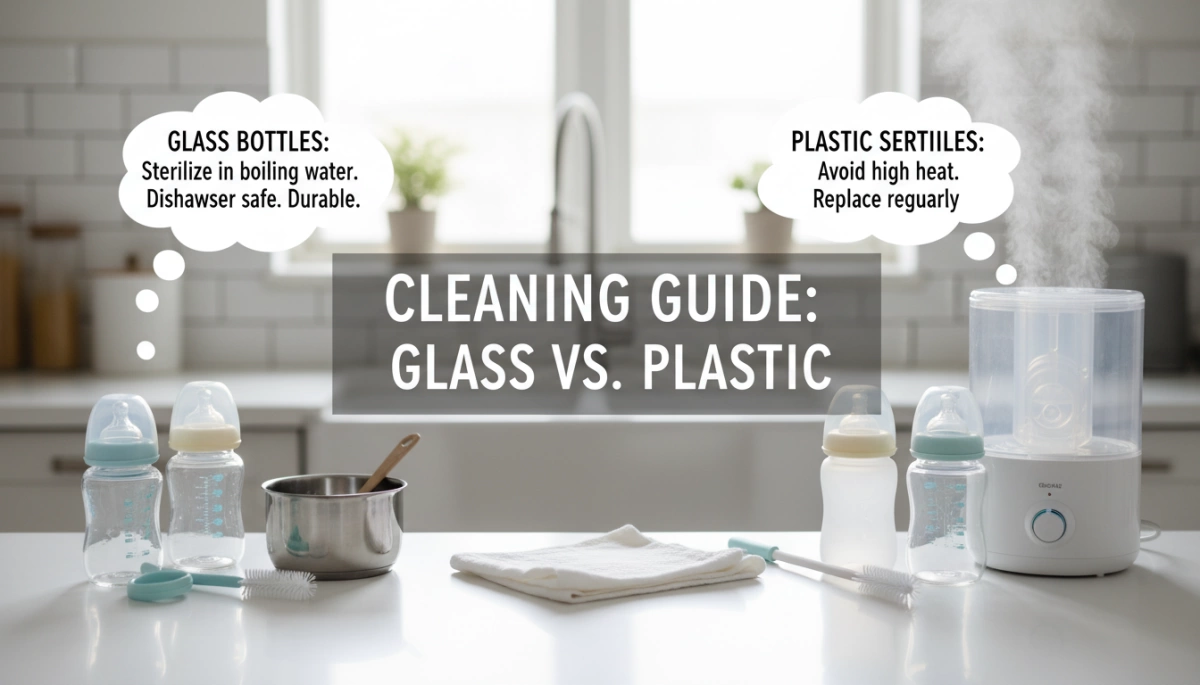
The maintenance routine heavily depends on your choice in the glass baby bottles vs plastic debate.
How to Wash and Sterilize Glass Bottles
Glass is naturally durable, reusable, and resistant to both discoloring and taste and odor transmission. Keeping them sanitary is simple:
- Rinse Immediately: Rinse with warm water right after a feeding to prevent milk residue from sticking.
- Scrub Gently: Wash thoroughly with warm soapy water and a bottle brush.
- Sterilize Freely: You can boil glass, use steam sterilizers, or run them through a dishwasher on high heat. Because high-quality borosilicate glass withstands extreme temperature shifts—much like durable amber glass food warmer containers—you never have to worry about the material breaking down during sterilization.
Safety Tips for Heating and Using Plastic Bottles
If you are using plastic or silicone baby bottles, heat management is critical to prevent the release of harmful toxins or microplastics into the milk.
- Never Microwave: Microwaves create dangerous hot spots and degrade plastic faster.
- Use Warm Water Baths: Place the sealed bottle in a bowl of warm (not boiling) water to gently bring the milk to temperature.
- Avoid Abrasive Scrubbing: Hard brushes create micro-scratches inside plastic bottles, giving bacteria a place to hide and accelerating the breakdown of the bottle.
When Is It Time to Replace Your Baby Bottles?
Nothing lasts forever, but different materials have very different lifespans.
- Glass Bottles: These can essentially last a lifetime. You only need to replace them immediately if you spot a crack, chip, or deep scratch.
- Plastic Bottles: Plan to replace these every 3 to 6 months. Toss them sooner if you notice cloudiness, deep scratches, lingering smells, or structural warping.
Frequently Asked Questions
Are modern plastic baby bottles safe?
Today’s plastic options meet strict safety standards and are entirely BPA-free. However, when evaluating glass baby bottles vs plastic, heating plastic repeatedly still raises valid concerns about microplastics and the potential release of harmful toxins. Plastic is also prone to scratching and discoloring over time, creating tiny spaces where bacteria can hide. For complete peace of mind, glass or premium silicone baby bottles offer a much safer, cleaner feeding experience.
Do glass baby bottles retain heat longer than plastic?
Yes, they do. Glass is naturally thicker and acts as a better insulator than plastic, keeping milk comfortably warm throughout the entire feeding. Furthermore, glass guarantees zero taste and odor transmission, so the milk always tastes fresh. As a trusted glass baby bottles manufacturer and supplier, we specifically use thermal shock-resistant borosilicate glass. Much like the heavy-duty material found in our round borosilicate glass food jars, this ensures the bottle can handle rapid temperature changes while locking in heat effectively.
How many bottles should I buy to start with?
We generally recommend starting with a rotation of 4 to 6 bottles. This gives you enough clean bottles on hand without constantly rushing to the sink.
- Newborn Phase: Focus on 4-ounce bottles.
- Growing Phase: Transition to 8-ounce bottles as their appetite increases.
Because glass is highly durable and reusable, a small set of high-quality glass bottles will comfortably last through multiple children. You skip the constant replacement cycle required when plastic bottles wear down, making glass a smarter long-term investment.