How does ordinary sand become a sturdy, airtight Mason jar in a food pantry? From 1500°C furnaces to high-precision molding, the journey of a glass jar is a masterpiece of industrial engineering and sustainability.
How Are Mason Jars Manufactured? The Quick Answer:
-
Batching: Mixing silica sand, soda ash, limestone, and recycled cullet.
-
Melting: Heating the mixture to 1500°C until it becomes molten glass.
-
Forming: Utilizing the “Press and Blow” process to create the jar’s shape and threaded neck.
-
Annealing: Gradually cooling the glass in a kiln to remove internal stress and ensure heat resistance.
-
Inspection: Using automated optical sensors to guarantee a perfect, airtight seal.
Read on to go behind the scenes of the seven-step process that creates the world’s most reliable glass packaging.
How Are Mason Jars Manufactured? The First Step
Gathering the Raw Materials for Glass Making
How does a simple pile of soil become a sturdy, transparent glass jar in your storage room? It all starts with the exact right mix.
To achieve the ideal soda-lime glass composition, we rely on three core raw materials:
- Silica Sand: This is the primary foundation and structural backbone of our glass.
- Soda Ash: Added to significantly lower the melting point of the sand, making the manufacturing process much more efficient.
- Limestone: Crucial for adding durability and chemical resistance, ensuring the jar withstands daily wear and tear.
The Role of Cullet and Eco-Friendly Glass Packaging
We do not just rely on raw earth materials to craft our containers. A massive part of our production process involves cullet—which is high-quality, crushed recycled glass.
Integrating cullet into our raw material mix is a total game-changer. Because recycled glass melts at a much lower temperature than raw silica sand, it drastically reduces the energy required in our facility. This smart integration lowers our overall carbon footprint and ensures that every container we produce represents truly eco-friendly glass packaging. By prioritizing these sustainable manufacturing methods, we consistently deliver 100% recyclable glass bottles and jars that are just as good for the planet as they are for your product line.
Step 2: The Melting Process in the Furnace
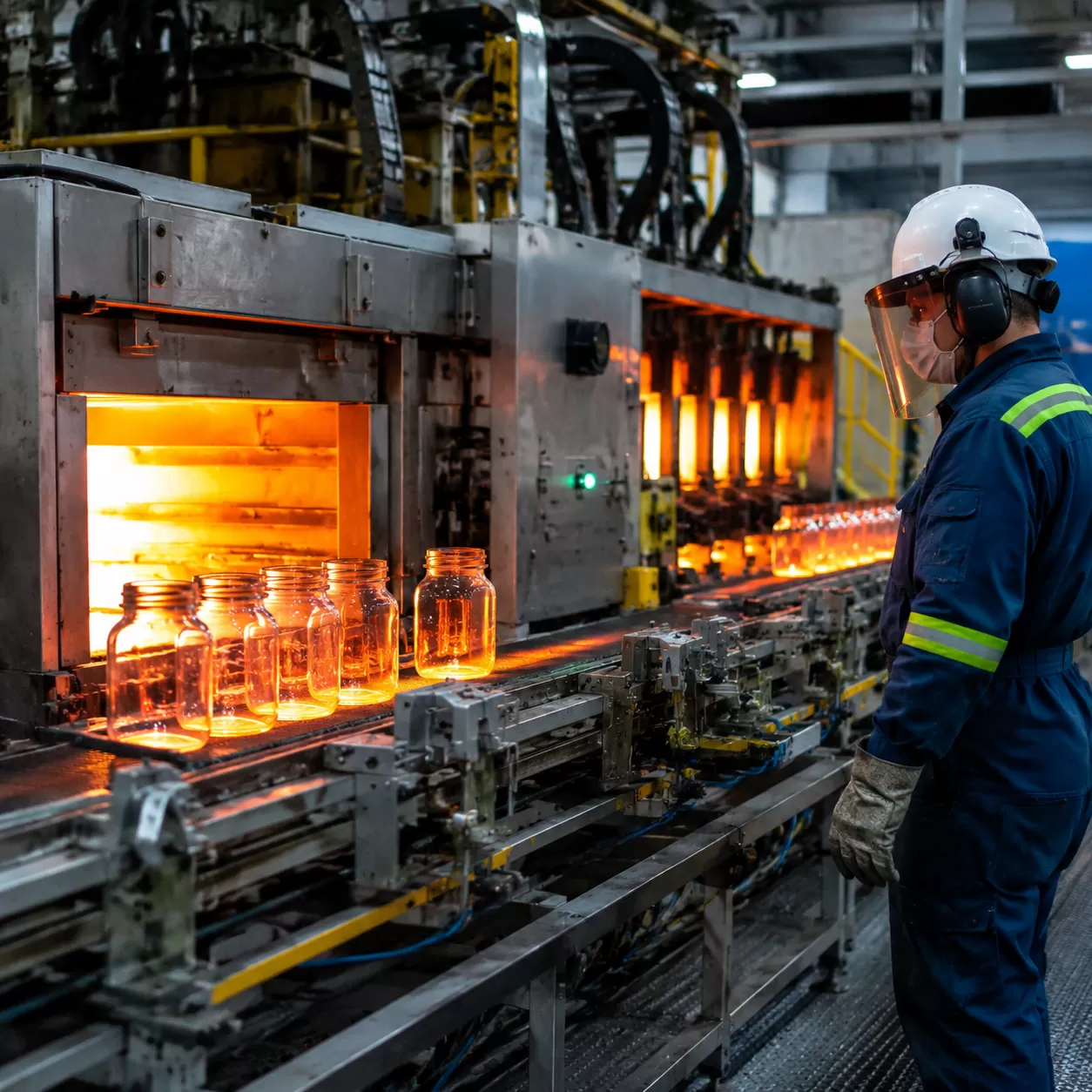
Once the raw materials are prepared, the next phase in how mason jars are manufactured takes place inside the glass melting furnace. This is where solid ingredients transform into the durable material needed for our packaging solutions.
We follow a highly controlled process to ensure the glass meets strict quality standards:
- Batching and Mixing: The silica sand, soda ash, limestone, and recycled cullet are accurately weighed and blended. Getting this soda-lime glass composition exactly right is the foundation for creating strong, dependable jars.
- Feeding the Furnace: The blended mixture is continuously fed into the furnace. The flow rate is closely monitored to maintain a steady production line.
- Extreme Temperatures: Inside the furnace, the environment reaches a staggering 1500°C (around 2700°F). At this intense heat, the raw mixture melts down into a glowing, liquid state known as molten glass.
- Achieving Chemical Stability: This precise melting process locks in the chemical properties required for heat-resistant glass containers. Whether the glass is destined for heavy-duty canning or tailored for glass spice jars with screw airtight seal, the molten material must be completely uniform to prevent structural weaknesses.
By maintaining a consistent temperature and a flawless chemical balance, we ensure that every batch of molten glass is perfectly prepped for the next stage of molding.
Step 3: Forming the Jar (The Press and Blow Process)
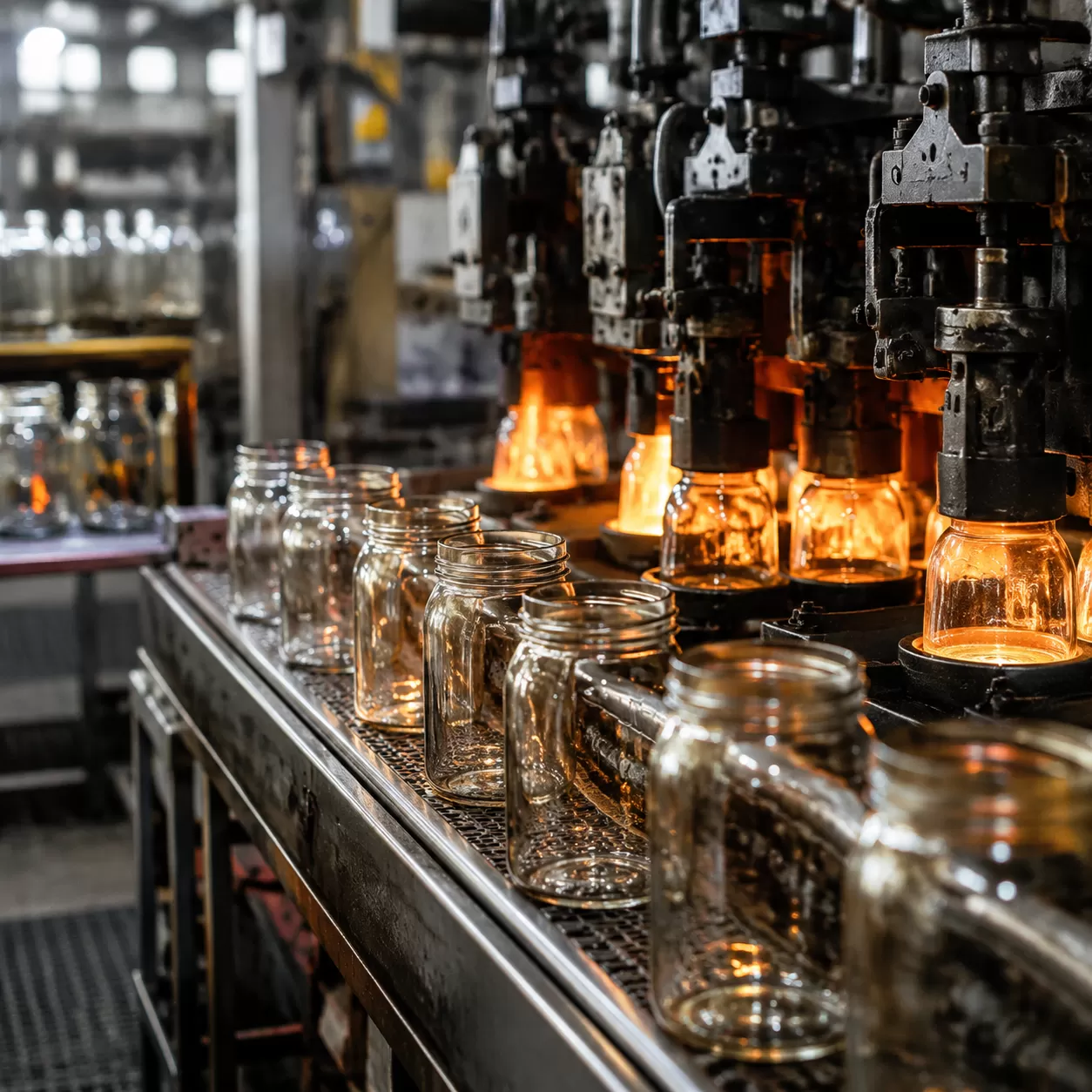
At our facility, we rely on the highly efficient press and blow process. This reliable glass molding technique ensures every single jar has a consistent shape, clear details, and uniform wall thickness.
Here is exactly how the liquid glass takes its familiar form:
- Cutting Precise Gobs: As the molten glass exits the furnace, heavy mechanical shears cut the thick stream into precise, glowing drops known as “gobs.” Each gob is strictly measured to contain the exact weight and volume of glass needed for a specific jar size.
- The Press Phase: The gob drops into a blank mold. A metal plunger pushes down into the hot glass to form the threaded neck. This precise threading is critical—it is what ultimately guarantees airtight mason jars that seal perfectly. This action also creates a thick, hollow pre-form shape called a “parison.”
- The Blow Phase: The parison is quickly transferred into the final blow mold. We inject compressed air into the center of the glass, expanding it smoothly against the inner walls of the mold. This gives the jar its final, recognizable shape.
- Forming the Openings: This automated process allows us to easily produce both wide-mouth and regular-mouth jars with absolute uniformity.
We utilize these advanced glass molding techniques across our entire production line, ensuring incredible structural integrity whether we are manufacturing standard bulk mason jars or precision items like our 650ml-1000ml high borosilicate bottles with scale lines. By tightly controlling the press and blow process, we guarantee durable, heat-resistant glass containers that hold up flawlessly during heavy-duty commercial filling and cleaning processes.
Step 4: The Annealing Lehr (Cooling and Strengthening)
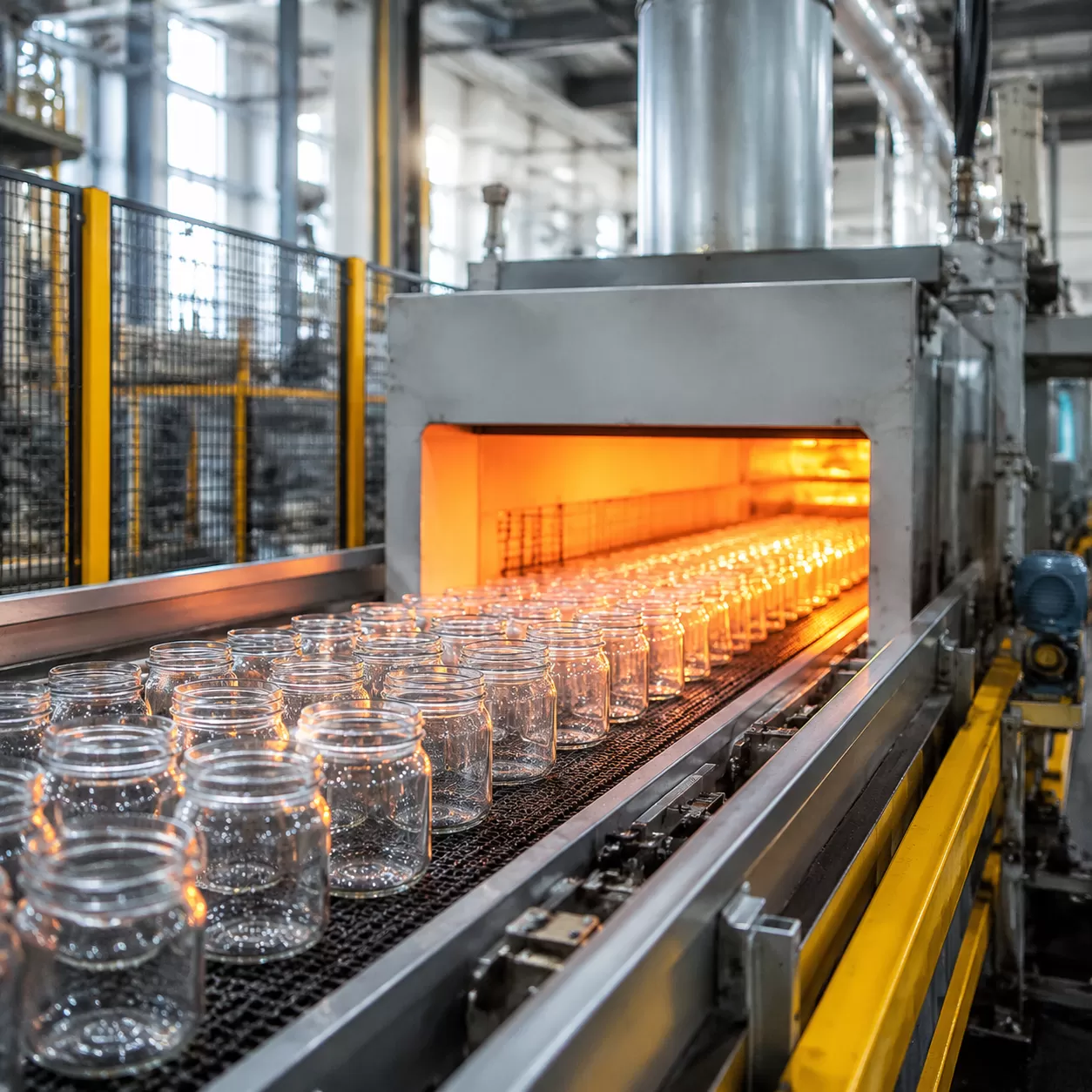
In the manufacturing process of Mason jars, the cooling phase is just as critical as the melting and forming stages. Once the jars leave the mold, they are still incredibly hot. If exposed directly to room temperature, the outside of the glass would cool much faster than the inside. This uneven temperature drop causes severe thermal stress, which would make the glass shatter instantly.
To prevent this and ensure durability, we immediately transfer the newly formed jars onto a conveyor belt that feeds into a long, temperature-controlled kiln known as an annealing lehr.
Creating Shatter-Resistant Glass
The process of annealing glass jars requires precise temperature management to guarantee structural integrity. Here is how we ensure every jar is ready for heavy-duty use:
- Controlled Reheating: As the jars enter the lehr, they are briefly reheated to an exact, uniform temperature. This step relaxes the glass and removes any internal stresses created during the press and blow process.
- Gradual Cooling: As the jars travel down the length of the tunnel, the temperature is lowered at a very slow and controlled rate.
- Maximum Durability: This gradual temperature reduction stabilizes the glass structure. The result is a highly durable, heat-resistant container capable of withstanding the temperature shocks of commercial hot-filling processes and standard home canning.
This rigorous annealing process is exactly how we ensure our 5-32oz round glass mason jars with aluminum lids maintain exceptional strength, keeping them intact during bulk shipping, filling, and everyday consumer use.
Step 5: Surface Coating and Treatment
In the manufacturing process of Mason jars, the surface treatment phase is a critical step that guarantees the longevity and usability of the final product. Once the jars exit the annealing lehr, we apply specialized coatings to protect the glass and optimize it for industrial use.
Applying Hot-End and Cold-End Coatings
We utilize a dual-coating system to enhance the durability of our glass containers:
- Hot-End Coating: Applied while the glass is still extremely hot, this microscopic layer of tin or titanium oxide bonds with the glass surface, strengthening it and preparing it for the second treatment.
- Cold-End Coating: After the jars cool down, we apply a food-safe polyethylene spray. This adds essential lubricity to the exterior.
Preventing Scratches During Transport
Glass is naturally susceptible to abrasions when jars rub against one another. Our coating process significantly lowers surface friction, preventing scuffs and scratches during transit. Whether you are ordering bulk standard containers or specialty items like our 16oz gradient skeleton shape mason jars, these protective layers ensure your wholesale glass jars arrive in flawless, retail-ready condition.
Improving Flow on Commercial Lines
A smooth exterior does more than preserve the aesthetic appeal of the jar. The added lubricity prevents the containers from catching or jamming against each other. This drastically improves the flow of jars on commercial glass jar filling and cleaning lines, allowing your facility to maintain high-speed production rates without the risk of costly delays or breakage.
Step 6: Rigorous Quality Control and Inspection
When looking at exactly how are mason jars manufactured to withstand high temperatures and daily use, quality control in glass manufacturing stands as the most critical phase. We know that a single flaw can ruin a product line, so we rely on strict, multi-layered inspection protocols before any glass container leaves our facility.
To ensure every batch meets global safety and performance standards, we implement the following checks:
- Automated Optical Inspections: As the jars move down the line, high-speed automated cameras scan every single unit. This technology instantly detects microscopic cracks, trapped air bubbles, and any structural defects, automatically rejecting flawed pieces.
- Threaded Finish Precision: A jar is only as good as its seal. We strictly measure the dimensions of the threaded neck. This precise sizing guarantees that our lids fit flawlessly, creating the perfectly airtight mason jars required for food storage and preservation.
- Wall Thickness Testing: Glass density matters. We constantly test the wall thickness of our jars to ensure they are uniform and robust. This step is non-negotiable for producing heat-resistant containers that safely endure pressure canning and commercial hot-fill processes without shattering.
By combining advanced technology with rigorous testing standards, we guarantee that our wholesale glass jars are durable, safe, and ready for commercial filling lines.
Step 7: Packaging, Palletizing, and Shipping
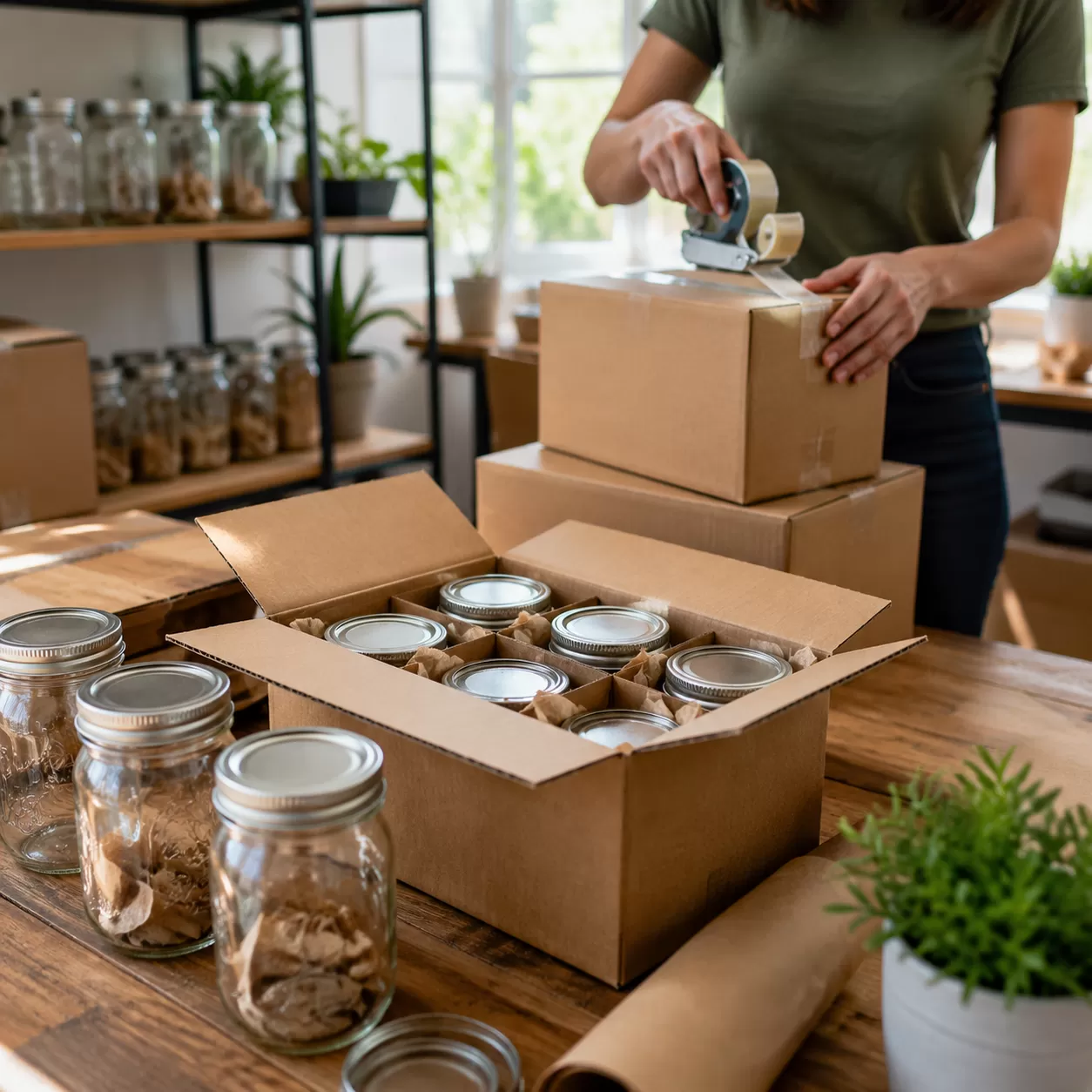
Once we have mapped out exactly how are mason jars manufactured and inspected for quality, the final step is getting them safely to your facility. As a dedicated bulk mason jars supplier, we meticulously package every order to ensure your inventory arrives intact and ready for immediate production.
Preparing Bulk Orders for Safe Transit
Shipping glass requires precision and care. We utilize reinforced, eco-friendly corrugated dividers and sturdy cartons to completely eliminate friction between the jars. Whether you are stocking up on classic designs or our 100ml-750ml straight-sided glass food jar with metal lid, our packaging architecture is specifically engineered to absorb heavy shocks and vibrations during transit.
Palletizing for Global Distribution
When shipping wholesale glass jars across the globe, proper palletizing is absolutely critical. We secure your bulk orders using industry-leading methods:
- Industrial Shrink Wrapping: Heavy-duty wrap binds the cartons tightly to the pallet, preventing any shifting inside the shipping container.
- Rigid Edge Protectors: Thick corner boards maintain pallet stability and prevent carton crushing under heavy vertical loads.
- Contamination Barriers: Protective top sheets keep the entire shipment clean, dry, and free of dust during extended ocean or land freight.
Ready for Commercial Filling and Cleaning
We build our shipping protocols around your operational needs. When our pallets arrive at your destination, the cartons are strategically organized for rapid, hassle-free unboxing. This structured approach minimizes handling time, ensuring the containers flow smoothly and directly into your commercial glass jar filling and cleaning automated lines.
The Reihey Advantage: Wholesale Mason Jars
As a direct manufacturer, we take the complexity out of how mason jars are manufactured to bring you reliable, high-quality containers. We are a trusted bulk mason jars supplier, delivering premium products tailored to the exact needs of global markets.
Here is what sets our manufacturing process apart:
- Eco-Friendly Glass Packaging: We are deeply committed to sustainable production. Our jars are crafted from 100% recyclable materials, helping your brand maintain a low carbon footprint without compromising on durability or clarity.
- Customization and Bulk Availability: We scale our production to meet your demands. We offer versatile capacities ranging from 3 to 32oz, along with specialized threaded finishes to ensure you get perfectly airtight mason jars every time.
- Unmatched Quality and Pricing: Because you are buying directly from the factory, you benefit from highly competitive pricing. We enforce strict quality control in glass manufacturing at every step, ensuring your wholesale glass jars arrive heat-resistant, uniform, and ready for commercial filling and cleaning lines.
FAQs About Mason Jar Manufacturing
When customers ask us about how are mason jars manufactured, a few specific technical questions frequently come up. Here are the facts behind our production and engineering methods.
Are mason jars made of tempered or annealed glass?
Mason jars are entirely constructed from annealed glass, rather than tempered glass.
- Controlled Cooling: During the glass jar manufacturing process, the molten glass is formed and then sent through an annealing lehr. This machine cools the glass slowly and uniformly to relieve internal thermal stress.
- Safety in Canning: Tempered glass is designed to shatter into tiny pieces under stress. Annealed glass provides the necessary structural stability to withstand gradual heating and cooling safely.
How do manufacturers ensure the glass jars are completely airtight?
Food preservation relies on a vacuum seal. We engineer our containers to function as perfectly airtight mason jars through strict dimensional control.
- Thread Precision: The “finish” (the threaded neck of the jar) is molded with extremely tight tolerances during the press and blow process.
- Rigorous Testing: Automated optical cameras inspect every single jar’s rim and threads. Whether we are molding bulk canning jars or specialized packaging like a clear cube shape glass candle jar, maintaining exact dimensions at the opening ensures the lid’s sealing compound seats flawlessly against the glass.
What makes mason jars heat-resistant for canning?
Producing heat-resistant glass containers comes down to the raw material blend and the final thermal treatment.
- Soda-Lime Glass Composition: We utilize a premium soda-lime mixture designed specifically for durability and clarity.
- Even Wall Thickness: By distributing the glass evenly throughout the jar’s body and base, we prevent weak points. Combined with thorough annealing, this prevents the glass from fracturing when exposed to the extreme temperatures of boiling water baths or commercial hot-fill operations.