Why Glass Doesn’t Have a “Single” Melting Point
At Reihey, clients often ask us for the exact glass melting point when sourcing wholesale jars. The reality? Glass doesn’t behave like ice, which melts into water at one strict, predictable temperature.
The Amorphous Solid Matrix
Glass lacks a rigid, organized crystal structure. Instead, it is built on an amorphous solid matrix. Because the internal molecules are arranged randomly, they don’t all break down at the same time when exposed to extreme heat.
Instead of a sudden, instant melt, glass gradually transitions from a hard solid into a thick, honey-like liquid. This steady, gradual shift is known as the amorphous solid transition temperature.
The Three Key Temperature States
Because of this unique molecular setup, our bulk glass bottles manufacturing process doesn’t rely on just one number. To ensure structural integrity, we track three distinct thermal phases:
- The Strain & Annealing Temperature of Glass: The crucial cooling and stabilizing zone. At this heat level, internal structural stresses are relieved without the glass warping or losing its shape. Proper annealing guarantees your wholesale glass jars won’t shatter easily.
- The Glass Softening Point: As the heat ramps up, the glass reaches a threshold where it begins to sag under its own weight. It loses its rigid shape but isn’t quite a flowing liquid yet.
- The Working & Melting Range: This is the peak heat zone inside the glass furnace. The glass finally transitions into a glowing, workable syrup, allowing us to mold it perfectly into durable, high-quality containers.
Melting Points by Glass Type
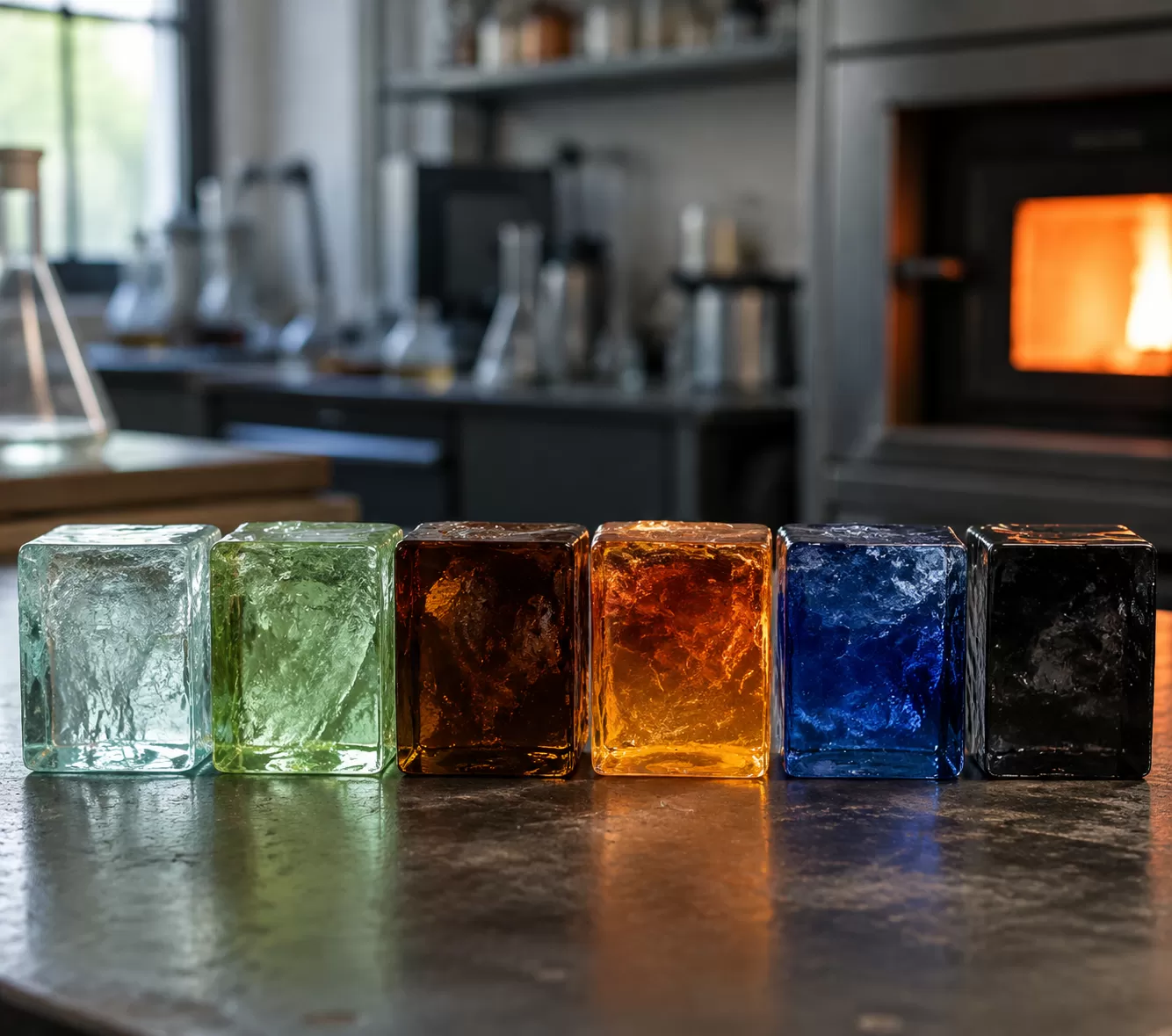
When sourcing bulk glass bottles or wholesale glass jars for your brand, understanding the exact glass melting point of different materials is crucial for safe and effective product design. At Reihey, we work with several glass compositions. Because glass is an amorphous solid, it doesn’t melt at a single, sharp temperature. Instead, it transitions from a hard solid to a workable liquid over a range of temperatures.
Here is a direct breakdown of how different glass materials handle the heat.
Soda-Lime Glass (Soda Glass / Flint Glass)
This is the most common glass used globally for everyday commercial packaging, including food jars, cosmetic containers, and standard drinkware like 12oz mojito cocktail glasses.
- Softening Point: Around 700°C (1,292°F).
- Melting Range: The typical flint glass melting process requires furnace operational temperatures between 1,400°C and 1,500°C (2,552°F – 2,732°F).
- Performance: While highly cost-effective, you must be mindful of soda-lime glass temperature limits. It is not designed to withstand rapid, extreme temperature changes.
Borosilicate Glass (Borosil Glass)
If your product line requires heat-resistant food storage jars or premium cookware, borosilicate is the industry standard. The addition of boric oxide significantly lowers its coefficient of thermal expansion.
- Softening Point: Approximately 820°C (1,508°F).
- Melting Range: Typically melts at around 1,650°C (3,000°F).
- Performance: Known for exceptional borosilicate glass thermal resistance, this material easily survives rapid heating and cooling cycles that would shatter ordinary soda glass.
Fused Silica Glass (Quartz Glass)
Quartz glass is made of almost pure silicon dioxide. It is highly specialized, expensive, and engineered for extreme industrial or scientific environments.
- Softening Point: Roughly 1,650°C (3,000°F).
- Melting Range: The quartz glass melting temperature is incredibly high, exceeding 1,713°C (3,115°F).
- Performance: Unmatched thermal stability, capable of surviving sustained, intense heat.
Specialty and Treated Glasses
Beyond the base chemical composition, post-manufacturing treatments dictate how glass handles heat in everyday use.
- Tempered Glass: The tempering process drastically increases the tempered glass heat threshold and physical impact resistance. While it doesn’t alter the actual melting point of the base glass, tempered items can safely endure surface temperatures up to 250°C (482°F) without failing.
- Amber Glass: Commonly used for UV-sensitive products, such as our square amber spray glass bottles. It shares the same basic thermal properties and melting point as clear soda-lime glass but features added iron and sulfur for color and light protection.
- Ceramic Glass: When looking at ceramic glass vs soda glass, ceramic structures are partially crystallized. This unique matrix allows them to endure massive thermal shock and direct flames, handling continuous use at around 700°C (1,290°F) without warping or melting.
Quick Reference Temperature Comparison Table
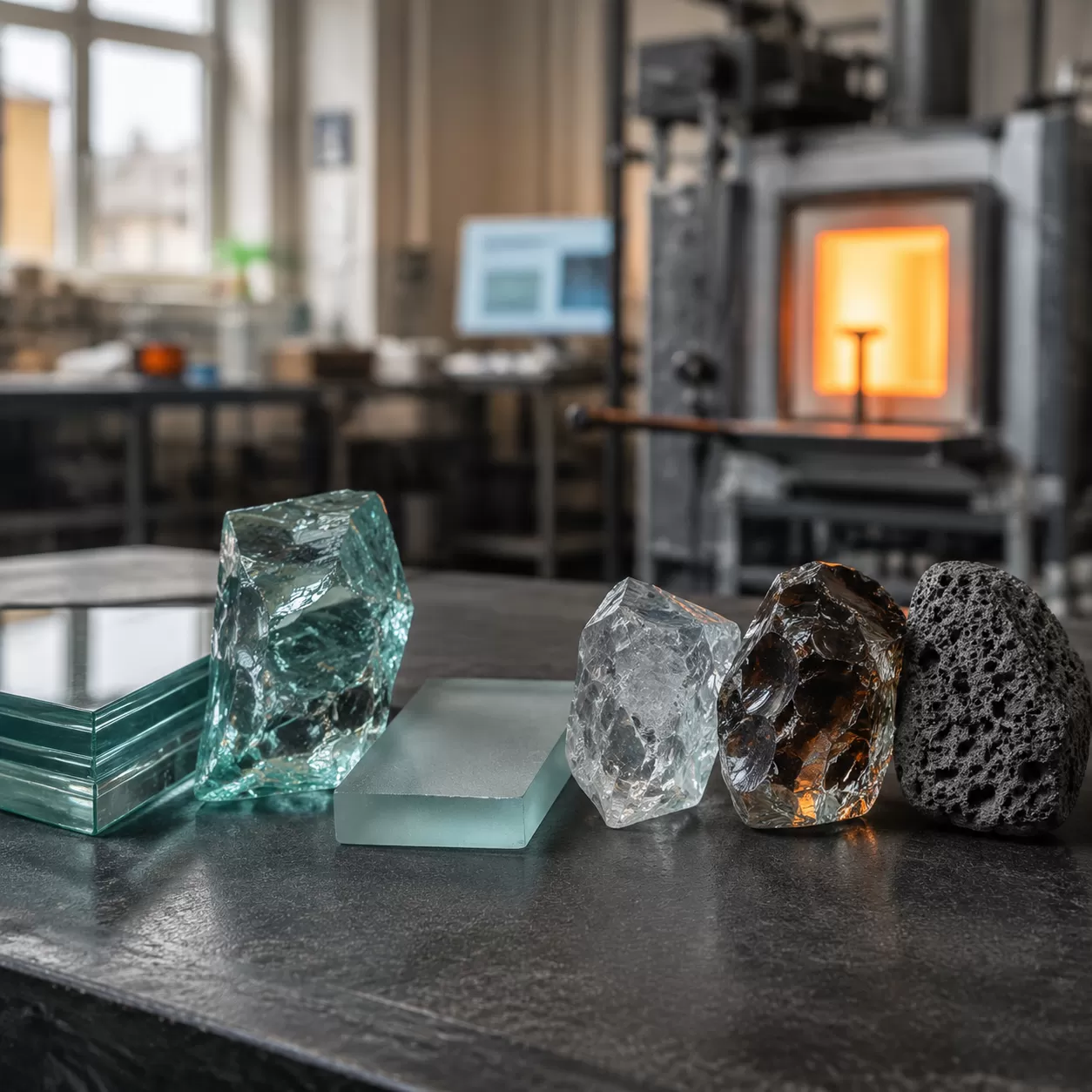
Here is a direct breakdown of common glass types based on their working temperatures and practical uses.
| Glass Type | Working / Softening Point | Thermal Shock Resistance | Common Wholesale Applications |
|---|---|---|---|
| Soda-Lime (Flint Glass) | ~700°C – 1000°C | Low | Food jars, beverage bottles, daily cosmetics |
| Borosilicate (Borosil Glass) | ~820°C – 1250°C | High | Labware, heat-resistant food storage jars, premium skincare |
| Quartz (Fused Silica) | ~1600°C+ | Excellent | High-tech optics, advanced lab equipment |
| Lead Crystal | ~400°C – 600°C | Low | Decorative glassware, premium decanters |
Soda-Lime / Flint Glass Properties and Applications
Soda lime glass, often referred to as flint glass in its clearest form, is the industry standard for bulk glass bottles manufacturing. It has a lower glass softening point, making the flint glass melting process highly energy-efficient and cost-effective for large production runs. While its thermal shock resistance is relatively low, it is perfect for everyday consumer goods kept at room temperature. We rely heavily on this material for reliable food packaging, such as our durable screw thread shape glass honey jars, which require solid structural integrity without the need to withstand extreme heat.
Borosilicate Glass Properties and Applications
When your product demands higher durability against sudden temperature changes, we recommend borosilicate glass (frequently called borosil glass). Its elevated glass melting point and low coefficient of thermal expansion provide exceptional borosilicate glass thermal resistance. This makes it the go-to choice for heat-resistant food storage jars, laboratory vials, and premium packaging. If you are sourcing high-end glass jars for beauty products that undergo hot-fill manufacturing processes, upgrading to borosilicate ensures your containers won’t crack under pressure.
Quartz / Fused Silica Properties and Applications
Quartz glass sits at the extreme end of the temperature spectrum. The quartz glass melting temperature exceeds 1600°C, offering unmatched durability and near-perfect resistance to thermal shock. Because of the intense heat required—pushing the absolute limits of the glass furnace operational temperature—manufacturing quartz is highly expensive. Therefore, it is rarely used for standard wholesale glass jars, serving instead in specialized scientific, semiconductor, and high-tech industrial applications.
Lead Crystal Properties and Applications
Lead crystal has a significantly lower glass melting point compared to standard soda glass. The addition of lead oxide softens the amorphous solid matrix, making the material easy to cut and engrave while providing brilliant clarity and light refraction. However, it has very low thermal shock resistance. Due to both its fragility under rapid temperature changes and strict health regulations regarding lead leaching, this glass is not used for food, beverage, or cosmetic packaging. Its applications are strictly limited to luxury decorative items and specialized ornamental drinkware.
Thermal Shock vs. Glass Melting Point
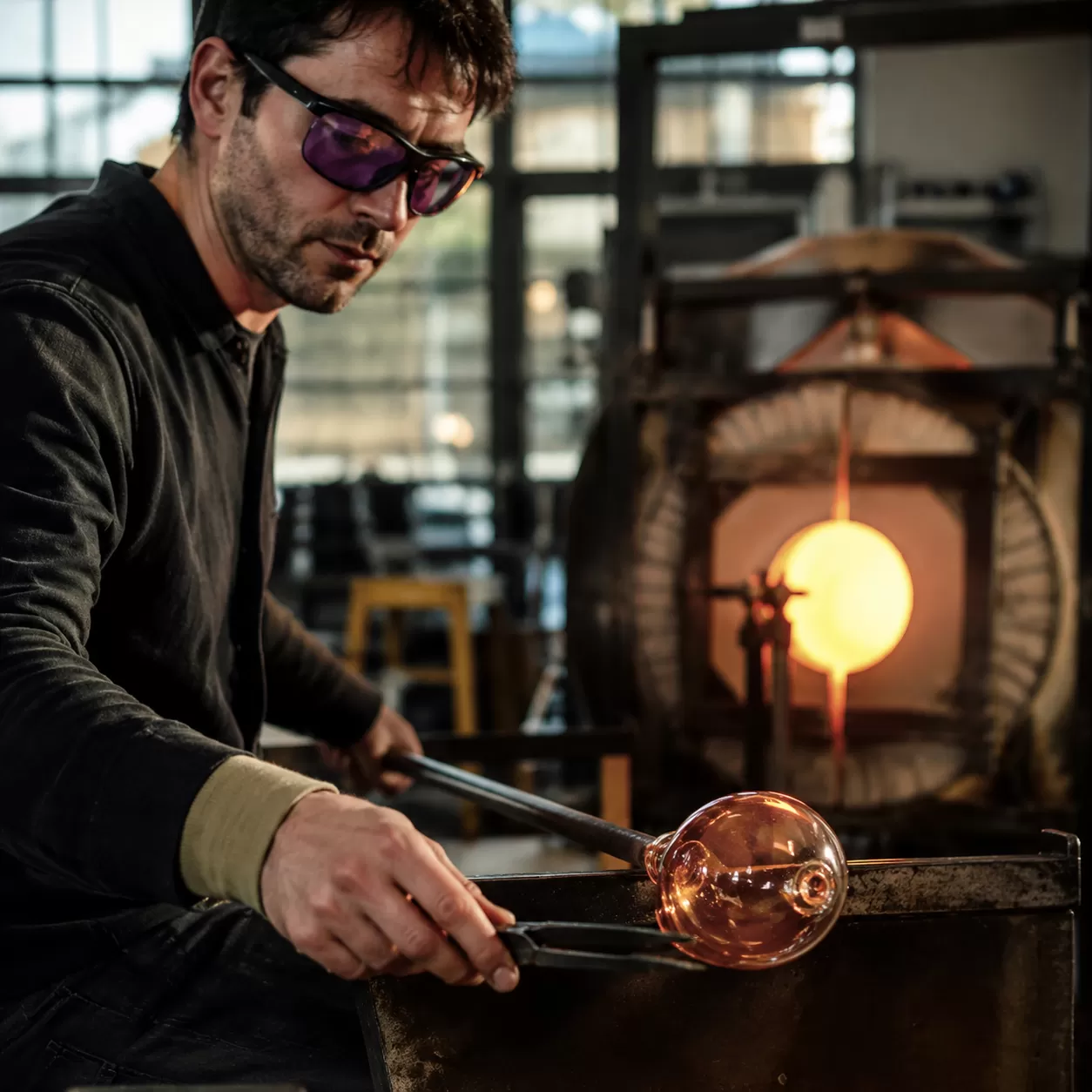
Many brands and everyday users confuse a glass melting point with its ability to handle sudden temperature shifts. As a wholesale glass jar manufacturer, we see this misconception constantly. Just because a container has a high melting point does not mean it can survive moving from a deep freezer straight into a hot oven. That breakage is a completely different mechanism known as thermal shock.
Defining Thermal Shock Resistance
Thermal shock occurs when rapid temperature changes cause different parts of a glass container to expand or contract at different speeds. For example, pouring boiling water into a cold soda glass jar makes the inner wall expand instantly while the outer wall stays rigid. The stress snaps the glass.
This reaction is tied to the material’s coefficient of thermal expansion, not its actual glass melting point. This is exactly why choosing materials with high thermal shock resistance is non-negotiable for heat-resistant food storage jars or hot-pour products like a 2.5oz transparent glass yurt candle jar.
Safe Handling Practices for Bulk Glass Bottles
Whether you are processing large batches of bulk glass bottles or simply decorating mini glass wish favor bottles for an event, practicing safe thermal handling prevents unexpected shattering and protects your bottom line.
- Avoid Extreme Temperature Swings: Keep temperature shifts below a 40°C (104°F) difference when handling standard soda-lime glass.
- Pre-Warm Containers: Always run warm tap water through your glass before filling it with boiling liquids or hot wax.
- Buffer Hard Surfaces: Never set hot wholesale glass jars directly on cold steel prep tables or granite counters. Use a wooden board, cardboard, or a thick towel as a thermal buffer.
- Match the Material to the Process: If your manufacturing involves extreme heat processes, know your tempered glass heat threshold and consider upgrading to borosilicate to avoid stress fractures.
B2B Buying Guide: Choosing the Right Glass
Understanding the glass melting point and the specific thermal properties of different materials is critical for your packaging strategy. At Reihey, we help our B2B partners navigate these specifications to balance performance, safety, and budget.
When to Choose Bulk Soda-Lime Glass
Soda-lime glass is the universal standard for everyday packaging. While soda-lime glass temperature limits restrict it from extreme heat, it is highly cost-effective and performs exceptionally well under normal conditions.
- Best applications: Standard food packaging, ambient-temperature liquids, and cosmetics.
- Economic advantage: The most cost-efficient option for large-scale production.
- Our recommendation: If you need reliable, clear packaging for pantry staples, our wholesale mason jars are manufactured from high-grade soda glass to meet strict commercial demands.
When to Upgrade to Borosilicate
If your product faces rapid temperature changes or high-heat environments, upgrading is non-negotiable. Superior borosilicate glass thermal resistance comes from its very low coefficient of thermal expansion, which prevents the material from expanding and shattering under stress.
- Best applications: Heat-resistant food storage jars, hot-fill products, and premium kitchenware.
- Performance advantage: Handles intense thermal shock and high operating temperatures effortlessly compared to standard flint glass.
Bulk Glass Bottles Manufacturing Excellence
Consistent quality requires absolute control over the production environment. We monitor the glass furnace operational temperature with exact precision to achieve a flawless melt. During cooling, strictly regulating the annealing temperature of glass removes internal mechanical stresses. This ensures that every container we produce possesses the structural integrity required for commercial handling and shipping.
Quick Comparison for B2B Sourcing
| Material Type | Thermal Shock Resistance | Ideal B2B Use Case | Cost Efficiency |
|---|---|---|---|
| Soda-Lime Glass | Low to Moderate | Retail food jars, standard beverage bottles | Excellent for bulk |
| Borosilicate Glass | Very High | Microwave-safe containers, hot-fill applications | Premium investment |