If you’re choosing between amber vs cobalt blue glass bottles, the key difference is simple:
- Amber glass = maximum UV protection + best shelf-life preservation (ideal for sensitive formulas)
- Cobalt blue glass = premium appearance + moderate light protection (best for branding-focused products)
In addition to these, here are some other things you need to know:
- Which one blocks more harmful UV light
- Which is better for essential oils, serums, and pharmaceuticals
- Which improves brand perception on retail shelves
- Which is more cost-effective for bulk production
Let’s break down which packaging truly protects your product—and which one simply looks better.
The Physics of Light Degradation
Is the product prone to spoilage? The culprit is almost always light degradation. When you are packaging light-sensitive products, the color of your container isn’t just an aesthetic choice—it is your first line of defense against product spoilage.
Choosing between cobalt blue vs amber glass comes down to understanding how different glass tints interact with light.
Understanding the Light Spectrum
Light travels in wavelengths, spanning from invisible ultraviolet (UV) radiation to visible light and infrared heat.
-
- Ultraviolet Light (100–400 nm): This high-energy radiation breaks down chemical bonds, destroying vitamins, fragrances, and active ingredients.
- Visible Light (400–700 nm): While less intense than UV, blue and violet visible light still carry enough energy to trigger degradation in sensitive formulas.
The Vulnerability of Unprotected Formulations
When light penetrates a container, it triggers product oxidation. This chemical reaction alters the molecular structure of your formula, leading to:
Rapid loss of potency in essential oils and pharmaceuticals.
Discoloration and unpleasant odors.
A severely shortened shelf life.
Without proper light shielding capability, premium ingredients degrade into useless, or even harmful, compounds before the consumer ever opens the bottle.
Clear Glass Limitations
While clear glass jars and bottles are excellent for showing off the natural color of your product, they offer virtually zero uv protection. Clear glass allows the entire spectrum of visible and ultraviolet light to pass straight through.
If your formula contains active ingredients, essential oils, or natural preservatives, clear packaging leaves them completely defenseless. To achieve true shelf life extension packaging, transitioning to a tinted option is non-negotiable.
Deep Dive: Amber Glass Bottles (The Ultimate Protective Shield)
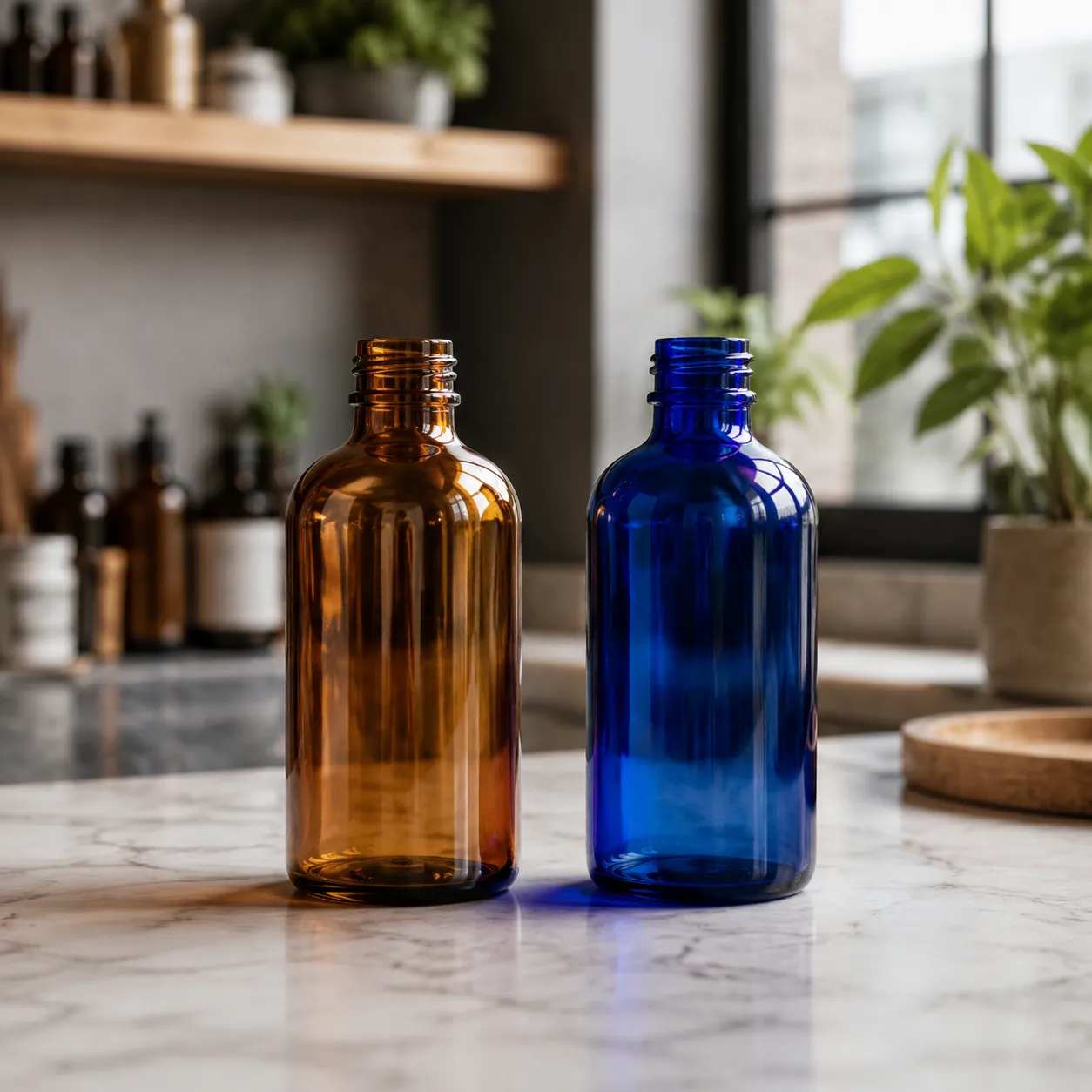
While comparing cobalt blue vs amber glass, amber consistently wins on pure utility and light shielding capability. It acts as a literal shield, absorbing harmful ultraviolet radiation wavelengths before they can touch your product.
The Chemistry of Amber
We manufacture our amber glass by mixing sulfur, iron, and carbon into molten soda-lime glass. This specific chemical blend alters the molecular structure, allowing the glass to block out almost all light within the critical 200nm to 450nm range.
Technical Performance
Amber glass delivers the highest level of UV protection glass performance available on the market today. It filters out both ultraviolet and blue light, which are the main culprits behind product oxidation.
| Feature | Performance Specification |
|---|---|
| UV Protection Rate | Blocks up to 99% of harmful UV rays |
| Wavelength Blocking | Effective from 200nm to 450nm |
| Oxidation Prevention | Maximum shelf life extension packaging |
| Thermal Stability | High resistance to temperature fluctuations |
Primary Commercial Applications
Because of its superior protective qualities, amber is the go-to packaging choice for industries where product integrity cannot be compromised.
-
- Essential Oil Packaging: Essential oils degrade rapidly under UV light. Using specialized amber essential oil bottles ensures volatile compounds remain stable and potent.
- Pharmaceutical Grade Glass: Protects liquid antibiotics, vitamins, and supplements from losing efficacy. Our secure pharmacy amber glass bottles are trusted by brands worldwide for medicine storage.
- Cosmetics and Serums: Prevents active ingredients like Vitamin C and retinol from oxidizing and turning useless.
The Sourcing Profile
We offer wholesale glass bottles bulk options to help brands lower their unit costs while securing premium protection. Whether you need classic Boston round glass bottles or specialized tinted glass vials wholesale, amber glass remains the most reliable, cost-effective choice for long-term product safety.
Deep Dive: Cobalt Blue Glass Bottles (The Premium Aesthetic Powerhouse)
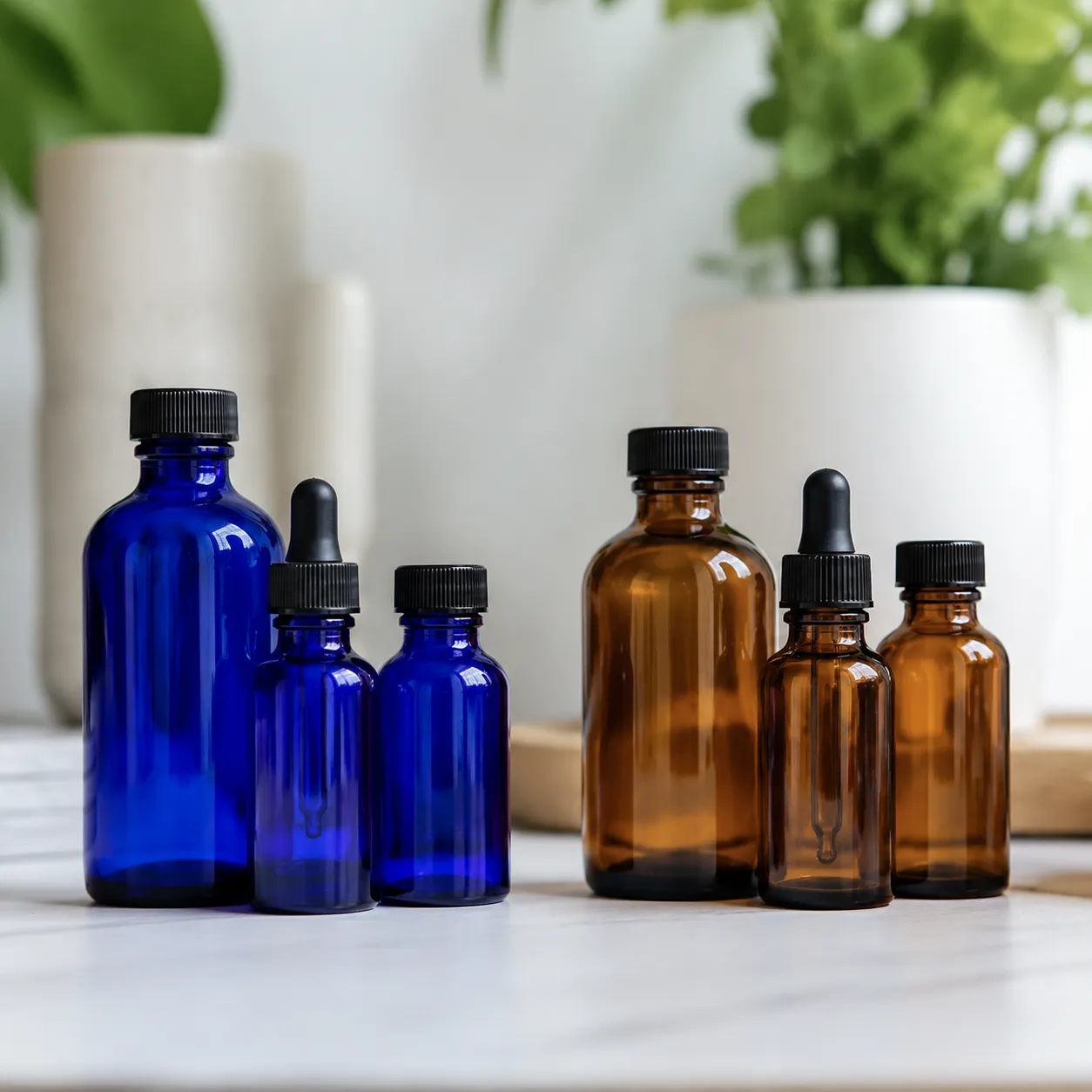
When you want your brand to pop on retail shelves while maintaining strong product safety, cobalt blue glass bottles are the ultimate premium choice. At Reihey, we craft these stunning containers to give brands a distinct competitive edge, blending luxury aesthetics with reliable performance.
The Chemistry of Cobalt
The striking, vibrant hue of cobalt glass is achieved by adding cobalt oxide during the specialized production process of glass bottles. Even in tiny quantities, this powerful coloring agent fuses with the molten silica to create a deep, permanent blue tint that will not fade, chip, or scratch off over time.
Technical Performance
While they look luxury-grade, these tinted glass vials wholesale options offer serious functional value. Cobalt glass provides excellent light shielding capability against specific ultraviolet radiation wavelengths.
-
- UV Protection: Shields products from high-energy Ultraviolet (UV) light.
- Visible Light Pass-Through: Allows blue and violet visible light to pass through, which gives the bottle its signature glow.
- Oxidation Prevention: Slows down the degradation of moderately light-sensitive products.
The Psychology of Cobalt Blue
Color drives consumer behavior. Cobalt blue instantly conveys a sense of premium quality, medical-grade trust, and refreshing purity. It looks expensive, clean, and professional, making it easier to justify a higher retail price point for your finished goods.
Primary Commercial Applications
Cobalt blue glass is the go-to packaging solution across several high-end industries:
| Industry | Typical Applications |
|---|---|
| Cosmetics & Skincare | Premium face serums, luxury oils, and facial mists. |
| Aromatherapy | Specialized essential oil packaging and custom blends. |
| Apothecary & Wellness | Herbal extracts, liquid vitamins, and tinctures. |
| Spirits & Beverages | High-end blue glass bottles for boutique liquors and mineral water. |
The Sourcing Profile
For brands looking to scale, sourcing wholesale glass bottles bulk is the most cost-effective way to secure premium packaging. We supply a wide range of options, including classic boston round glass bottles and custom glass jars, directly from our manufacturing facilities to ensure consistent quality and reliable supply chains.
-
- Availability: Ready supply for bulk glass jars and containers.
- Customization: Full support for custom molds, labeling, and unique closures.
- Quality: Heavyweight, durable glass designed for automated filling lines.
Head-to-Head Technical Comparison Matrix
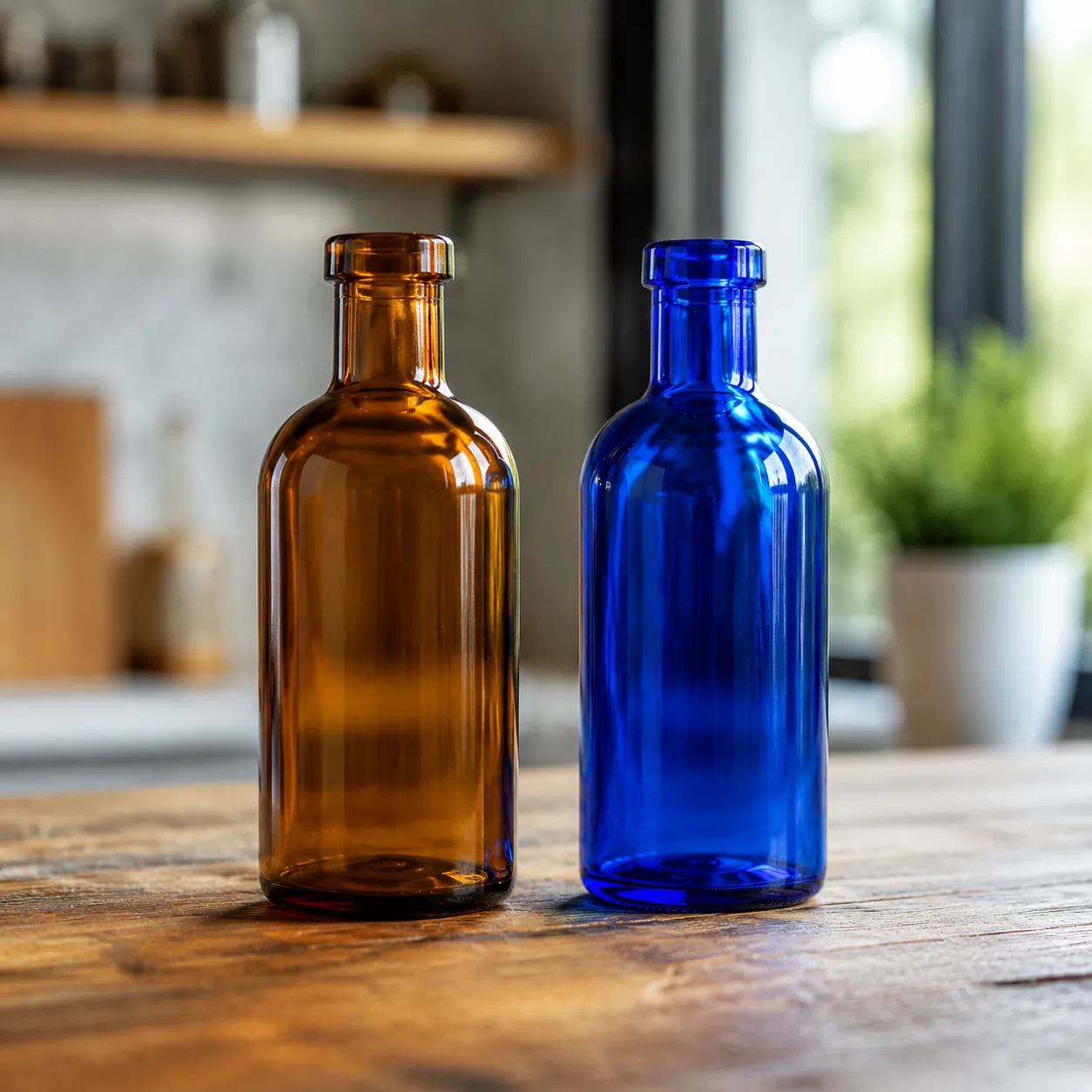
When choosing the best glass bottles for your brand, look past the visual appeal. The performance difference between cobalt glass and amber glass comes down to wave blocking.
As a dedicated custom glass bottle supplier, we test these containers against strict structural benchmarks to ensure maximum product oxidation prevention. Here is how they stack up under laboratory conditions.
Comparison Benchmarks
| Performance Metric | Amber Glass Bottles | Cobalt Blue Glass Bottles |
|---|---|---|
| UV Protection (200nm – 400nm) | Excellent (Blocks up to 99%) | Good (Blocks ~70-80%) |
| Visible Light Shielding (400nm – 700nm) | High absorption across all wavelengths | Absorbs red/yellow; passes blue light |
| Best Used For | Highly light-sensitive products, pharmaceuticals | Premium cosmetics, select essential oils |
| Chemical Resistance | Inert Type III or Type pack | Inert Type III or Type pack |
| Primary Structural Style | Boston round glass bottles, tinted glass vials | Skincare pumps, luxury dropper bottles |
While cobalt blue offers an undeniable premium aesthetic powerhouse look, amber remains the ultimate protective shield against ultraviolet radiation wavelengths. Blue glass allows blue spectrum light to pass through, meaning it cannot offer the total shelf life extension packaging benefits that amber provides for highly vulnerable compounds. If your formulas are deeply light-sensitive, amber is the standard choice for risk-free bulk glass jars and containers.
Strategic Decision Framework: How to Choose for Your Brand
Choosing between amber vs blue glass bottles comes down to balancing product protection with visual identity. We use this precise four-step framework to help brands select the best glass bottles for their product lines.
Step 1: Conduct a Formula Sensitivity Audit
First, you must determine how vulnerable your product is to photo-oxidation (light damage).
-
- High Sensitivity: If you are packaging light-sensitive products like pure essential oils, retinol serums, or citrus-based liquids, amber glass is non-negotiable due to its superior light shielding capability against ultraviolet radiation wavelengths.
- Moderate to Low Sensitivity: If your formula relies on synthetic, light-stable ingredients or contains robust antioxidants, cobalt blue glass provides adequate protection while offering premium shelf appeal.
Step 2: Evaluate Your Storage Ecosystem
Where will your product live during its lifecycle? Consider the entire supply chain and consumer environment:
| Storage Environment | Exposure Risk | Recommended Packaging Tint |
|---|---|---|
| Retail Shelves & Intense Florescent Light | High UV/Visible Light | Amber Glass |
| Dimly Lit Warehouses & Closed Shipping Boxes | Low Light Exposure | Cobalt Blue or Amber Glass |
| Bathroom Vanities & Home Countertops | Moderate Ambient Light | Cobalt Blue Glass |
Step 3: Define Your Target Brand Identity
Your packaging tells your brand story before the consumer even opens the bottle.
-
- Amber Glass Bottles: Best for brands leaning into an apothecary, organic, medicinal, or classic heritage vibe. It signals natural ingredients and clinical efficacy, making it the industry standard for essential oil packaging and pharmaceutical grade glass.
- Cobalt Blue Glass Bottles: Best for premium, modern, luxury, or ocean-inspired branding. It stands out sharply on retail shelves and elevates the perceived value of premium skincare lines. For brands expanding into broader beauty offerings, aligning your bottles with high-end glass jars for cosmetics storage ensures a cohesive luxury aesthetic.
Step 4: Analyze Supply Chain Logistics
ly, look at the numbers and manufacturing availability.
-
- Stock Availability: Standard shapes like boston round glass bottles are highly stocked in both tints, but amber is universally easier to source in massive quantities.
- Bulk Ordering: If you plan to source wholesale glass bottles bulk shipments, amber often yields lower per-unit costs during bulk glass jars and containers production runs because the raw materials for amber tinting are more widely available than cobalt oxide.
- Customization: Ensure your custom glass bottle supplier can guarantee consistent color density across production batches to prevent variation on the retail shelf.