Are Whiskey and Rum Glasses the Same?
Whiskey glasses and rum glasses share a foundation in premium spirits glassware, but they are not identical. Each glass style is tailored to optimize the specific flavor compounds, ABV levels, and tasting rituals of the liquid inside.
Key Similarities in Spirit Glassware
Both whiskey and rum glassware rely on precision engineering to enhance sensory evaluation and presentation.
- Premium Clarity: Premium crystal glassware and high-clarity soda-lime glass showcase color depth, age, and leg coat.
- Aroma Concentration: Curved bowls trap light aromas at the surface, allowing subtle notes to build before reaching the nose.
- Neat Pour Capability: Stems, heavy bases, and bowl proportions cater to standard 1.5-to-2-ounce neat pour servings.
Core Differences in Design Purpose
| Design Parameter | Whiskey Glasses | Rum Glasses |
|---|---|---|
| Primary Focus | Soften ethanol fumes; highlight oak, peat, and grain profiles | Capture molassed sweetness, tropical fruit esters, and spice aromas |
| Bowl & Rim Geometry | Tight tapered rims or straight tumbler glass walls | Flared tulip openings or rounded snifter bowls for swirl aeration |
| Alcohol Bite Management | Directs vapor past the nasal passage to limit burn | Wider bowl surface area diffuses volatile alcohol bite from higher-proof rums[1] |
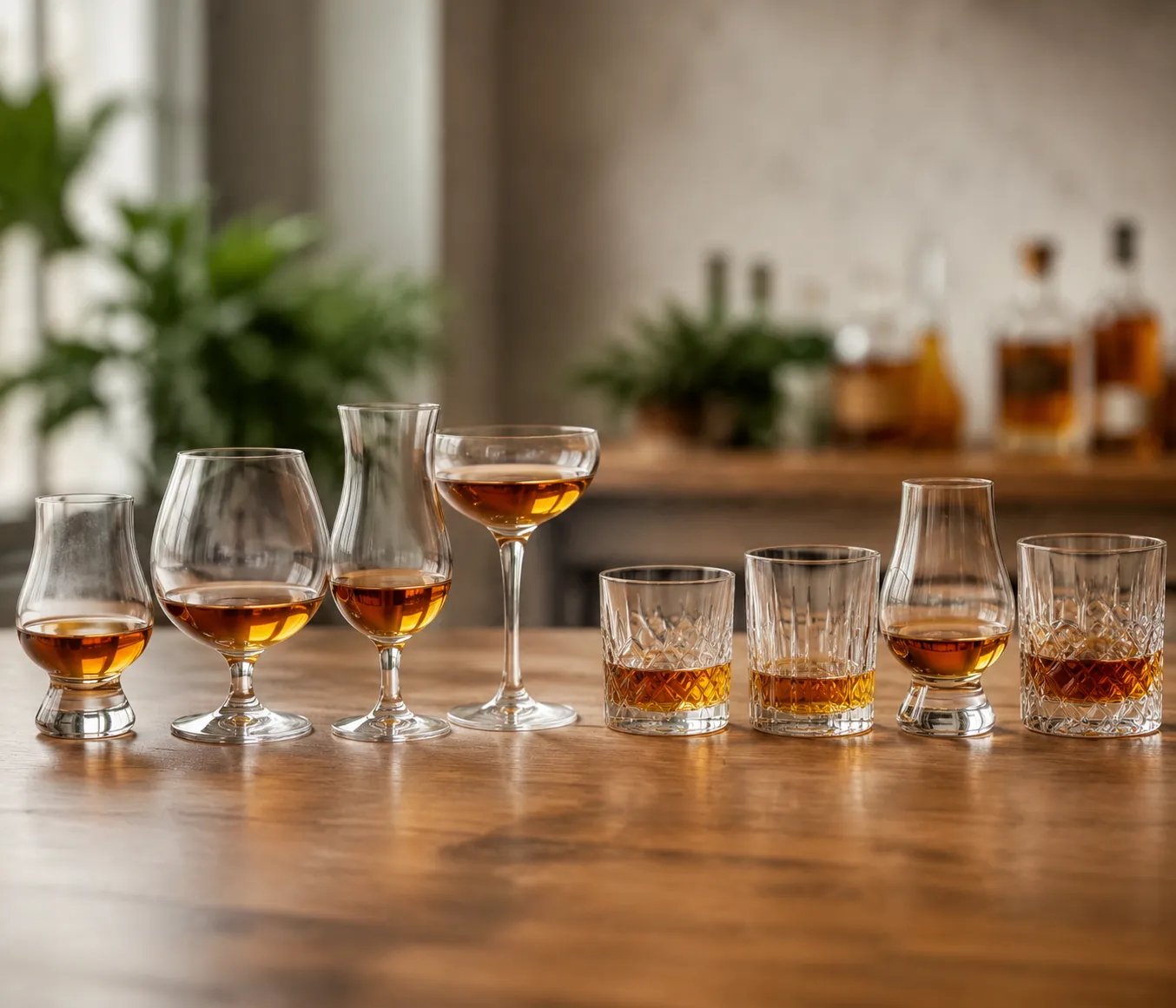
Popular Types of Whiskey Glasses
Just as premium liquor packaging relies on glass to preserve flavor purity, the design of your whiskey glasses determines how aromas and subtle notes reach your senses.
The Glencairn Glass
The Glencairn glass is widely regarded as the gold standard for enjoying a neat pour. Designed specifically for single malts and premium blends, its narrow tapered mouth traps subtle aromas while channeling harsh alcohol bite away from your nose.[1]
- Best for: Single malts, aged rye, and dedicated tasting sessions.
- Key Feature: Tapered bowl built for maximum aroma concentration and a comfortable grip.
Rocks Glass (Lowball)
Also known as an old fashioned glass or tumbler glass, this heavy-bottomed design is an absolute staple in spirits glassware. Its wide body accommodates large ice spheres or whiskey stones without crowding the drink.
- Best for: Whiskey on the rocks, classic cocktails, and casual daily pouring.
- Key Feature: Thick glass base that adds weight stability and blocks hand heat from warming the liquid.
The Snifter and Tulip Glass
Inspired by classic brandy glasses, snifters and tulip glasses feature wide, rounded bowls that give high-proof spirits room to breathe. Gently swirling liquid against the walls of crystal glassware unlocks complex top notes and accelerates aeration.
- Best for: High-proof cask-strength releases and rare aged spirits.
- Key Feature: Curved bowl with a flared rim that softens fumes and directs liquid smoothly across the palate.
Popular Types of Rum Glasses
Tulip-Shaped Tasting Glasses
Tulip-shaped tasting glasses feature a wide, rounded bowl that transitions into a tapered rim. This distinct silhouette concentrates volatile ethanol vapors while funneling delicate aromas of vanilla, caramel, and tropical fruit directly to your nose. We recommend using a tulip-shaped glass when evaluating a neat pour of high-proof rum, as it allows the spirit to breathe without overwhelming your senses.
Highball Glasses for Mixed Rum Drinks
Tall, cylindrical highball glasses are engineered to hold plenty of ice while maintaining carbonation in long mixed drinks. Whether serving a classic Dark & Stormy, a Mojito, or a simple rum and cola, this vessel preserves the crisp texture of fizzy mixers. Understanding the right balance between ice volume and liquid ratio is critical when selecting different types of cocktail glasses for rum-based drinks.
- Best for: Highball cocktails, Mojitos, Cuba Libres, and rum punches
- Key feature: Tall profile preserves carbonation and maximizes ice capacity
- Ideal volume: 8 oz to 12 oz
Copita and Warm Glasses for Aged Rum
For sipping vintage or extra-aged rums, a traditional Copita glass or rounded warm glass provides an exceptional tasting experience. Similar to a classic sherry glass, the Copita features a slender stem that keeps hand heat from elevating the spirit’s temperature while offering maximum control during swirling.
- Stemmed design: Prevents direct heat transfer from your palm to maintain precise tasting temperatures
- Tapered top: Traps complex aging notes like toasted oak, molasses, and spice
- Optimal use: Premium dark rums aged in oak casks
Whiskey Glasses vs Rum Glasses: Aroma and Alcohol Bite
Proper spirits glassware directly shapes how you smell and taste fine liquor. When evaluating whiskey glasses vs rum glasses, the physical geometry of the vessel fundamentally alters nose concentration, ethanol intensity, and palate balance.
Aroma Concentration and Alcohol Vapor
The bowl architecture controls how volatile aromatic compounds rise off a neat pour.[3]
- Tapered Rims: A narrowed opening traps aromatic compounds while channeling subtle top notes – such as oak, vanilla, or caramel – directly toward your nose.
- Ethanol Vapor Dispersion: Snifters and curved tasting glasses separate harsh alcohol bite from rich underlying aromas, protecting your palate from sensory burn.
- Evaporation Surface: Wide bowls allow high-proof bourbon or aged rum to open up through controlled air contact.
Temperature Control and Hand Heat Transfer
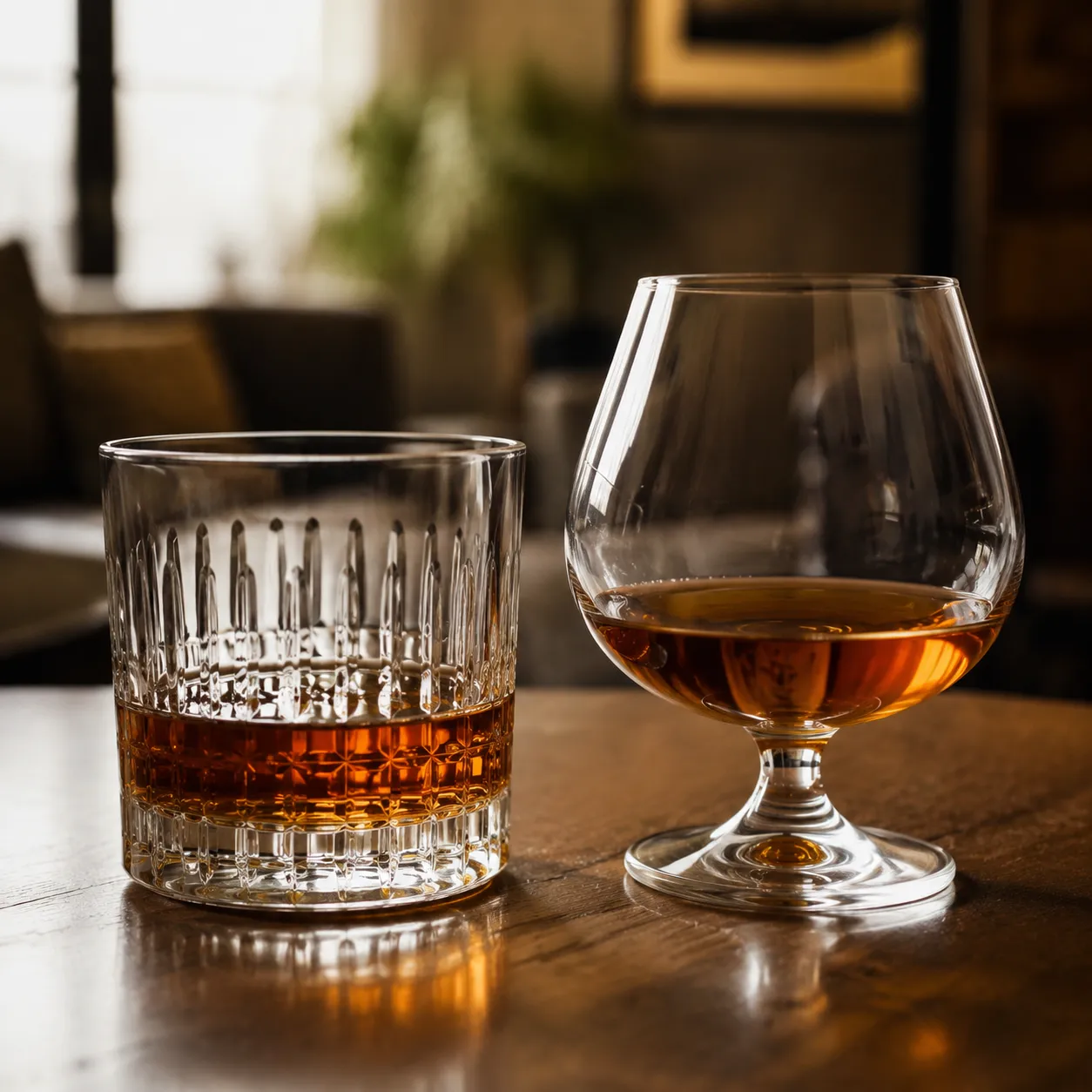
- Stemmed and Thick-Base Glasses: Stems or heavy glass bases prevent hand heat from inadvertently warming room-temperature or chilled spirits.
- Targeted Hand Warming: Rounded tulip-shaped glasses let you cupping the bowl slightly, using gentle palm heat to unlock deep molasses and spice notes in dark rums.
- Glass Density: High-clarity, dense glass retains thermal equilibrium far better than thin, cheap alternatives, using the same forming discipline we apply to glass bottles and glass jars. We showcase this precise thermal stability across our spirits glassware production line and showroom, where uniform wall thickness ensures consistent tasting results.
How to Choose the Right Glass for Whiskey or Rum
Selecting the ideal spirits glassware comes down to how you plan to serve your drink. Whether evaluating whiskey glasses vs rum glasses for home tasting or sourcing bulk inventory for commercial service, matching the glass design to the beverage style ensures the best aroma concentration and flavor delivery.
Matching the Glass to Your Drinking Style
- Neat Pour and Spirit Tasting: Choose a tulip-shaped glass or a classic Glencairn glass. The narrow rim concentrates delicate vapors, making them ideal for sipping aged rum or single-malt whiskey.
- On the Rocks: Go with a heavy-bottomed tumbler glass or old fashioned glass. The wide opening easily accommodates large ice spheres without overcrowding the liquid.
- Highballs and Cocktails: Use tall, straight-sided glasses for long rum drinks or whiskey sodas. Knowing the right standard cocktail glass size helps maintain proper spirit-to-mixer ratios.
Crystal vs. Standard Glassware
The material impacts clarity, rim density, and everyday durability.[2] We regularly assist wholesale buyers in balancing budget and luxury appeal:
| Feature | Lead-Free Crystal Glassware | Standard Soda-Lime Glass |
|---|---|---|
| Clarity & Refraction | Exceptional brilliance and light refraction | Good clarity with a slight natural tint |
| Rim Thickness | Ultra-thin for smooth, direct tasting | Slightly thicker for added rim strength |
| Durability | Higher flexibility; hand-wash recommended | Sturdy, highly durable, dishwasher-safe |
| Best Used For | Premium neat pour tasting rooms and gifts | High-volume bars, casual dining, and bulk orders |
Capacity, Weight, and Durability Considerations
When selecting glassware for high-frequency use, keep these practical factors in mind:
- Capacity: Pure tasting glass options usually hold 5 to 7 oz, while rocks tumblers range from 8 to 12 oz to leave room for ice.
- Base Weight: A heavy base adds stability, prevents tipping, and retains heat balance away from your hand.
- Rim Strength: In busy commercial environments, thermal-shock resistance prevents cracking. While minor rim wear happens, learning how to fix a chipped drinking glass can address emergency flaws, though replacement is always best for safety.
Need custom whiskey or rum glass shapes, logo etching, or carton specs for hospitality runs? Request a quote.