The Importance of Secure Packaging for Shipping Glass Jars
Shipping glass jars requires more than just a standard box; it demands a strategic approach to breakage protection. Glass is inherently fragile, and the transit environment is unforgiving. Secure packaging serves as the primary line of defense against the vibrations, drops, and stacking pressures common in global logistics. For any business, prioritizing high-quality materials—such as molded pulp or heavy-duty cardboard boxes—is a fundamental investment in operational stability.
Reducing Product Loss and Breakage Rates
The most immediate benefit of robust packaging is the drastic reduction in overhead costs. Every broken jar represents a total loss of product, labor, and shipping fees.
- Minimized Insurance Claims: Fewer damaged goods mean less time spent filing claims with carriers.
- Inventory Integrity: Ensuring fragile items arrive intact keeps your stock levels predictable.
- Operational Efficiency: Eliminating the need for reshipping saves double the logistical effort.
Enhancing Customer Experience with Safe Delivery
In the e-commerce era, the unboxing experience is a critical touchpoint for your brand. Delivering a box filled with glass shards is a guaranteed way to lose a customer and earn a negative review.
- Brand Trust: Safe delivery signals to the customer that you value their purchase and their time.
- Review Management: Intact shipments lead to positive feedback and repeat business.
- Professionalism: Using specialized cushioning and organized inserts reflects a high standard of quality control.
Understanding ISTA 6-Certified Protection
To compete at a global scale, especially through platforms like Amazon, understanding ISTA 6-certified protection is essential. This standard ensures that your packaging has been rigorously tested for the “General Simulation” of e-commerce delivery hazards.
| Feature | ISTA 6 Standard Requirement |
|---|---|
| Drop Testing | Validates structural integrity from various heights and angles. |
| Compression | Ensures the cardboard boxes can withstand heavy stacking. |
| Vibration | Simulates long-haul transit to prevent fatigue in the glass. |
Implementing these standards means you aren’t just guessing—you are utilizing a scientifically proven method to ensure your glass jars survive the journey from warehouse to doorstep.
Step-by-Step Guide: How to Pack Glass Jars for Shipping
Shipping glass jars requires a disciplined approach to prevent cracks and breaks during the bumpy ride to a customer’s doorstep. I’ve found that following a consistent protocol significantly lowers return rates and keeps customers happy.
Inspecting and Preparing Jars for Transit
Before any packing begins, I always do a quick quality check. Look for hairline fractures or chips, especially around the rim. If you are shipping specialized items like an 8oz glass spice jar with spoon and lid, ensure the lid is screwed on tight to prevent it from rattling or coming loose. This prevents glass-on-glass friction that often leads to shattering.
Wrapping Individual Jars for Maximum Cushioning
The goal is to create a soft “cocoon” around each item to provide 24/7 breakage protection.
- Bubble Wrap: Wrap the jar at least two or three times. Use tape to secure the wrap so it doesn’t slide off.
- Kraft Paper: For a more eco-friendly option, use crumpled kraft paper to provide dense cushioning.
- Bottom & Top: Ensure there is extra padding at the base of the jar, as this is where most impact occurs.
Strategic Placement of Void Fillers and Inserts
Once wrapped, place the jars into sturdy cardboard boxes. To stop fragile items from moving:
- Dividers: Use custom corrugated inserts to keep wholesale glass jars separated and upright.
- Void Fillers: Fill any empty space with packing peanuts, air pillows, or molded pulp to immobilize the product.
- The Shake Test: Give the box a gentle shake. If you hear anything shifting, add more filler until the contents are silent.
Properly Sealing and Labeling Fragile Shipments
The final step is securing the exterior for the long haul. I recommend the “H-tape” method—sealing all open seams of the box with heavy-duty packing tape. Clearly apply “Fragile” or “Handle with Care” stickers on at least two sides of the package. This alerts carriers that they are handling sensitive goods, ensuring your shipping glass jars process ends with a successful, intact delivery.
Essential Packaging Materials for Glass Protection
When shipping glass jars, the materials I choose are the first and only line of defense against rough handling. Using the right combination of cushioning and structural support is how I maintain a zero-breakage reputation. I focus on materials that balance cost-efficiency with high-level breakage protection.
Molded Pulp Shippers vs. Traditional Bubble Wrap
While bubble wrap and air pillows are common, they often fall short for heavy or high-volume shipments. I prefer molded pulp shippers for several reasons:
- Custom Fit: They are engineered to cradle the jar’s specific shape.
- Space Efficiency: They stack easily, saving room in my warehouse.
- Shock Absorption: Unlike plastic, pulp absorbs the energy of a drop rather than bouncing.
If you are sending premium items, like a vacuumed airtight glass food jar, molded pulp provides a much more professional “unboxing” feel than messy packing peanuts.
Custom Corrugated Inserts and Box Dividers
When I ship wholesale glass jars in bulk, I never let them touch each other. Glass-on-glass contact is a guaranteed recipe for disaster. I use cardboard boxes fitted with custom corrugated inserts or cell dividers. These dividers:
- Lock jars in place to prevent shifting during transit.
- Add vertical strength to the outer box, allowing for safer stacking.
- Provide a 360-degree buffer around every single jar.
Eco-Friendly and Sustainable Fiber Packaging
Sustainability is a huge factor for my customers today. I’ve shifted away from plastic-heavy methods in favor of eco-friendly fiber packaging. Materials like kraft paper and honeycomb wrap provide excellent breakage protection for fragile items without the environmental guilt. Using sustainable materials isn’t just about being “green”; it’s a practical way to reduce the overall dimensional weight of the package compared to bulky plastic alternatives.
Specialized Solutions for Different Jar Types
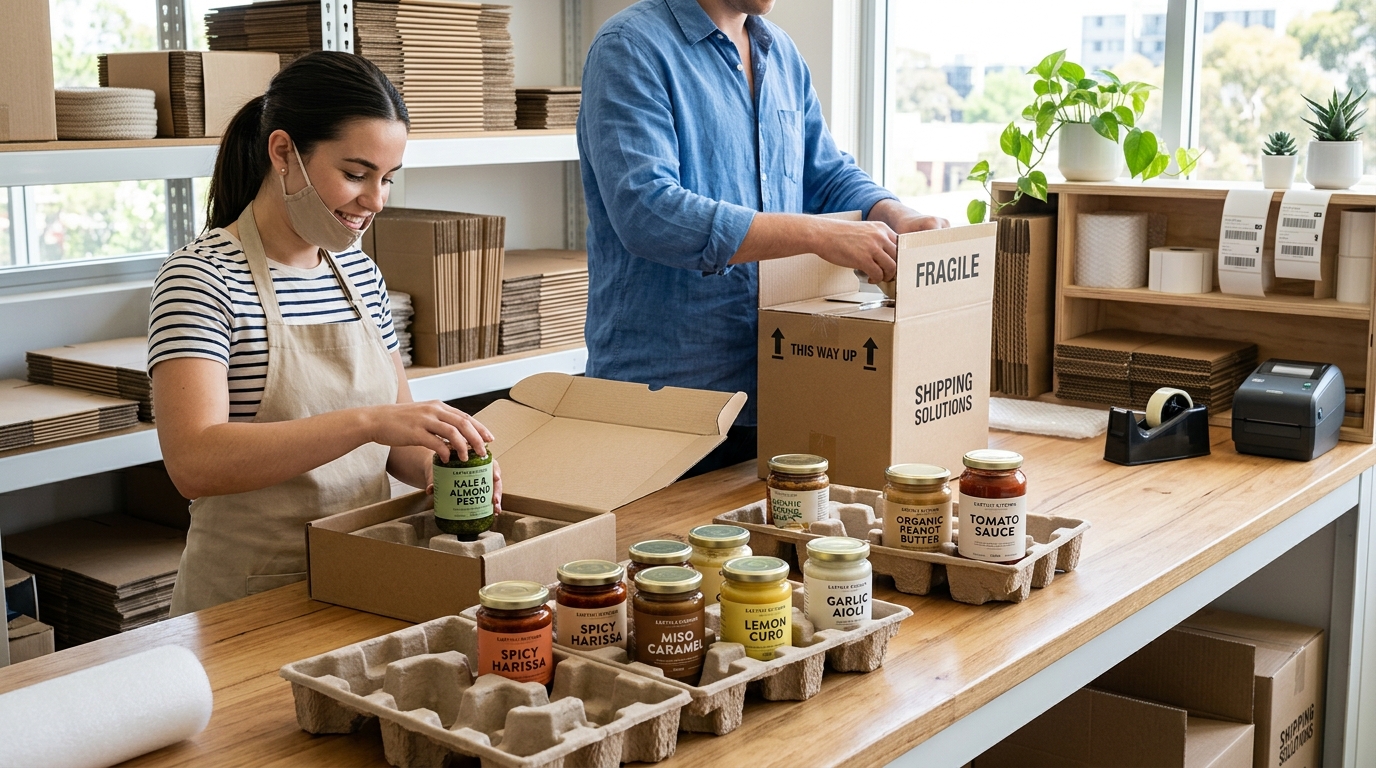
Every jar design presents its own set of logistics challenges. We tailor our shipping glass jars strategies based on the weight, wall thickness, and value of the contents to ensure zero breakage.
Shipping Mason Jars and Home Canning Goods
When we ship mason jars, the primary goal is preventing glass-on-glass impact. Because these are often shipped in bulk quantities (12-packs or 24-packs), we rely on:
- Corrugated Cell Dividers: These create individual “rooms” for each jar within the master carton.
- Tight-Fit Tooling: Ensuring the box is sized perfectly to the dividers stops momentum from building up during drops.
Protective Packaging for Candle and Apothecary Jars
Candle and apothecary containers are often more fragile and require a higher standard of presentation. For high-end items like our 6oz-8oz square glass spice jars, we suggest using molded pulp or custom-cut inserts. If you are shipping smaller apothecary items, such as amber essential oil bottles, individual wrapping is mandatory to provide the necessary breakage protection.
Heavy-Duty Shippers for Salsa, Sauce, and Food Jars
Food jars are heavy and carry high internal pressure. Standard single-wall boxes often fail under the weight of these liquid-filled containers.
- Double-Wall Corrugated Boxes: These are essential for any shipment where the total weight exceeds 20 lbs.
- Bottom Reinforcement: We always recommend heavy-duty H-tape sealing to prevent heavy jars from breaking through the bottom flaps during transit.
| Jar Category | Best Material | Main Goal |
|---|---|---|
| Mason/Canning | Corrugated Dividers | Prevent Clinking |
| Candle/Apothecary | Molded Pulp / Inserts | Shock Absorption |
| Salsa/Sauce | Double-Wall Shipper | Structural Integrity |
Choosing the Right Shipping Box Configuration
Picking the right box configuration is a balancing act between safety and shipping costs. In my experience, the best results come from matching the outer container strictly to the jar’s geometry to eliminate movement.
Single-Jar vs. Multi-Pack Shipping Kits

For individual e-commerce orders, single-jar shipping kits provide a dedicated “crush zone” around the item. If you are shipping bulk orders or wholesale glass jars, multi-pack kits are much more efficient. These kits rely on sturdy internal grids or corrugated dividers to keep glass from knocking against glass—the primary cause of fractures during transit.
Optimizing Box Size for Straight-Sided and Jelly Jars
The goal is to leave as little “air” in the box as possible. Excess space requires more void fill and increases dimensional weight costs.
- Straight-sided jars: These benefit from snug, tall boxes that prevent tipping and lateral shifting.
- Jelly jars: Due to their tapered shape, these require specific inserts that provide bottom-heavy support.
- Specialty containers: For smaller, delicate items like pharmaceutical glass vials, I recommend custom foam or molded pulp inserts that lock the necks in place to prevent rattling.
Retail Boxes vs. Heavy-Duty Outer Shippers
One of the biggest mistakes is relying on a retail box alone for shipping glass jars. While a retail box looks great on a store shelf, it usually lacks the bursting strength needed for modern courier sorting belts. I always suggest placing retail packaging inside a heavy-duty double-walled shipper with at least two inches of cushioning like bubble wrap or kraft paper on all sides to ensure the product arrives intact.
Strategies for Reducing Glass Shipping Costs

Finding the Most Economical Shipping Carriers
Shipping costs can quickly eat into your margins if you aren’t careful. For wholesale glass jars, I always recommend comparing regional carriers against major players like UPS, FedEx, or USPS. While glass is heavy, many carriers offer “flat rate” or “commercial plus” pricing for high-volume shippers. When importing glass jars from China, calculating the total landed cost—including the final domestic leg—is the only way to ensure your pricing stays competitive in the global market.
Minimizing Dimensional Weight with Efficient Designs
Carriers don’t just bill you for the actual weight; they charge for the space your box occupies (Dimensional Weight). To keep expenses down when shipping glass jars, focus on tight, efficient designs:
- Right-Size Your Box: Avoid oversized cardboard boxes that require excessive packing peanuts or air pillows to fill the gap.
- Ditch the Bulk: Molded pulp and slim corrugated dividers provide superior breakage protection while keeping the outer box dimensions much smaller than traditional bubble wrap.
- Optimize Geometry: Straight-sided jars pack more tightly than tapered designs, allowing for more units per pallet and lower shipping costs per jar.
Reducing Labor with Easy-to-Assemble Packaging
Time is money on the packing line. I prioritize packaging solutions that my team can assemble in seconds rather than minutes.
- Integrated Inserts: Use custom corrugated inserts that “pop” into place without complex folding.
- Self-Locking Boxes: Choose boxes with auto-locking bottoms to reduce the amount of tape needed and speed up the sealing process.
- Simplified Materials: Using a single material (like all-fiber packaging) for both the box and the cushioning makes the workflow faster and more eco-friendly for fragile items.
Frequently Asked Questions About Shipping Glass Jars
Should I Double-Box My Glass Jar Shipments?
Double-boxing is the gold standard for breakage protection when sending fragile items through high-volume carrier networks. I recommend this method for high-value orders or when shipping larger items, like our 500-700ml square embossed glass jar with acacia wood lid, to ensure they survive drops and vibrations. A 2-inch buffer of cushioning between the inner and outer cardboard boxes acts as a shock absorber.
How Do I Prevent Jars from Shifting Inside the Box?
Movement is the primary cause of damage during shipping glass jars. If you can hear a “clink” when you shake the box, your packaging isn’t tight enough. Use these tools to secure your inventory:
- Molded Pulp: Contoured inserts that lock jars into a fixed position.
- Void Fillers: Pack gaps with kraft paper, air pillows, or packing peanuts until there is zero movement.
- Corrugated Dividers: Essential for keeping wholesale glass jars from hitting each other during transit.
What is the Cheapest Way to Ship Glass Without Breaking?
The most cost-effective strategy is balancing protection with dimensional weight. To keep costs low without risking a total loss, follow these three rules:
| Strategy | Benefit |
|---|---|
| Right-Sizing | Use the smallest box possible to avoid paying for “shipped air.” |
| Lightweight Fillers | Use bubble wrap or air pillows instead of heavy paper to keep the scale weight down. |
| Bulk Purchasing | Buying your glass and packaging materials in bulk significantly lowers the per-unit shipping overhead. |
By optimizing your internal packaging, you reduce the need for oversized outer shippers, effectively lowering your shipping rates while maintaining a professional customer experience.