
Annealed vs Tempered vs Laminated Glass: Key Differences
As a seasoned glass bottles manufacturer and supplier, we know that choosing the right material comes down to understanding exactly how each type performs under pressure. Making the right choice means looking closely at strength, how it is made, and the overall cost.
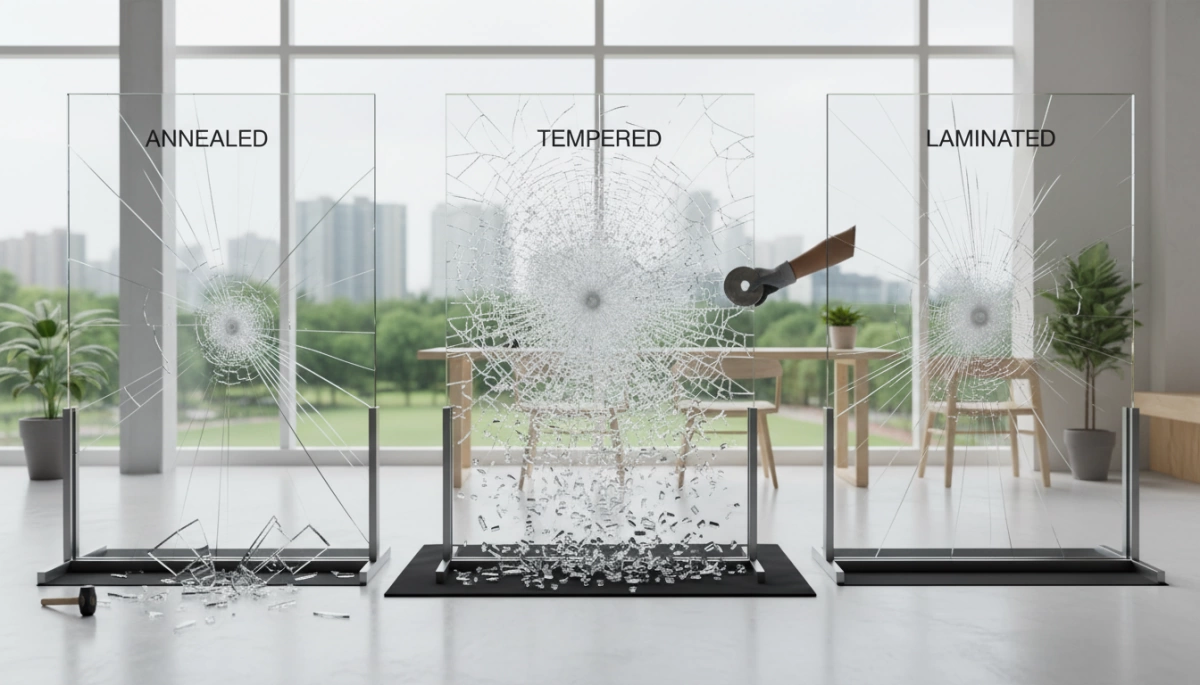
Strength and Durability Comparison
When evaluating glass strength and overall impact resistance, these three types behave very differently.
| Glass Type | Strength Level | Breaking Pattern | Primary Characteristic |
|---|---|---|---|
| Annealed (Plate Glass) | Baseline (Weakest) | Shatters into large, sharp, dangerous shards | Standard everyday glass |
| Tempered (Toughened Glass) | 4-5x stronger than annealed | shatters into tiny, blunt, pebble-like pieces | High impact resistance |
| Laminated Glass | Extremely durable | Cracks spiderweb but the panel stays intact | True safety glass standard |
Manufacturing Process Differences
The secret to their performance lies entirely in the production phase.
- Annealed Glass: The molten glass is cooled slowly at a highly controlled rate to relieve internal stresses. It is standard plate glass without any extra strengthening steps.
- Tempered Glass: Starts as standard glass but undergoes a strict heat treatment process. It is heated to over 600°C and then rapidly blasted with cold air. This fast cooling creates massive surface compression, turning it into highly durable toughened glass.
- Laminated Glass: Made by sandwiching a tough plastic interlayer (usually PVB) between two or more layers of glass using heat and pressure. Whether we are producing flat architectural safety panels or breaking down how much it costs to manufacture a glass bottle, the complexity of the manufacturing steps directly dictates the material’s final capabilities.
Price and Cost Comparison
Project budgets often dictate the final material choice. Here is how the costs stack up:
- Annealed Glass (Lowest Cost): The most affordable option on the market because it requires the least amount of processing and materials.
- Tempered Glass (Mid-Range): Moderately priced. You pay a premium for the heating and rapid cooling process, but the safety and durability payoff makes it highly cost-effective.
- Laminated Glass (Premium Cost): The most expensive option. The raw materials—multiple glass sheets plus the specialized resin interlayer—combined with a complex bonding process significantly drive up the final price.
Understanding Annealed Glass
What is Annealed Plate Glass?
Annealed glass. Often referred to as standard plate glass, this material is formed by carefully cooling molten glass in a controlled environment. This slow cooling, or annealing, prevents residual internal stresses. It yields a stable base product that is exceptionally easy to cut, drill, or machine to exact specifications.
Strength and Safety Considerations
When comparing annealed vs tempered vs laminated glass, it is crucial to understand that standard annealed glass is not classified as safety glass.
- Glass Strength: It offers baseline durability but lacks the enhanced structural integrity of treated alternatives like toughened glass.
- Impact Resistance: It is highly vulnerable to physical stress and heavy impacts.
- Breakage Pattern: When broken, it shatters into large, heavy, and extremely sharp jagged shards that pose a significant safety risk.
Common Applications and When to Use It
Despite lacking a specialized heat treatment process to boost its strength, annealed glass remains highly versatile and cost-effective. It is the ideal choice for projects where heavy impact is unlikely and safety glazing is not legally or functionally required.
Top Applications Include:
- Standard residential windows (in low-traffic zones)
- Decorative wall mirrors
- Cabinet doors and retail display cases
- Standard glass bottles and packaging containers
Exploring Tempered Glass
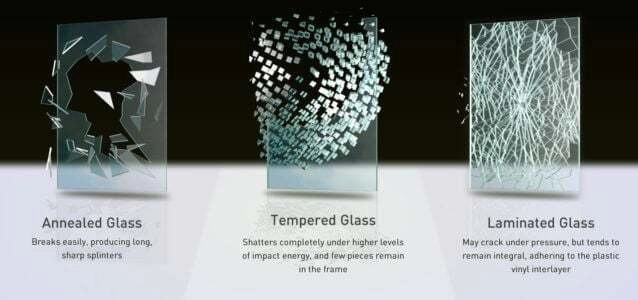
When evaluating annealed vs tempered vs laminated glass, tempered glass stands out for its incredible durability. Whether you are installing architectural windows or designing a premium 500ml to 750ml glass wine bottle, choosing the right material prevents breakage and ensures long-term reliability.
The Tempering Manufacturing Process
Tempered glass, widely recognized as toughened glass, begins its life as standard plate glass. To transform it into a stronger material, it undergoes a highly controlled heat treatment process.
- Heating: The glass travels through a tempering oven heated to over 600°C (1,112°F).
- Rapid Cooling (Quenching): The glass is immediately blasted with high-pressure cold air.
This rapid temperature drop causes the outer surfaces of the glass to cool and contract faster than the center. This creates surface compression and interior tension, multiplying the overall glass strength significantly.
Key Benefits and Safety Features
The primary reason to choose tempered glass over standard options is protection. It is classified as a true safety glass for several reasons.
| Core Benefit | Practical Advantage |
|---|---|
| Superior Impact Resistance | It is 4 to 5 times stronger than standard annealed glass, easily handling heavy blows. |
| Safe Shatter Pattern | If broken, it crumbles into small, blunt granular chunks rather than sharp, jagged shards. |
| Thermal Stability | It easily withstands rapid temperature changes and high heat environments without cracking. |
| Wind Load Handling | Excellent for exterior uses where high wind pressure is a constant factor. |
Best Applications for Tempered Glass
Because of its high impact resistance and safe breaking pattern, tempered glass is strictly mandated by building codes for specific areas.
- Residential Use: Frameless shower doors, large glass tabletops, sliding patio doors, and low-level windows.
- Automotive Industry: Side and rear vehicle windows.
- Commercial Builds: Storefront windows, glass staircases, and office partitions.
- Custom Glassware: While not used for flat panes, similar strengthening techniques are applied to everyday items—like heavy-duty 1oz heart shaped shot glasses—to ensure they survive daily drops and dishwasher cycles.
Exploring Laminated Glass
While standard plate glass works for basic applications, analyzing annealed vs tempered vs laminated glass quickly reveals why laminated options are the top choice for uncompromising security.
How Laminated Glass is Made
Laminated glass is not created through a standard heat treatment process like toughened glass. Instead, it relies on a highly durable bonding method:
- The Sandwich Technique: Two or more panes of glass are permanently bonded together using a tough plastic interlayer, typically Polyvinyl Butyral (PVB) or Ethylene-Vinyl Acetate (EVA).
- Heat and Pressure: These layers are fused in an autoclave under intense heat and pressure, creating a single, solid panel.
Core Benefits of Laminated Glass
This unique construction turns it into a premium safety glass with a distinct set of advantages:
- Exceptional Impact Resistance: It can absorb massive force from heavy blows or extreme weather without failing.
- Shatter-Safe Design: If the glass breaks, the dangerous shards adhere directly to the resin interlayer instead of scattering.
- Sound Insulation: The inner plastic core naturally dampens soundwaves, making it excellent for noise reduction.
- UV Blocking: The interlayer effectively blocks up to 99% of harmful ultraviolet rays, protecting interiors from fading.
Where to Use Laminated Glass
You should use laminated glass anywhere structural failure is simply not an option. Just as you want reliable, thick-walled durability for daily kitchen use—much like our resilient clear glass food storage with lid—buildings require this specialized barrier for critical safety zones.
| Ideal Application | Why It Works Best Here |
|---|---|
| Skylights and Overhead Glazing | Completely prevents broken glass from falling on people below. |
| Automobile Windshields | Keeps passengers safe from flying debris and structural collapse during an accident. |
| Hurricane and Storm Zones | Easily withstands extreme wind pressure and high-speed flying projectiles. |
| High-Security Storefronts | Deters forced entry because the panel remains intact and impassable even when shattered. |
Which Type of Glass is Best for Your Project?
When evaluating annealed vs tempered vs laminated glass, the right choice depends entirely on your project’s daily demands. As a trusted glass bottles manufacturer and supplier, we understand that material integrity dictates performance. Whether you are sourcing heavy-duty architectural windows or looking for a reliable glass spray bottle manufacturer, prioritizing durability and safety is non-negotiable.
Comparing Tempered and Laminated Glass for Home Safety
For residential projects, safety is the top priority. Both tempered and laminated options are officially classified as safety glass, but they handle damage in very different ways.
| Feature | Tempered (Toughened) Glass | Laminated Glass |
|---|---|---|
| Impact Resistance | High (shatters into dull, safe pebbles) | Very High (shatters but remains intact on a resin layer) |
| Primary Strength | Takes blunt force and temperature shifts well | Prevents fall-through and blocks forced entry |
| Best Home Uses | Shower doors, glass tables, low windows | Skylights, glass flooring, storm-prone windows |
When to Choose Standard Annealed Glass
Standard annealed plate glass skips the intense heat treatment process required to create toughened glass. Because it cools slowly, it lacks the high glass strength of the other options and will break into sharp, jagged shards if struck.
You should only choose annealed glass for:
- Low-traffic areas: Small windows out of reach of children or pets.
- Decorative pieces: Mirrors, cabinet doors, or art displays with minimal risk of human impact.
- Budget projects: Situations where high impact resistance is not legally or functionally required.
Making the Decision for Your Needs
Your final decision comes down to budget, location, and safety codes.
- Choose Laminated: If you need maximum security, UV protection, or overhead safety.
- Choose Tempered: If you need a strong, heat-resistant surface that is safe if shattered.
- Choose Annealed: Strictly for low-risk, decorative, or highly budget-constrained areas where safety glass is not mandated.
Always assess the structural and safety risks of your environment first to make the smartest investment.