
For a UK-facing food, drink or beauty brand’s packaging procurement manager, the useful response to the new EPR fees is a better supplier evidence file. Request the actual glass weight, material declarations and closure breakdown for each SKU before comparing packaging options. A catalogue description such as “glass bottle with metal cap” leaves several reporting and assessment questions unanswered.
Reihey can review a selected bottle or jar, its fitted parts and decoration, then identify the drawings, measurements and supplier declarations available for that configuration. Your UK reporting team or compliance adviser uses that evidence to determine the obligated organisation, packaging scope, applicable methodology and assessment outcome.
What PackUK confirmed for 2026/27
PackUK’s November 25, 2026 announcement introduced confirmed green, amber and red waste-disposal fees for the 2026/27 EPR year. The official fee table and methodology list glass at £192 per tonne for green, £207 for amber and £249 for red. The published rates are rounded to the nearest £1.
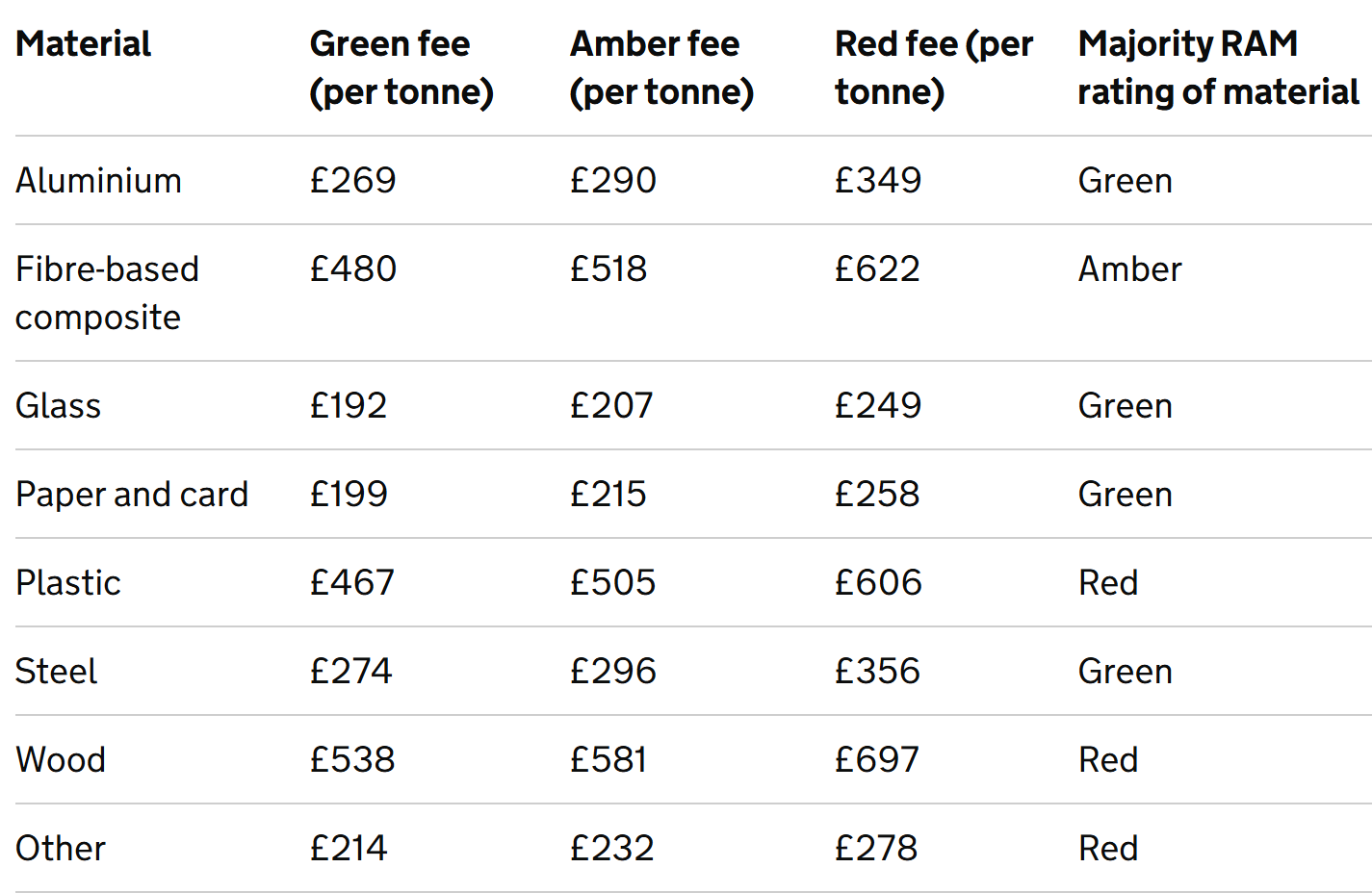
The guidance covers large producers liable under the regulations. Its methodology uses household packaging placed on the market in 2025 by liable producers. Registration charges and costs of meeting separate recycling obligations, such as packaging waste recycling notes, sit outside this fee table.
Use the notice and guidance for the relevant organisation and fee year when budgeting. A future order date alone does not establish the applicable rate. Ask your UK compliance team to confirm the responsible activity and organisation through the official obligation guidance. This disposal-fee schedule concerns UK packaging responsibilities. Import duties require their own customs assessment.
Establish whether the item functions as packaging in the supply chain before selecting a material category. For glassware sold as the product itself, such as ordinary drinking glasses, have the reporting team check the packaging definition and actual use. Keep that decision separate from the material description.
Keep the fee year and reporting methodology in separate fields
A purchase order can be signed in one calendar year, supplied during another and contribute to a reporting period with its own methodology. Put the fee year, reporting period and RAM version in the evidence record, with a link to the guidance used. Avoid copying a rating from an older project solely because the bottle shape looks unchanged.
On a phone, swipe within the table to read every column.
| Record | What to enter | What it controls |
|---|---|---|
| Fee year | 2026/27 for the published rates discussed here | The disposal-fee schedule being considered. Confirm the relevant Notice of Liability. |
| Market data basis | Applicable reported packaging and reporting period | The tonnage and material data to which the organisation’s obligations relate. |
| 2026 reporting methodology | RAM version 1.1, as directed by official guidance | Assessment of packaging supplied during the 2026 reporting year. |
| 2027 reporting methodology | RAM 2027 for January 1 to December 31, 2027 | The 2027 assessment and evidence requirements. Future fees need their own published basis. |
O official RAM 2027 publication explicitly directs producers to use RAM version 1.1 for the 2026 reporting year. Its 2027 materials guidance contains glass-specific criteria and component examples. Use the version applicable to the packaging period you are assessing.
Ask for the glass body’s measured weight and material
Begin with a supplier reference, drawing revision and the glass body as a defined measurement item. Record whether the stated weight is a nominal design value or a measurement of supplied samples. For measured data, keep the measurement date, sample quantity, weighing method and observed variation. Ask which batch or production configuration the result represents.
Keep bare-glass weight separate from the assembled empty pack and its filled gross weight. A scale reading of a filled jar includes the food, lid and other fitted parts. A carton shipping weight also includes transport packing. Those measurements answer different questions, so identify exactly what was on the scale.
Ask for the glass composition declaration and its basis. A clear appearance or a food-storage description cannot establish a particular glass composition. In the 2027 glass criteria, material composition matters, including the distinction between soda-lime-silica glass and the listed other glass types. Your assessor needs the declaration for the actual SKU to apply the relevant version’s criteria.
Nosso straight-sided glass food jars with metal lids illustrate the gap between a public product listing and a reporting evidence file. The page gives a shape and capacity range to shortlist. Request a component schedule and current material/weight records for your selected size and lid.
Break down caps, pumps, liners and decoration
Give every part a supplier reference. For a food jar, ask whether the cap description identifies the actual metal, internal coating and sealing material. For a fragrance bottle, include the pump assembly, collar, dip tube and removable cap. Ask the component supplier for the available material and weight breakdown instead of inferring it from color or appearance.
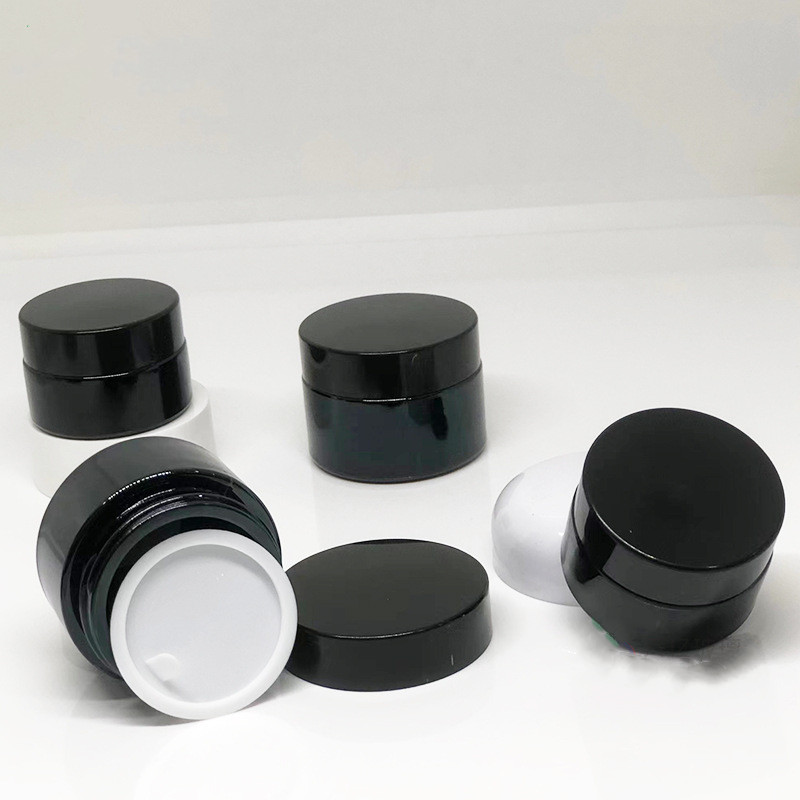
Record how components are removed or remain attached during normal use, with photographs and the supplier’s assembly description. Physical separation evidence helps the assessor apply the appropriate rules. Each material’s reporting treatment still needs to follow the regulations and relevant guidance.
For example, the 2027 guidance includes an illustrative jam-jar example that distinguishes assessment of a jar and attached label from reporting their separate material weights. Preserve both the assembly description and material breakdown. A parts list is useful source evidence for that decision.
Separate colored glass from applied color or decoration in the specification. Record the substrate, coating or print method, coverage and available composition information. Ask for labels, adhesives, sleeves and attached decorative parts to be identified as well. The assessor can then determine what further evidence is required under the relevant methodology.
Reihey’s published UK storage-jar sample project describes wood lids, glass printing and appearance review. It supports a discussion about defining the approved sample. EPR assessment requires the additional material and weight evidence for the packaging actually supplied.
Use one evidence schedule for every SKU
Send the schedule to the glass supplier, closure supplier and any decorator or label provider. Keep supporting documents beside the entries. Use “awaiting confirmation” where a value is missing, then identify the owner and date needed before your reporting team signs off.
On a phone, swipe within the table to read every column.
| Evidence field | Request from the supplier | Buyer’s record |
|---|---|---|
| SKU and version | Drawing, part numbers and revision, sample or batch reference | Supplied period, quantity and approved configuration. |
| Glass body | Composition declaration, bare weight and measurement basis | Measured/nominal status, sample count, date and data owner. |
| Color and finish | Body color, surface decoration and available composition details | Approved finish sample and change history. |
| Cap, pump and liner | Material and weight breakdown, references for all fitted parts | Assembly relationship and missing component evidence. |
| Label and accessories | Material, weight, adhesive or attachment information | Reporting material categories and assessment decision references. |
| Separation | Normal-use removal or attachment description and photos | Applicable RAM version, rationale and reviewer. |
| Evidence approval | Declaration/report source, revision and issue date | Approval date, responsible person and next review trigger. |
A 20-tonne illustration shows why the assumptions matter
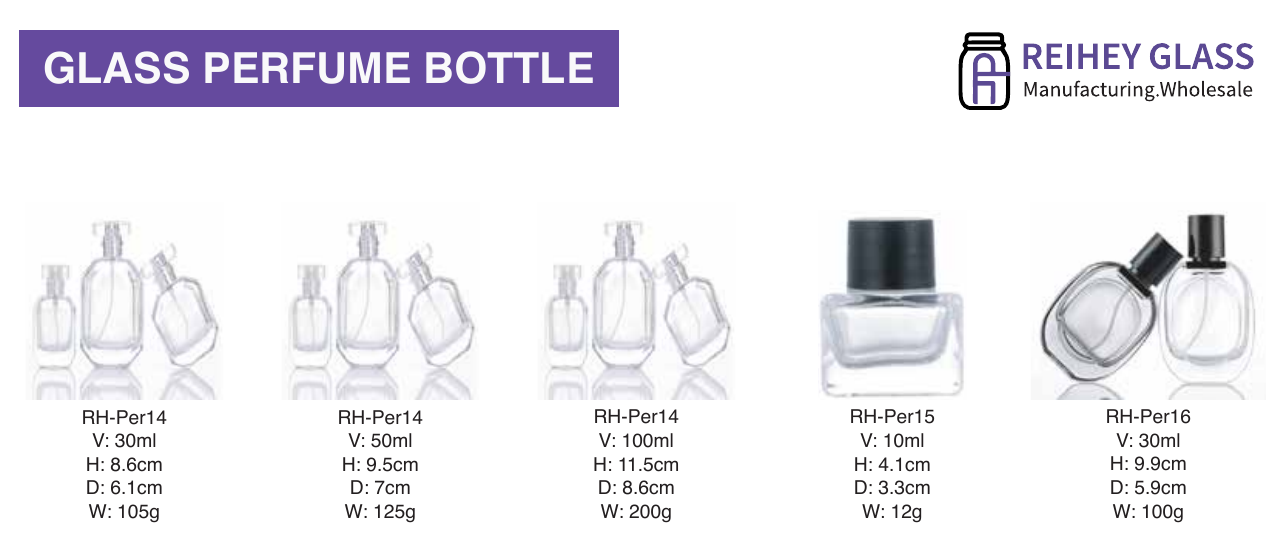
Assume 100,000 bare glass bottle bodies weigh 200g each, all of that glass tonnage is chargeable, and the relevant rating is established separately. The glass weight would be 100,000 × 200 ÷ 1,000,000 = 20 tonnes. Using the published rounded rates gives the following sensitivity comparison.
On a phone, swipe within the table to read every column.
| Assumed rating | Published £/tonne | 20-tonne illustration |
|---|---|---|
| Verde | £192 | £3,840 |
| Âmbar | £207 | £4,140 |
| Vermelho | £249 | £4,980 |
The red-to-green difference in this illustration is £1,140. It is a hypothetical comparison using a fixed assumed tonnage and alternative ratings. It excludes caps, labels and other materials, registration charges, separate recycling obligations and other costs. Actual liability depends on the applicable packaging data, assessment and notice. Use the comparison to see which inputs deserve checking before applying the model to your organisation.
Weight reduction also needs the packaging engineering checks appropriate to your product. Ask the filler and technical team to review any proposed body change for filling, closure fit, handling and transport performance, then update the measurement record. A lighter design needs an approved specification and supply plan.
Make changes traceable before the next shipment
A substitute lid, a new decorator or a changed glass drawing can make an old evidence file incomplete. Agree that the supplier identifies changes to composition, component source, weight and decoration before shipment. Link every accepted change to the physical sample and the date it began to be supplied.
- The procurement manager maintains the agreed SKU and component scope.
- The suppliers provide available declarations, drawings, measurements and their source dates.
- The UK reporting owner confirms obligations, material reporting and the applicable assessment version.
- The technical team approves performance-related packaging changes.
- The reporting owner records the assessment rationale and outstanding evidence before sign-off.
For a proposal from Reihey, send your glass-packaging evidence request with the bottle or jar reference, destination market, reporting period, component scope and the fields your reporting team needs completed. We can review the selected configuration and identify which documents are available and which measurements or component declarations still need arranging. Keep the approved evidence with your packaging specification so the next order can be checked against the same record.