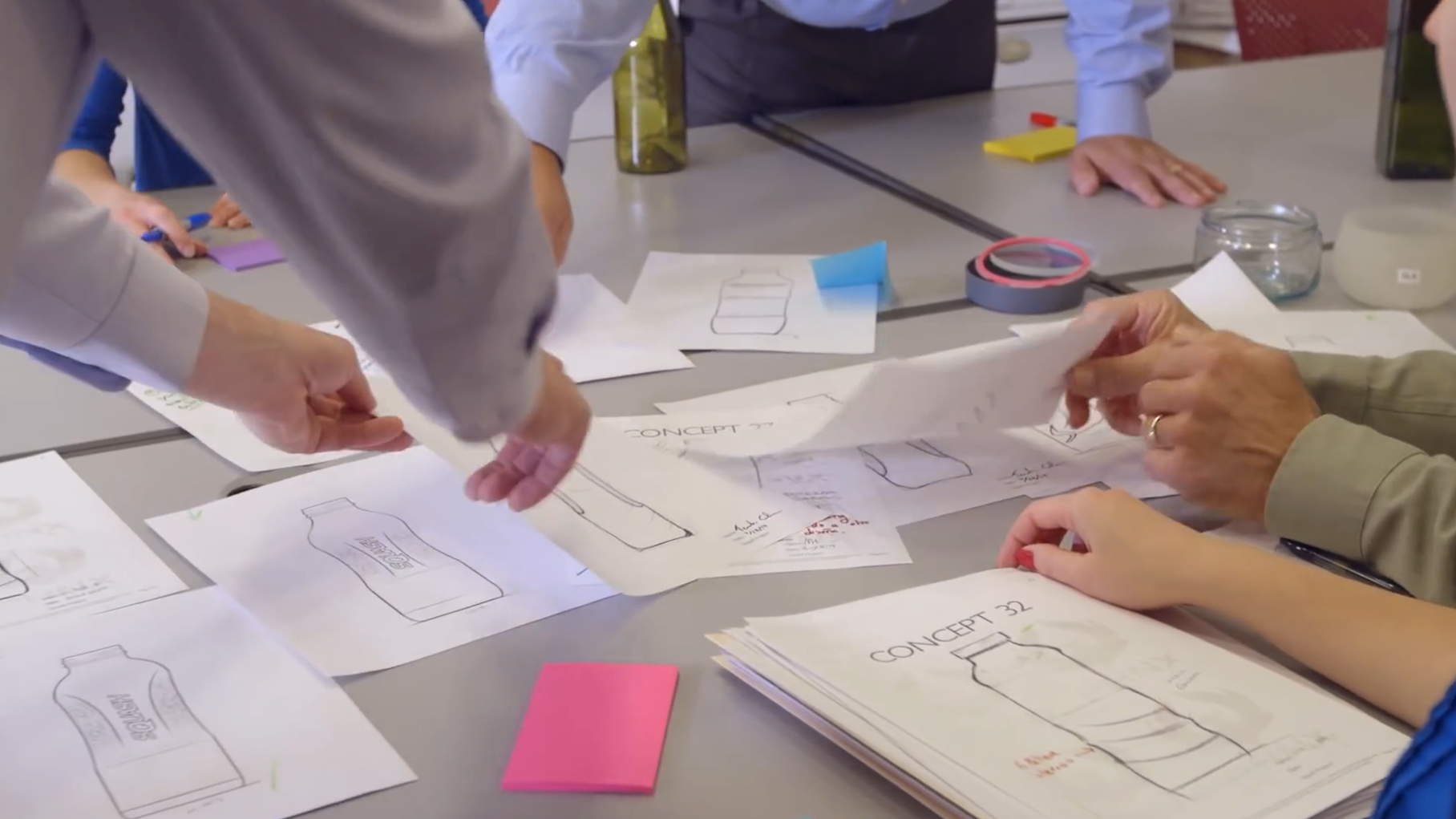
Watch how the customer serves the seasoning before choosing its jar. Someone finishing a dish with a light dusting makes a different movement from someone lifting a spoonful of a coarse blend. A spice brand selling through grocery shelves and kitchenware counters can use the same recipe in both channels, yet give each buyer a more useful pack by choosing a different opening, grip and place for the flavour name.
Start with one real serving
Take a filled sample to a counter and prepare the dish pictured on the label. Does the cook turn the jar upside down over the food, or set the jar down, open the lid and take a portion? Now repeat that action with one hand occupied. Notice where the other hand lands, where the spoon rests, and which part of the label faces away. Those observations tell the packaging buyer more about this particular blend than a photograph of the empty container.
For a fine finishing seasoning, a shaker invites a short movement over the dish. The gallery for the 3oz square spice shaker shows perforations in its silver-coloured lid. How a particular blend passes through them depends on the actual particles and mixture. Use the intended fill in the sample. If large herb pieces stay behind while the fine powder falls through, changing the serving instruction on the label will do little for the customer.
Design a retail face that survives a crowded shelf
Retail jars stand shoulder to shoulder. Put three filled samples next to another brand and read them from the aisle. A square face gives the designer a defined front panel, but filling it with a large brand mark can leave very little room for the flavour. A buyer launching six blends may get more value from a common brand line and generous flavour names than from six different label shapes.
Give the lid its own job in the design. A shopper looking down on a lower shelf may see the top before reading the front. In a kitchen drawer the same view returns every day. A compact flavour cue at the top or shoulder can help in both settings. If a pale bamboo lid is central to the look of the collection, try the cue on a narrow upper band of the label first and compare it with a top sticker.
For a tabletop pot, make room around the jar
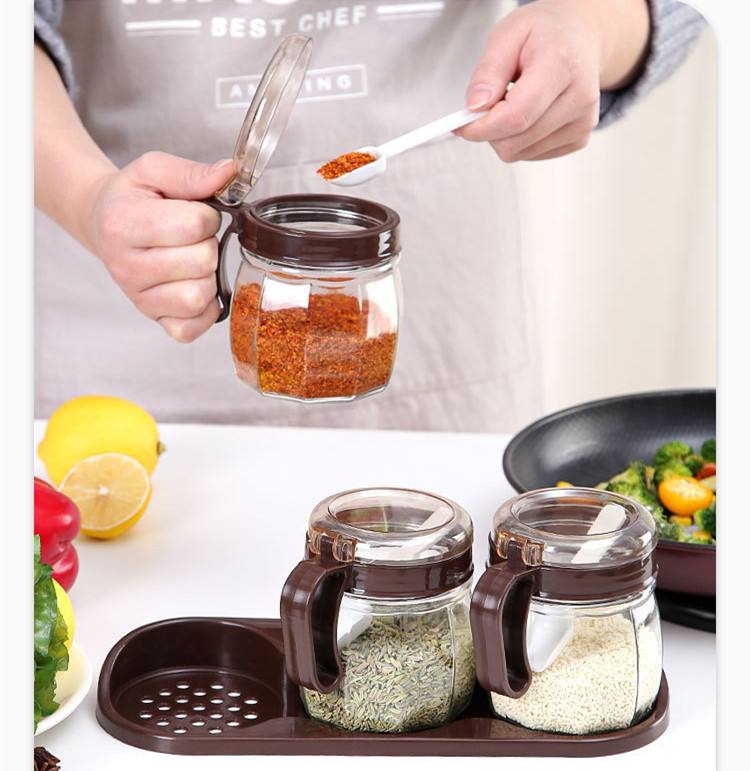
Il 12oz handled glass seasoning jar is shown with a hinged lid and spoon. Its appeal becomes clear when the pot stays on the table: the contents remain visible, the user lifts the lid, and a portion comes out on the spoon. This format gives a buyer a way to merchandise a seasoning alongside dishes or kitchen accessories. The spoon shown is a serving accessory; use a measured utensil if the recipe calls for an exact amount.
Set two pots next to each other with their handles in the position a diner would actually use. Open one lid and remove the spoon while someone reaches for the neighbouring pot. Measure the space the two actions occupy. The width of a closed glass body will understate the space a tray or table display needs. On a small counter, two accessible pots may be a better presentation than three that have to be moved every time someone serves.
Let the channel determine what travels together
A grocery buyer may order individual filled retail jars and replenish one fast-selling flavour at a time. A kitchenware buyer may want a coordinated pair of empty pots or a boxed condiment station. For the second customer, a photograph with a tray can strongly influence what the customer expects to receive. List the pot, lid, spoon and any proposed tray as separate lines when discussing the complete pack. That also makes replacement components easier to describe.
Use a common visual element if both formats carry the same brand. One typeface and the same flavour colour can connect the compact retail label to the broader tabletop presentation. The artwork still needs separate placements: the retail customer approaches straight on, while the seated diner may approach from the handle side. A pair of filled samples photographed at those two eye levels gives the designer a useful brief.
Choose the first order by where repeat use happens
For a grocery launch, choose the format the shopper can identify quickly, carry home and use in the intended motion. For a tabletop launch, choose the arrangement that lets a diner open, serve and replace the utensil comfortably. If both channels matter, give each trial its own success measure. A store buyer can report which flavour is easy to find on a mixed shelf. A kitchenware buyer can report whether the pot is easy to use when placed beside a plate.
When requesting a wholesale quote, send a photograph of that intended shelf or table with the preferred jar marked. Include the fill, intended serving method, artwork area and components that should arrive together. The supplier can then quote a retail shaker or a complete tabletop presentation against a specific use, and the buyer can compare the delivered pack on the same basis.